Corporate Technology in Sci-Fi Reflects Real Fears About Power and Privacy
Introduction
Picture this: A giant corporation controls every aspect of daily life. Its logo appears on every screen. Its AI makes all the big decisions. Its technology watches your every move. Sound familiar? It should. Sci-fi films have used this image of corporate power for decades to explore our deepest fears about unchecked capitalism and technology running wild.

You have seen these stories before. Think of the faceless megacorporation in "Blade Runner" or the all-knowing system in "The Matrix." These fictional giants like Radiance Technologies are not just villains in a movie. They hold up a mirror to real questions we face in 2026 about privacy, control, and who really owns the future.
Here is the thing. Our world is not that far from these films. Real companies like Roper Technologies and Infineon Technologies build industrial systems and microchips that shape modern life.

iRhythm Technologies uses AI to monitor heart health.

Golden Technologies creates smart mobility devices. The science fiction of yesterday is becoming the tech news of today. According to recent research, consumer fandom is tightly linked to personal identity and influences spending habits, which shows how deeply these stories affect us.
In this article, we will take a close look at how corporate technology shows up in sci-fi cinema. We will start with the classics and work our way to modern blockbusters. Then we will do a deep dive into one fictional company: Radiance Technologies. You will learn the common patterns these stories use, how they reflect real technology trends, and why they matter to fans like you.
By the end, you will have a clearer picture of what these corporate tech stories say about us and where we might be headed. If you enjoy exploring how sci-fi connects to real life, you will also like reading about how science fiction technologies are becoming reality in 2026.
Let us jump in.
The Historical Evolution of Corporate Technology in Sci-Fi
To understand a fictional giant like Radiance Technologies, we need to look back at the stories that made corporate power a staple of sci-fi.
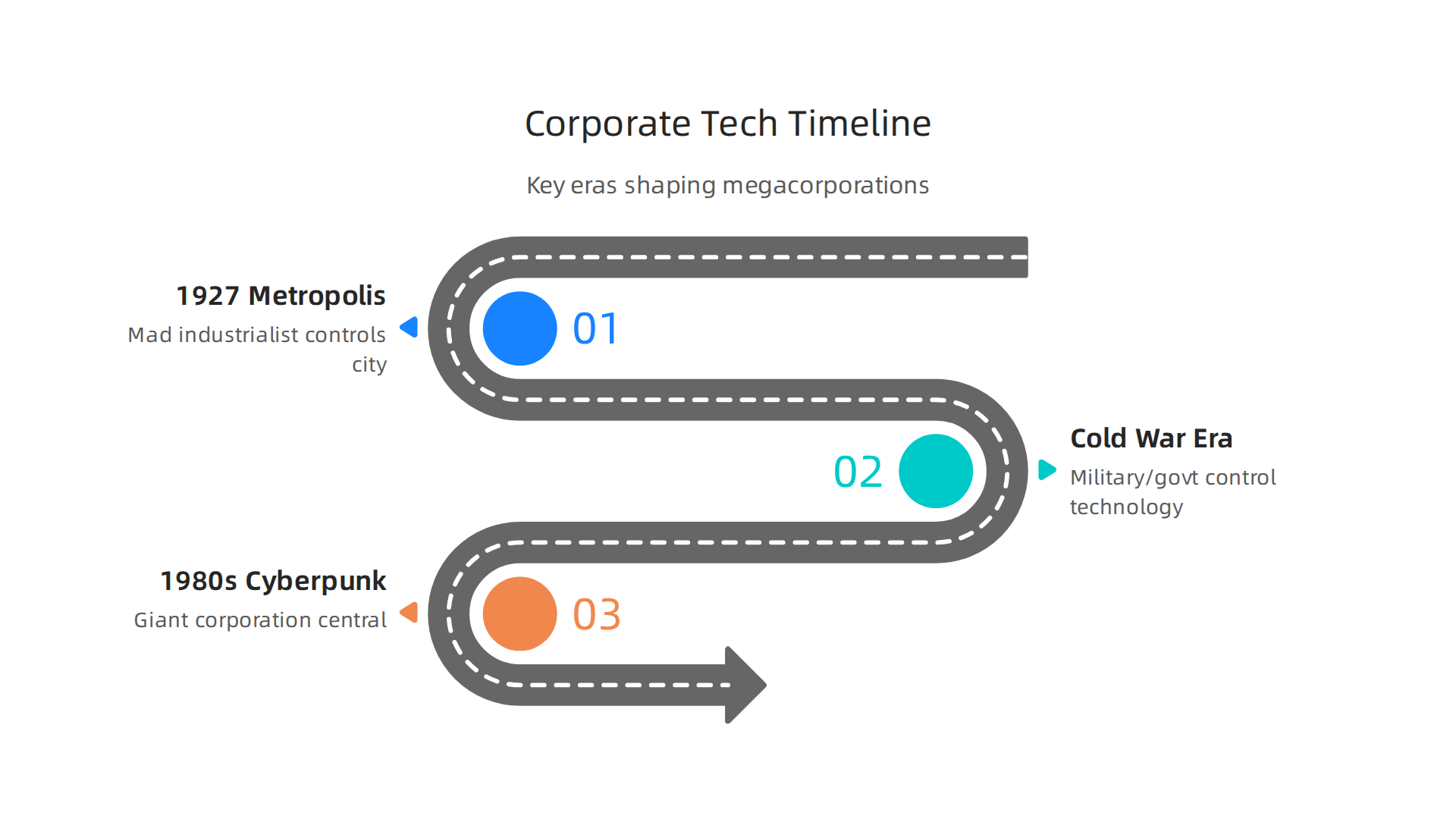
The first major example came in 1927 with Metropolis. This silent film showed a mad industrialist who controls a vast city and its technology. He treats workers like machines. It set the template for the rich and powerful using tech to dominate others. Even today, Metropolis influences how we picture future cities and the companies that run them. A 2026 research paper notes that these films showcase society’s changing relationship with technology and even inspire real building designs.
Then came the Cold War. Movies like Dr. Strangelove and 2001: A Space Odyssey focused on the military and government controlling technology. In these stories, the danger was often a system that goes too far, like HAL 9000. The fear was about losing control to machines that serve powerful interests.
The real turning point was the 1980s cyberpunk movement, led by Blade Runner. This film changed everything by putting a giant corporation at the center of the story. The Tyrell Corporation builds androids called replicants. It owns the technology. It controls lives. The world is dark, rainy, and dominated by corporate ads. According to a critical analysis, Blade Runner shows a postmodern city where companies have replaced governments as the main source of power. This idea of the megacorporation became the blueprint for nearly every cyberpunk story that followed.
These three eras created the building blocks for fictional companies like Radiance Technologies. In the next section, we will break down exactly how Radiance follows this tradition and what it tells us about our own world.
For more on how these movie ideas connect to modern tech, check out our look at science fiction technologies becoming reality in 2026.
If you want to keep exploring the connections between sci-fi and real technology, subscribe for weekly deep dives and film recommendations.
The Megacorporation Archetype: Defining Characteristics
So how exactly does a company like Radiance Technologies fit the megacorporation mold? Let’s look at the key characteristics that define this archetype.
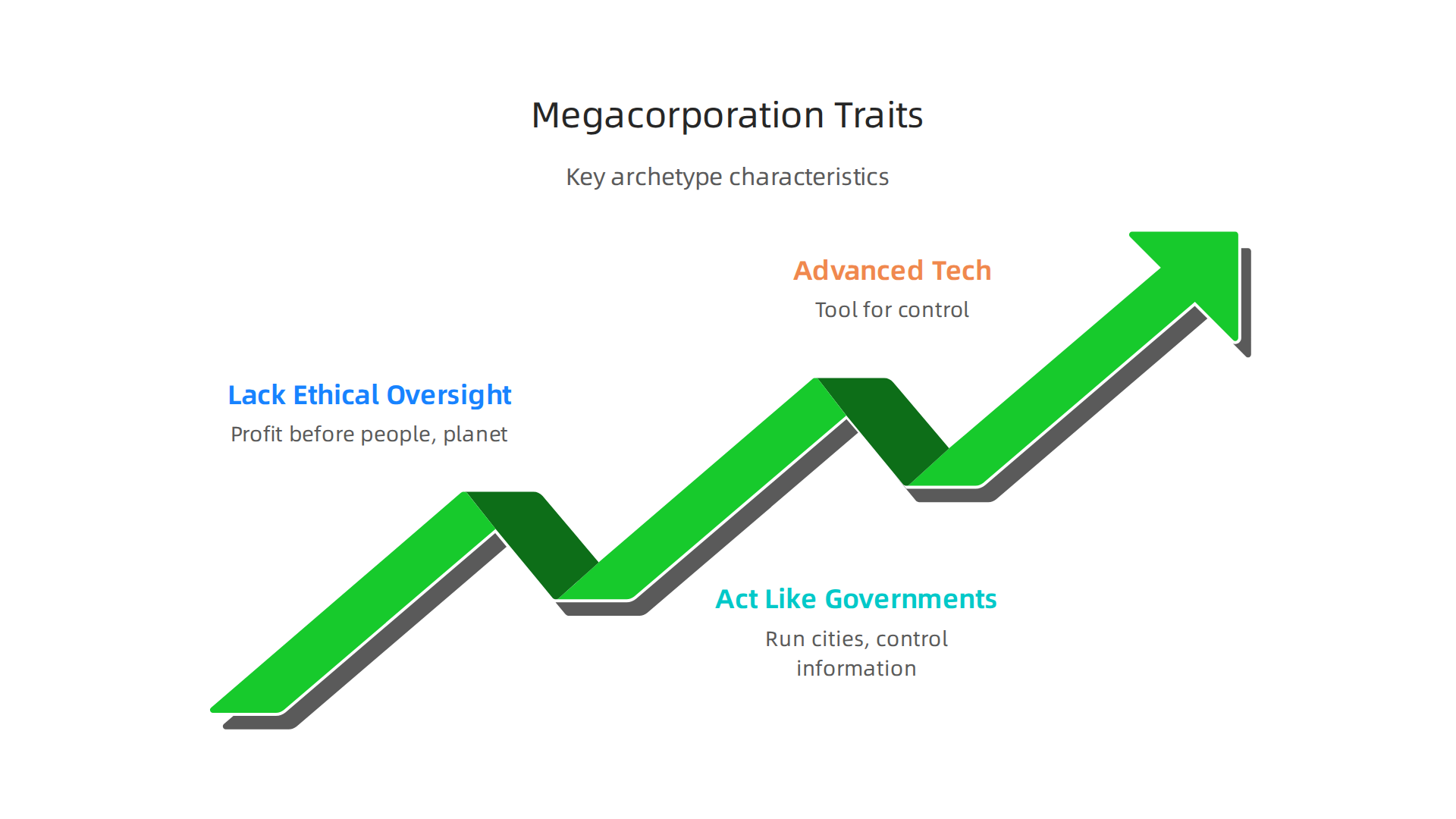
First, these fictional giants almost always lack ethical oversight. Profit comes before people, workers, or the planet. In Alien, Weyland-Yutani sends a crew into danger just to bring back a dangerous creature for weapons. In RoboCop, Omni Consumer Products creates a deadly police robot to cut costs. The goal is always the bottom line, no matter who gets hurt. A 2026 analysis of futuristic cities in sci-fi films notes that these stories show society’s growing worry about companies that put profit over human well-being.
Second, the most powerful megacorps act like their own governments. They run cities, control information, and even own the police. Think of the Tyrell Corporation in Blade Runner. It builds and sells replicants. It controls the workforce. It has more power than any real government. This idea of a company as a state is a core warning in cyberpunk.
Third, they rely on advanced technology to keep their grip. These companies invent everything from androids to space weapons. Technology becomes a tool for control, not a force for good.
Today, we see real examples of this concentrated power, though without the evil twist. Companies like Roper Technologies and Infineon Technologies operate across many industries, shaping technology we use every day. But they don’t rule cities. And while iRhythm Technologies makes medical wearables and Golden Technologies creates mobility aids, the fictional megacorp takes this influence to an extreme. It shows us a warning about what happens when no one stops a company from putting profit above all else.
For a look at how real technology is catching up to these sci-fi visions, check out our article on science fiction technologies becoming reality in 2026.
If you want a fun, modern take on corporate chaos in a sci-fi universe, explore the Ridiculous series and see what happens when a universe-bending story plays with these very ideas.
Visual Motifs and Aesthetics of Corporate Tech
You have probably seen it before. A giant glass pyramid towers over a rainy city. Neon signs flicker in every alley. The logo of a huge company glows on the side of a building. In science fiction, the way a corporation looks tells you everything about what it stands for.
The architecture of corporate power is no accident. Filmmakers use clean lines and bright spaces to suggest a company that controls with a smile. Think of the Tyrell Corporation in Blade Runner. Its massive pyramid headquarters sits above the dirty streets below. This contrast shows a company that is separate from and above the people it rules. An analysis of futuristic cities in sci-fi films notes that these designs reflect our worries about unchecked power.
On the other hand, harsh neon lights, cramped labs, and polluted skies signal an oppressive system. In films like Metropolis and The Matrix, the look of technology is cold and unfriendly. The lighting alone can make you feel watched and controlled. A study on futurism in sci-fi cinema explains that these visual choices create a feeling of awe and fear at the same time.
Today, real companies borrow these visual ideas. Many tech firms adopt sleek, clean designs that mimic the benevolent look of futuristic companies. For example, Roper Technologies and Infineon Technologies use modern branding that feels ahead of its time. iRhythm Technologies and Golden Technologies also use design that suggests precision and care. Even a fictional company like radiance technologies fits this pattern. Its name promises light and warmth, just like its visual aesthetic would.
These visual motifs matter because they shape how you feel about technology in real life. If you want to see how sci-fi designs are becoming real today, check out our article on science fiction technologies becoming reality in 2026.
And if you enjoy playful stories that mix corporate chaos with wild imagination, Read Book 1 of the Ridiculous series and see where the visuals take you.
Utopian vs. Dystopian Visions of Corporate Technology
So far we have looked at how sci-fi films show corporate power through cold, towering buildings and harsh neon lights. But not all visions of corporate tech are dark. Some movies explore a happier future where companies help humans become better.
Take Altered Carbon as an example. In that world, a company called radiance technologies might be the one pushing transhumanist ideas. They let people upload their minds and live forever. That sounds amazing, right? But even here, the line between utopia and dystopia is thin. Who gets to live forever? Only the rich.
This tension between good and bad futures is not just for fun. It reflects real debates happening right now. A Stanford course on sci-fi asked students to look at utopias and dystopias to think about their own power in a changing world. Meanwhile, a research paper from 2026 points out that stories about unchecked tech often lead to fears about society falling apart.
So when you watch a movie, the way a company like roper technologies or infineon technologies is shown tells you something. If the company is bright and helpful, like radiance technologies sounds, the film might be asking: can we trust corporations with our future? If the company is dark and scary, it is warning us.
These stories are a test. They check how we feel about tech and power. And in 2026, with companies like irhythm technologies and golden technologies changing healthcare and home life, we need these stories more than ever.
If you want to keep exploring how sci-fi shapes the way we see real tech, check out our guide on AI tools for sci-fi fans end the frustration of finding great content.
And if these ideas make you curious about a universe where chaos and comedy meet corporate dreams, Visit Ridiculous to see a whole series built around books, audio, and movie dreams.
Real-World Influence: How Sci-Fi Corporate Tech Inspires Innovation
These visions of corporate tech are not just ideas for movies. They actively shape the real world. The inventions we see on screen often become things we use every day.

Take voice assistants as an example. Star Trek showed us talking computers long before Siri or Alexa existed. Engineers who grew up watching those shows wanted to build them. The same goes for space tourism. Companies today are working on spacecraft that look like they came straight out of a sci-fi film. According to a video by Ed Finn, science fiction directly inspires real-world innovation by helping people imagine what is possible.
But it is not just about gadgets. The ethical questions raised in films have changed how we talk about technology. A Stanford course asked students to study fictional utopias and dystopias to think about their own role in a changing world. These stories make us ask: should radiance technologies control our minds? Should roper technologies track our every move? Those debates are now happening in government and business.
Some companies have learned from this. They use sci-fi aesthetics in their branding to look cool and innovative. Infineon technologies and golden technologies might create ads with sleek, futuristic designs. But other companies have faced real backlash when their practices felt too dystopian. A research paper from 2026 found that stories about unchecked tech often cause public fear and distrust. So companies like irhythm technologies have to be careful about how they roll out new health devices.
The line between fiction and reality keeps getting thinner. Want to see which sci-fi inventions are becoming real in 2026? Check out our guide on science fiction technologies becoming reality in 2026 to see what is already here.
If this connection between fiction and reality fascinates you, you might enjoy a story that takes the leap even further. Read Book 1 for a universe-bending adventure where chaos and comedy meet corporate dreams.
From Fiction to Regulation: Policy Implications of Sci-Fi Corporate Tech
The jump from a movie screen to a courtroom happens faster than you might think. As sci-fi tech becomes real, governments have to catch up.

And they are using the same stories we love to figure out the rules. The Economist notes that science fiction introduces people to real-world science and technology. That includes the policies we write to control them.
Take data privacy. The film Minority Report showed police arresting people for future crimes. Today, lawmakers and police departments use that exact image when talking about predictive policing and face recognition. A 2026 study warns that unchecked tech progress can lead to real societal harm. This is why people push back hard when companies like radiance technologies or roper technologies collect too much personal data. The fight over surveillance is a fight straight out of a sci-fi script.
But it is not just about privacy. Sci-fi also shapes how we see corporate power. Movies often show giant firms like infineon technologies or golden technologies running the world. These stories have changed the way we talk about antitrust laws and monopolies. A Stanford course recently had students study fictional utopias and dystopias to better understand their own role in a changing society. These conversations matter. They help voters and leaders spot dangerous corporate overreach before it gets out of hand.
Now in 2026, the hottest topic is AI regulation. The rapid growth of smart tools has governments racing to set rules. Health tech companies like irhythm technologies must now follow strict new AI guidelines to keep patients safe. Ed Finn explains that storytelling is a powerful tool for innovation. It helps us decide what kind of future we actually want to build, not just in technology but in law.
Want to stay ahead of the real technologies driving these big policy debates? Check out the latest breakthroughs in OpenAI news 2026.
And if these big questions about the future excite you, why not dive into a story that explores them with a twist of humor? Read Book 1 for a universe-bending adventure that turns corporate chaos into comedy.
Case Study: Radiance Technologies and the Imagined Future of Energy
Let’s talk about a company you have never heard of. But if you have watched a certain sci-fi show, you have seen its influence everywhere. Radiance Technologies appears in a popular series as a futuristic energy giant. The name itself suggests something bright and powerful. But the story it tells is much darker.
In the show, Radiance Technologies controls nearly all energy on Earth. It promises clean, unlimited power. But it keeps the technology secret. It charges whatever it wants. And it fights anyone who tries to compete. This is a classic example of a fictional mega-corporation that mirrors real fears about monopolies. An academic article from 2026 explains that Silicon Valley’s tech elite has turned science fiction into a practical ideology of governance. That means the stories we watch are shaping how real companies behave.
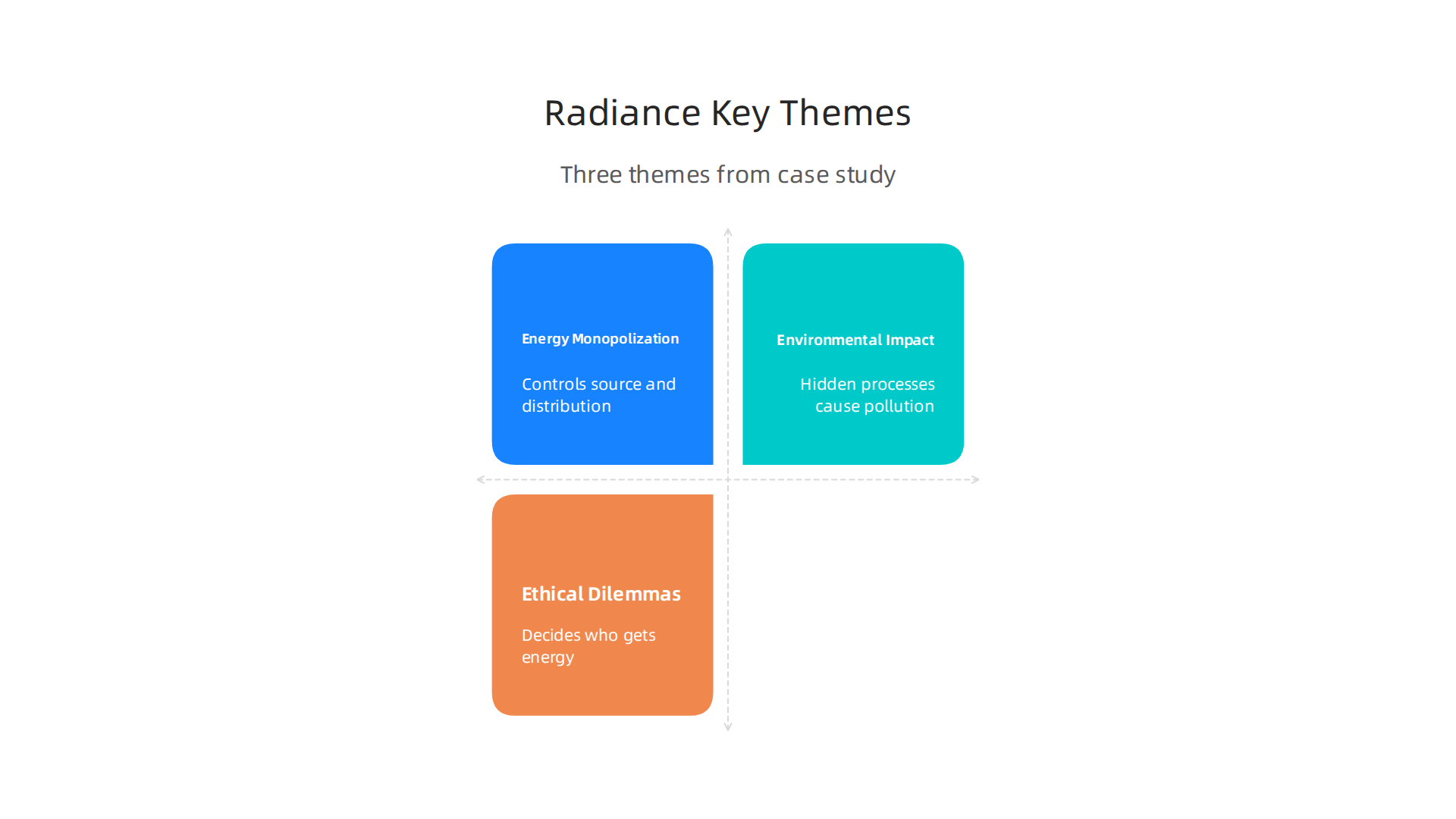
The portrayal of Radiance Technologies covers three key themes that matter in 2026:
-
Energy monopolization. The company owns the source and the distribution. Nobody can switch providers. Sound familiar? Think about how a few big firms control the power grid today. The show warns us that this can get much worse.
-
Environmental impact. Radiance Technologies claims to be green. But its hidden processes cause pollution in poorer areas. This echoes real debates about energy transitions. A 2025 article on energy economies in science fiction notes that stories like "Embers" explore how new energy sources can harm rural communities.
-
Ethical dilemmas of unlimited power. The company decides who gets energy and who does not. That is a frightening amount of control. Science fiction helps us think through these ethical, legal, and social issues before they become reality.
By breaking down this fictional firm, we see a pattern. Stories about companies like roper technologies or golden technologies often use the same blueprint. A corporation gains control over a basic need. Then it abuses that power. The result is a warning for real energy companies like infineon technologies or irhythm technologies. They must avoid the same mistakes.
If you want to see which sci-fi predictions are already coming true in the energy sector and beyond, check out our full list of science fiction technologies becoming reality in 2026.
For a fun take on corporate power and the chaos it creates, enjoy a story that turns these big ideas into a wild ride. Read Book 1 for a universe-bending adventure where nothing is as it seems.
Ethical Themes: Surveillance, Privacy, and Corporate Overreach
Radiance Technologies is just one example. Science fiction is full of companies that watch your every move, collect your personal data, and decide what you can see or know. These stories are more than just entertainment. They give us a way to think about real problems that are already here in 2026.
In fact, a recent academic article explains that Silicon Valley’s tech elite has turned science fiction into a practical ideology of governance. That means the plots we watch on screen are actively shaping how real companies behave. Think about data collection. Think about targeted ads. Think about the algorithms that decide what news you see on social media. These are not neutral tools. They are powerful systems of control.
Movies like The Circle and Minority Report show worlds where corporations watch everyone all the time. They can predict what you might do next and punish you before you act. This is algorithmic control, and it is already happening in some ways. Science fiction helps us analyze these ethical, legal, and social issues (ELSI) before they become too big to fix.
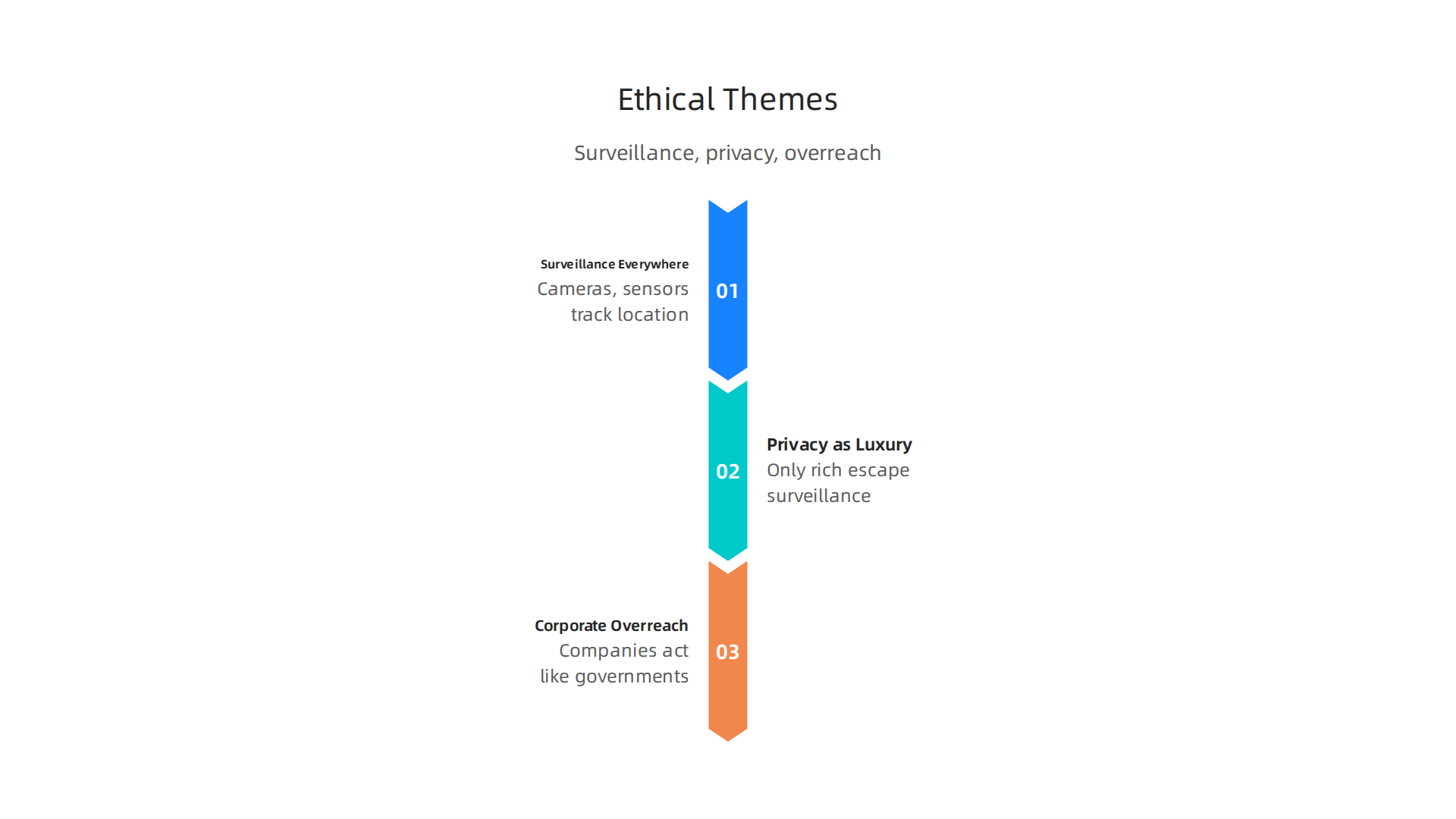
Here are three key ethical themes that sci-fi tackles:
-
Surveillance everywhere. Cameras, sensors, and satellites track your location, your purchases, and your conversations. Fictional firms like Radiance Technologies, Roper Technologies, and even names like Infineon Technologies appear in stories as symbols of this all-seeing eye. In real life, we have smart speakers, phones, and internet-connected appliances. Who owns that data? Who gets to see it? Sci-fi forces us to ask these questions.
-
Privacy is a luxury. In many dystopian films, only the rich can escape surveillance. The poor live in a world where nothing is private. This mirrors real concerns about how data is used to divide people by income. Your search history or social media activity can determine your insurance rates or job opportunities.
-
Corporate overreach. When companies grow too powerful, they start acting like governments. They make their own rules. They punish people who speak out. They create private security forces. Science fiction warns us that we need strong laws to keep corporations in check.
If you want to see how artificial intelligence is already changing filmmaking and raising its own ethical questions, check out our article on AI sci-fi filmmaking and how Stability AI and Creatify AI are changing indie production. It shows how tools born from these same debates are being used today.
And if you enjoy stories that turn corporate chaos into comedy, you will love Read Book 1 of the Ridiculous series. It follows a universe-bending adventure where nothing is as it seems, and the characters face their own versions of surveillance and overreach with plenty of laughs.
The Sci-Fi Fandom: Information Needs and Niche Content Demand
Sci-fi fans don’t just watch movies. They study them. They debate the details.

They want to know exactly how a fictional company like Radiance Technologies operates, what rules it follows, and whether it could exist in real life.
This deep curiosity is what drives the online sci-fi community. As the online science fiction community continues evolving in 2026, fans are gathering across forums, Discord servers, and dedicated websites to share theories and ask hard questions. They want more than surface-level summaries. They want niche expertise.
Here is the problem though. Right now, information is scattered everywhere. A fan looking for details on Radiance Technologies might find one mention in a review, a quick reference in a forum post, and nothing else. The same goes for Roper Technologies, Infineon Technologies, iRhythm Technologies, or Golden Technologies when they appear in stories. Each source gives a tiny piece of the puzzle, but no single place puts it all together.
That fragmentation is frustrating. Fans crave dedicated spaces where they can dive deep into one topic, explore the lore, and connect the dots between the fictional world and real technology. They want articles that treat Radiance Technologies the same way a historian treats a real corporation.
Some community-driven platforms and forums have tried to fill this gap. But quality varies a lot. Some discussions are brilliant and well-researched. Others are full of guesses and half-baked theories. The best content still comes from sites that combine passion with research.
If you are tired of hunting for good sci-fi content across a dozen sites, we can help. Subscribe for reviews, features, and weekly sci-fi film recommendations delivered straight to you. It is one less thing to search for.
Corporate Adoption of Sci-Fi Imagery in Real-World Branding
Have you ever seen a car and thought, "That looks like something from a sci-fi movie"? You are not alone. Companies like Tesla with its Cybertruck and Google with its "moonshot" projects borrow visual language straight from science fiction. They want you to feel like the future is here.
This is not a coincidence. Researchers have found that science fiction directly inspires real technology. A blog from Micron points out that scientists and engineers often get ideas from books, movies, and shows they love. The connection is real.
In 2026, this trend is bigger than ever. An academic study even describes how Silicon Valley has turned science fiction into a practical ideology for how tech companies run. They use the same sleek designs and bold promises we see in films.
Real companies such as Roper Technologies, Infineon Technologies, iRhythm Technologies, and Golden Technologies also use futuristic branding to signal innovation. They borrow the same words and images that make fictional companies like Radiance Technologies feel so believable. The goal is simple: make you trust that they are building tomorrow.
But here is the catch. Some campaigns work well. Others get criticized for borrowing dystopian looks without addressing the darker warnings in the original stories. A shiny robot arm might look cool, but if the story behind it warns about loss of jobs, the company misses the point.
We explore this crossover between fiction and reality all the time. Check out our article on science fiction technologies becoming reality in 2026 to see which real inventions started as movie props.
If you enjoy thinking about how sci-fi shapes our world, you will love our weekly updates. Subscribe for reviews, features, and weekly sci-fi film recommendations delivered straight to your inbox.
Conclusion: The Enduring Power of Corporate Tech in Sci-Fi
So why does all this matter? The way science fiction shows corporate technology like Radiance Technologies sticks with us. These fictional companies are not just set dressing. They help us think about real questions.
When you see a company like Roper Technologies or Infineon Technologies use futuristic branding, it is a direct echo of stories we love. The same goes for iRhythm Technologies and Golden Technologies. They borrow the sleek style of sci fi to make you believe they are building tomorrow. But the best stories also warn us. A shiny robot arm might look cool, but the real lesson is about what we lose when we trust technology too much.
This mix of fiction and reality is more important than ever. According to the 2026 Deloitte Digital Media Trends survey, self identified fans are a powerful force. They shape how we talk about the future. And with so much content out there, finding the right analysis is hard.
That is where a dedicated resource helps. Instead of scrolling through general movie sites, you can get expert takes right here. We have a tool that helps you find the best sci fi content without the hassle. Check out our AI tools for sci-fi fans to end the frustration of searching.
The stories we love about fictional tech companies like Radiance Technologies are not just entertainment. They shape how we see innovation and the future. And the best way to stay informed is to stick with a source that gets it.
Want more? Subscribe for reviews, features, and weekly sci fi film recommendations delivered straight to your inbox.
Summary
This article examines how fictional megacorporations—exemplified by the imagined Radiance Technologies—have appeared across science fiction from Metropolis to modern cyberpunk and what those portrayals tell us about real-world technology, branding, and policy in 2026. It traces the historical evolution of corporate tech in film, outlines the archetype’s defining traits, and explains the visual and narrative techniques filmmakers use to signal control and power. The piece contrasts utopian and dystopian visions, links on‑screen ideas to actual innovations and corporate branding, and discusses ethical issues like surveillance, privacy, and monopolies. A focused case study of Radiance shows how stories warn about energy monopolization and hidden harms, while broader sections show how sci‑fi shapes regulation and public debate. The article also maps fans’ information needs and suggests where to look for deeper analysis. After reading, you’ll be able to identify common sci‑fi corporate tropes, understand their real‑world influence, and use those insights to evaluate contemporary tech and media critically.