
Science Fiction Technologies Becoming Reality in 2026
Introduction: From Sci-Fi Fantasy to Tech Reality
Remember watching Minority Report or Blade Runner and thinking, "That kind of tech will never exist in my lifetime"? Well, guess again. The line between science fiction and real-world technology is blurring faster than ever in 2026.
One company that proves this point is Luminar Technologies, a leader in lidar sensors that give cars the ability to "see" the world around them.

Their Iris lidar system is already being used in Volvo and Mercedes vehicles to improve safety and autonomous driving. That sounds a lot like the self-driving cars we used to only see on screen.
But here’s the problem: as a sci-fi enthusiast, you probably love following these tech breakthroughs. The trouble is that finding curated, trustworthy content about the companies building our future can be overwhelming. General news sites bury the best stories, and social media is full of noise. You want real, research-backed information about emerging technologies without having to wade through clickbait.
That’s where this article comes in. We’re going to take a deep, no-fluff look at key players like Luminar and show you how they turn sci-fi ideas into reality. You’ll also learn smart ways to cut through the information overload. Along the way, we’ll connect these real-world innovations to the movies and stories that predicted them, like how Aechelon Technology and other tech companies are setting the future standard for visual simulation.
If that sounds like your kind of read, you’re in the right place. And if you want to stay ahead of every sci-fi tech trend, subscribe for our weekly updates and film recommendations.
Before we dive in, check out how AI tools are already changing the indie filmmaking world in our piece on AI sci-fi filmmaking and Stability AI. It’s another great example of fiction becoming fact.
Luminar Technologies: The Real-World LiDAR Driving Sci-Fi Visions
Remember that chilling moment in Minority Report when the police cruisers scanned the apartments with those whirring sensor arrays? Or the mapping probes in Prometheus surveying the alien landscape? Those fictional tools were brilliant guesses at what autonomous technology could actually look like. In 2026, Luminar Technologies is taking those exact concepts and putting them on public roads. They are proving that the line between a movie prop and a car part is officially gone.
So, how does this sci-fi vision actually work? Luminar builds lidar sensors. Lidar uses invisible lasers to create a detailed 3D map of the car’s surroundings. Think of it as giving a vehicle "super sight."


It can see a tire on the road, a child behind a bush, or a deer about to jump long before a human driver ever could. Luminar’s Iris lidar is already being used by automakers like Volvo and Mercedes-Benz. It is one of the most exciting emerging technologies setting a future standard for automotive safety.
Science fiction has always been great at predicting these kinds of tools. The concept of remote scanning and environmental mapping shows up everywhere in movies. Now, real tech companies are bringing that to life. Just as films predicted tablets, video calls, and bionic limbs, lidar is becoming just as common. To see just how often Hollywood nails these predictions, take a look at this piece on future shock: 11 technologies that science fiction predicted.
Luminar is building the complete brain and eyes for autonomous vehicles. The massive amounts of data their sensors collect are often processed by advanced AI systems. This is another area where sci-fi meets reality. For example, you can read about exactly how fast these tools are moving in our coverage of OpenAI news 2026 breakthroughs that sci-fi enthusiasts need to see.
If you love following the companies that turn sci-fi ideas into everyday tools, this is the most exciting time to be alive. For a curated look at the breakthroughs and the movies that predicted them, Subscribe to our weekly updates.
Beyond Luminar: Other Tech Titans Crafting Tomorrow’s Sci-Fi Aesthetic
Luminar is giving cars super sight, but other companies are building machines that look like they walked straight off a movie set. In 2026, three titans are blurring the line between fiction and reality faster than ever. Let’s take a look at Boston Dynamics, SpaceX, and Neuralink.
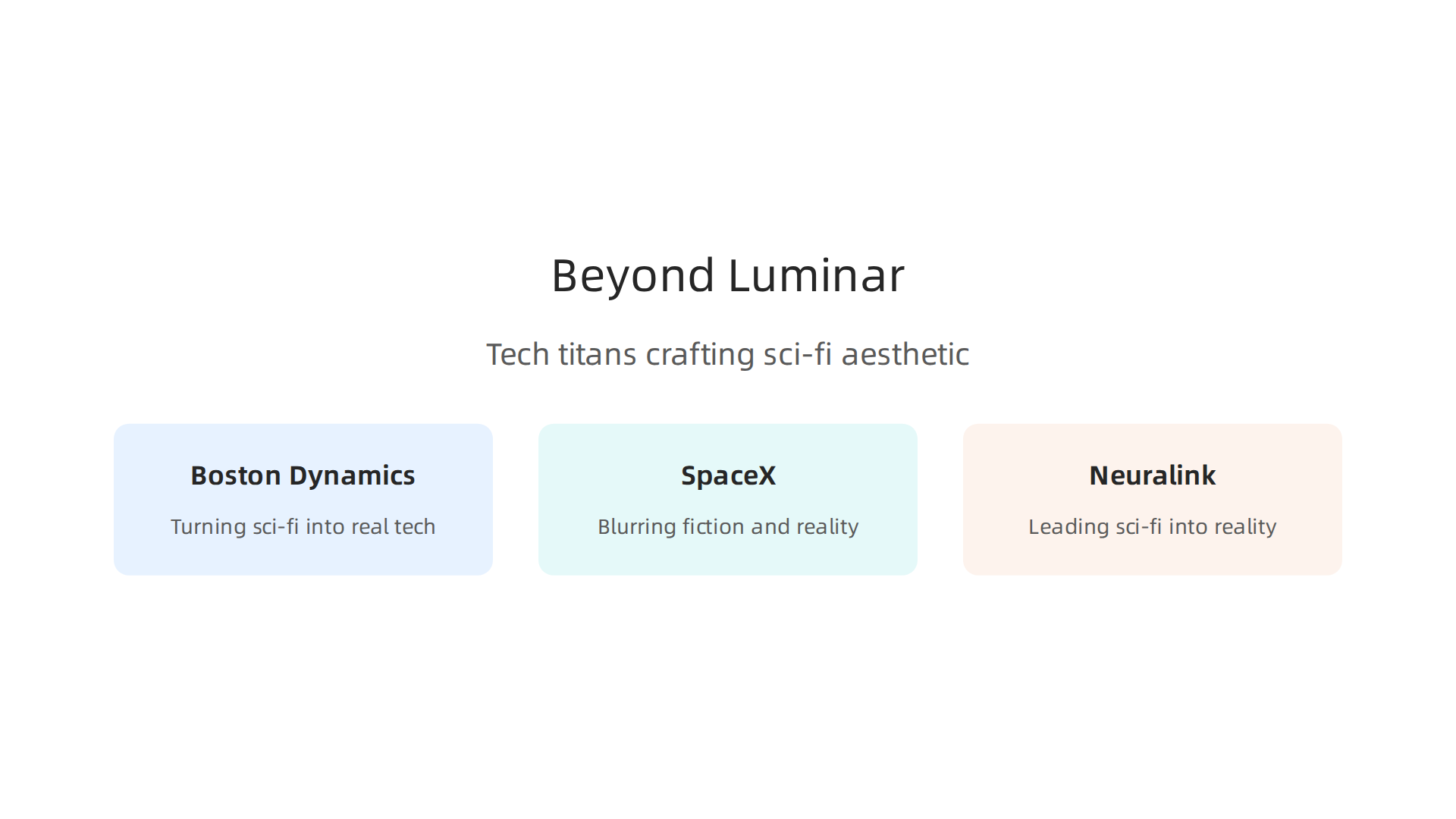
Boston Dynamics makes robots that move like living creatures. Their robot dog, Spot, can climb stairs, open doors, and even dance.

The humanoid robot Atlas can do backflips. These machines have already appeared in shows like Black Mirror, proving that real tech is inspiring the stories we tell. Spot is not just a cute gadget. It is used for inspecting factories and helping in dangerous rescue missions. Maybe you have seen one in a sci-fi show or a viral video.
SpaceX is building the future of space travel. Their Starship rocket is designed to take humans to Mars. That sounds like a plot from The Martian or Total Recall. In 2026, SpaceX is testing giant rockets and planning missions that could finally make us a multi-planet species. The satellite industry is watching closely. According to a report on 10 tech trends that will impact the space and satellite industry in 2026, the race to space is speeding up fast.
Then there is Neuralink. This company wants to connect your brain directly to a computer. The idea of brain-computer interfaces has been in sci-fi for decades. Now it is real. Neuralink is on track for mass production in 2026, as reported by Tomorrows Affairs. Imagine controlling a phone or a wheelchair with your thoughts. The long-term goal is even bigger: merging human intelligence with AI. For a deep dive into how mind-bending this mission is, check out the classic article on Neuralink and the brain’s magical future.
These companies are not just building products. They are shaping our culture. The names Boston Dynamics, SpaceX, and Neuralink have become part of how technology synonyms from science fiction shaped our modern vocabulary. Robot dogs, starships, and brain chips are no longer just ideas in a movie. They are real.
If you love watching these breakthroughs unfold, you will want to stay in the loop. Subscribe to our weekly updates and get the latest sci-fi tech news delivered to your inbox.
AI and Machine Learning: The Invisible Architects of Sci-Fi Storytelling
Have you ever watched a sci-fi movie and wondered how the alien world looked so real? Or how a script came up with such a perfect twist? The answer is often hiding in plain sight: artificial intelligence. In 2026, AI is not just a cool prop in movies. It is the invisible hand helping filmmakers build their visions.
AI plays a huge role in virtual production. It helps create realistic digital environments without building giant sets.

A study from the AMT Lab explains that AI assists in making immersive worlds that feel alive. Filmmakers use AI to generate CGI backgrounds, adjust lighting, and even animate characters faster. A new paper on AI‑driven workflows shows how these tools are expanding what is possible on set.
But AI is not just behind the camera. It is also in front of it as a character. Movies like Ex Machina and Her explore what happens when machines think and feel. These stories ask big questions about love, identity, and power. And guess what? Real AI researchers watch these movies for ideas too. Sci‑fi writers and scientists are in a constant feedback loop. Writers dream up wild futures, and engineers try to build them.
This connection between fiction and reality is what makes the genre so exciting. If you love seeing how AI shapes both our screens and our world, there is always more to learn. Check out our deep dive on how Stability AI and Creatify AI are changing indie production. It shows how small teams are now making big‑budget‑looking films.
Stay ahead of the curve. Subscribe to our weekly updates and get the latest on AI, sci‑fi movies, and the tech that is turning tomorrow into today.
Overcoming Information Overload: Curated Tools for the Sci-Fi Aficionado
You love sci-fi. But let’s be honest: finding the good stuff can feel like searching for a signal in deep space. You scroll through generic movie sites. You wade through endless lists. And you still miss the hidden gems. In 2026, the internet is louder than ever. According to a Deloitte study, almost half of fans discover new content through social media. But that firehose includes everything from cat videos to celebrity gossip. Not helpful when you just want deep‑dives on time travel or alien stories.
Here’s the thing. You don’t need more content. You need better filters. Start with a few smart tools. Personalized news aggregators let you set keywords like “aechelon technology” or “future standard” so you only see articles that matter. Dedicated sci‑fi newsletters deliver hand‑picked reviews and analyses straight to your inbox. YouTube channels like this one that recommends upcoming series can be gold if you subscribe to the right creators. And forums like the communities discussed in Scified’s 2026 report bring you real talk from fellow fans.
Don’t forget alerts. Set them on your favorite niche sites. That way you never miss a new release or an essay that connects the dots between emerging technologies and classic themes. We do this at Cinema Sci Fi. Every article is written for fans like you. For example, our piece on how Upscale AI restores classic sci-fi films shows you exactly where the tech and the art meet.
Whether you follow luminar technologies for cutting‑edge news or just want a weekly dose of smart recommendations, curated tools save you time. Stop hunting. Start watching.
Subscribe to our weekly updates and get the best sci‑fi insights delivered to you.
Niche Discovery Platforms: Where Sci-Fi Fans Unearth Hidden Gems
You know the feeling. You scroll through a streaming service and see the same blockbusters over and over. But somewhere out there is an indie sci-fi film that could change how you think about time travel. You just have to find it.
Finding those gems in 2026 is hard. The internet is full of noise. According to a Deloitte study, many fans rely on social media to discover content. But that firehose includes everything from cooking tutorials to pet videos. Not helpful when you want a deep space drama.
So where do you look? Here are a few platforms that do the digging for you.
MUBI curates a hand-picked selection of films every day. You will find cult classics and international sci-fi that never hit the mainstream.

Shudder focuses on horror, but its sci-fi horror crossovers are perfect for fans who love alien stories with a good scare.
Specialized YouTube channels are another goldmine. Creators who live and breathe sci-fi often review lesser-known titles you will not see on Netflix. The Scified report shows that fan communities are growing fast in 2026. These groups share recommendations that algorithms miss.
IMDb sci-fi lists are underrated. Fans create lists like "Time Travel Movies You Have Never Seen" or "Indie Sci-Fi from the 1980s." They are a rabbit hole worth falling into.
What about smarter suggestions? Some tech companies like luminar technologies are working on emerging technologies that improve how platforms recommend content. In the future, an aechelon technology might become the future standard for finding hidden gems. But for now, these niche platforms are your best bet.
If you want to see how emerging technologies are already changing indie sci-fi, check out our piece on how AI is changing indie film production. It shows you exactly where the tech and the art meet.
Stop scrolling through noise. Start finding the stories you were meant to discover.
Subscribe to our weekly updates and get hidden gem recommendations delivered to your inbox.
Building Trust in Sci-Fi Content: How to Evaluate Sources and Avoid Misinformation
You found a hidden gem using a niche platform. Great. But before you dive in, ask yourself one question. Is this real?
Sci-fi fans face a unique problem in 2026. The genre is full of hype. Fake announcements about new films pop up all the time. Someone might claim that luminar technologies is making a holodeck or that aechelon technology will be the future standard for movie theaters. Some of these rumors come from fans who want to believe. Others come from people trying to trick you.
How do you separate real news from noise? The same way Google does. Google uses a system called E-E-A-T, which stands for Experience, Expertise, Authoritativeness, and Trustworthiness. In March 2026, Google’s core update made E-E-A-T even more important for ranking content online. The search engine now rewards content that shows real first-hand experience and expert knowledge. You can use the same framework to judge any sci-fi article, review, or announcement.
Here is a simple checklist you can use every time you read about a new sci-fi project:

-
Check the author’s background. Does this person work in the industry? Have they written about sci-fi for years? Or is this their first post? Look for an author bio or a linked profile. According to a 2026 E-E-A-T guide from Digital Applied, Google rewards content attributed to authors with verifiable experience. You should do the same.
-
Look for cited sources. A trustworthy article will link to its references. If someone says a tech company like luminar technologies is building something new, they should link to an official press release, a reputable news outlet, or a direct quote from the company. If there are no sources, be skeptical. Google’s March 2026 core update emphasized the importance of citing original research and credible references.
-
Cross-reference multiple outlets. Do not trust a single source. If a big announcement is real, other reputable sites will report it. Check at least two or three sources before sharing the news. A study from Keywords Everywhere explains that Google’s quality raters look for content that matches information from multiple authoritative sources. The same logic applies to your own research.
-
Watch out for sensational language. Headlines like "This Changes Everything" or "The Future of Sci-Fi Is Here" are often clickbait. Real breakthroughs are usually announced with measured, factual language. If it sounds too wild to be true, it probably is.
-
Check the date. Old news sometimes gets recycled. Before you get excited about a "new" movie or technology, look at the publication date. An article from three years ago about a project that never happened is not news.
Using this checklist takes only a minute. But it saves you from wasting time on fake announcements or falling for hype.
If you want to go deeper on how emerging technologies like AI are changing what is real and what is fake in filmmaking, read our article on how AI is transforming indie sci-fi production. It gives you a behind-the-scenes look at the tools that power modern sci-fi movies.
Smart sci-fi fans think twice before hitting share.
Stay informed and get curated recommendations from people who care about accuracy.
Subscribe to our weekly updates and get hidden gem recommendations delivered to your inbox.
Immersive Technologies That Will Redefine the Sci‑Fi Cinema Experience
Now that you know how to separate real breakthroughs from hype, let’s look at the emerging technologies that are actually reshaping how we watch and interact with sci-fi movies. These aren’t just concepts anymore. They are here, and they are changing the game.
Think about the gadgets you dream about. Headsets like Meta Quest, Apple Vision Pro, and Magic Leap are bringing augmented and virtual reality into living rooms.

These devices let you step inside a sci-fi world instead of just watching it on a screen.

Imagine standing on the bridge of a starship or walking through a dystopian city while the story happens around you.
Holographic displays are also moving fast. Companies like Looking Glass Factory now sell Hololuminescent displays that show 3D images without any headset. These screens create a pure holographic presence that feels straight out of a sci-fi film. According to a 2025 overview of holographic display technology, these systems are becoming more affordable and are already used in museums and theaters. Another deep dive into hologram technology explains how these displays work and where they are headed in 2026.
Movie studios are already using these tools to create new kinds of storytelling. Some films release companion VR experiences that let you explore the movie’s universe. Others use real-time holograms of characters for interactive meet-and-greets. Tech companies like Meta and Apple are betting big on this as the future standard for immersive content.
What does this mean for the future? Expect more interactive narratives where you choose what happens next. Virtual sets will let directors build entire planets without leaving a studio. And audience immersion will go beyond what traditional theaters can offer.
If you want to build your own futuristic home theater setup, check out our guide to the best sci-fi tech accessories for a futuristic home theater. It covers the gear that makes these experiences possible.
Staying ahead of these trends is easy when you have a trusted source.
Subscribe to our weekly updates and get the latest on immersive sci-fi technology delivered to your inbox.
How Tech Companies Inspire New Sci‑Fi Franchises and Vice Versa
The connection between real-world tech companies and the stories we watch is a two-way street. Filmmakers look at emerging technologies for fresh ideas, and those ideas often spark new research and development in labs.
Think about it. The talking computer in Star Trek became Amazon Alexa. The communicator became your smartphone. And J.A.R.V.I.S. from Iron Man is now a blueprint for voice-activated AI assistants. These are not coincidences. Writers and directors study what tech companies are building. They imagine a future standard and bring it to the screen. Then engineers see that vision and work to make it real.
Today, companies like Luminar Technologies and Aechelon Technology are pushing boundaries. Luminar builds LiDAR sensors that help autonomous cars see the world. That tech feels straight out of a sci-fi chase scene. Aechelon creates high-fidelity simulation systems used for training pilots and building virtual worlds. Their work could easily inspire the next starship bridge or dystopian city in a film.
Filmmakers are also using these tools to produce movies faster and cheaper. A 2025 article from the NC State College of Design explains how a virtual production lab combines cameras, motion capture, and LED walls to create any environment. That blurs the line between real and digital. The same AI-driven workflows described in a recent ACM paper allow directors to generate realistic backgrounds in minutes. That speeds up the creative process and opens doors for indie filmmakers.
If you want to see how sci-fi stories have shaped our real vocabulary, read our article on how technology synonyms from science fiction became everyday words.
For a fun, chaotic take on where tech and imagination meet, dive into this universe-bending comedy.
The Influence of Tech on Sci‑Fi Costume and Set Design
When you watch a sci‑fi movie, the costumes and sets often feel like they come from another world. But here’s the thing: many of them come from this one. Tech companies are the secret sauce behind the rubber suits and neon cities you love.
Take wearable tech as an example. Real prototypes of exoskeletons and smart fabrics are showing up on screen faster than ever. Companies like Aechelon Technology build high‑fidelity simulators that create virtual environments. Costume designers borrow those same simulation concepts to design suits that look like they belong on a starship. Luminar Technologies, with its LiDAR sensors, inspires glowing tactical gear and scanning arrays that feel straight out of a spy thriller.
Set designers do the same thing with real cars and gadgets. The Tesla Cybertruck, for instance, has appeared in Cyberpunk 2077 shows and video games. Its sharp, angular design screams “future standard.” Industrial design from brands like Apple or Dyson also shapes the look of sci‑fi ships and rooms. The smooth curves, hidden seams, and brushed metal finishes you see in movies come straight from their emerging technologies.
This cross‑pollination makes sci‑fi feel real. When you see a suit with glowing circuit lines or a door that slides with a soft hum, you are watching the work of engineers and designers who build the same stuff today. Directors use these real references to save time and money. They can place a real Cybertruck in a scene instead of building a prop from scratch. That is good for budgets and great for believability.
If you want to see how AI helps indie filmmakers create these worlds faster, check out our guide on AI sci‑fi filmmaking tools that are changing indie production. The line between real tech and movie magic keeps getting thinner.
Want more insights like this? Subscribe to our newsletter for weekly takes on sci‑fi film, tech, and the future of storytelling.
Summary
This article maps how science fiction ideas have moved from screen fantasy to real‑world technology in 2026, with a close look at companies like Luminar Technologies that build LiDAR ‘eyes’ for cars and others (Boston Dynamics, SpaceX, Neuralink) pushing boundaries. It explains how AI and machine learning are now central to both filmmaking and real‑world systems, and it shows practical ways fans can cut through information overload using curated tools, niche platforms, and personalized alerts. You’ll get a simple checklist based on Google’s E‑E‑A‑T principles to judge rumors and announcements, plus concrete tips for finding indie gems on services like MUBI, Shudder, and specialized YouTube channels. The piece also covers immersive hardware (VR/AR headsets and holographic displays), and how emerging tech informs costume and set design. Read it to understand which companies are shaping the future, how to spot real breakthroughs, and where to go next for trustworthy, deep dives into sci‑fi tech.