How Technology Synonyms from Science Fiction Shaped Our Modern Vocabulary
Introduction: Why Technology Synonyms Matter for Sci-Fi Fans
You just finished a great sci-fi movie. You heard the word "cyberspace" again.

Or maybe "robot." These words feel right at home in a futuristic world, right? Here’s the thing. Many of them didn’t start there. They began inside someone’s imagination.
Science fiction has always been a breeding ground for new tech terms. Words that later become everyday technology synonyms. For example, the term "robot" was first used in a 1920 play called R.U.R. That play is credited with coining the word as we know it today. And "cyberspace"? That came from William Gibson’s novel Neuromancer in 1984. List of existing technologies predicted in science fiction

So when you hear debates about what is technology, realize sci-fi writers helped shape the answer. They gave us the language to talk about inventions before they even existed. And they still do today.
For passionate sci-fi enthusiasts, understanding the nuances between similar terms is key to deeper appreciation. It lets you spot clever references, see how ideas evolve, and enjoy the stories on a whole new level. You move from just watching a movie to understanding the history of computers and ideas woven into it.
This article will demystify technology synonyms. We will help you navigate fragmented information and discover reliable sources. You will learn the real origin stories behind the words you love.
If you enjoy seeing how stories fuel real-world innovation, you might like how AI is changing modern filmmaking. Check out our deep dive on AI in sci-fi filmmaking to see the connection in action.
Ready to explore the language of the future? Subscribe for curated reviews, deep dives, and weekly sci-fi highlights.
What Are Technology Synonyms? Defining the Lexicon
So what exactly are technology synonyms? Simply put, they are different words or phrases that describe the same or similar technological idea. Think of them as multiple labels for the same tool or concept.
For example, you might hear "artificial intelligence" and "machine learning" used side by side. They are not exactly the same, but they are closely related synonyms in the AI world. Another example? "Smartphone" and "mobile device." Both point to the same kind of gadget.
Technology synonyms show up everywhere. They span fields like AI, computing, biotechnology, and space exploration. Each area has its own set of interchangeable terms. A place like the Senior Planet Glossary of Technology Terms breaks down these terms into simple language.

That helps everyone stay on the same page.
In fact, there are hundreds of technical terms used in the tech world today. A list from Indeed covers 70 terms like "ad hoc network" and "authentication."

Each has synonyms in different contexts. So when you watch a sci-fi film and hear "neural network," you know it is a technology synonym for a brain-like computing system found in real AI research.
Why should you care about these synonyms? Because knowing them helps you read tech news, reviews, and discussions the right way.
If a review calls a movie’s robot a "synthetic being," you know it is the same idea as an "android." You catch the nuance. You avoid confusion.
Understanding these connections deepens your sci-fi experience. It lets you spot what authors borrowed from real tech and how language evolves. To see how this plays out in 2026 innovations, check out our look at OpenAI’s latest breakthroughs. You will see new words being born in real time.
As a sci-fi fan, knowing these synonyms lets you enjoy the layers in your favorite stories. You become a more informed viewer and reader.
If you want to keep learning the language of the future, Subscribe for curated reviews, deep dives, and weekly sci-fi highlights. We will help you master the terms that matter.
The Evolution of Tech Terminology: From Sci-Fi to Silicon Valley
Many of the technology synonyms we use today started as pure imagination.
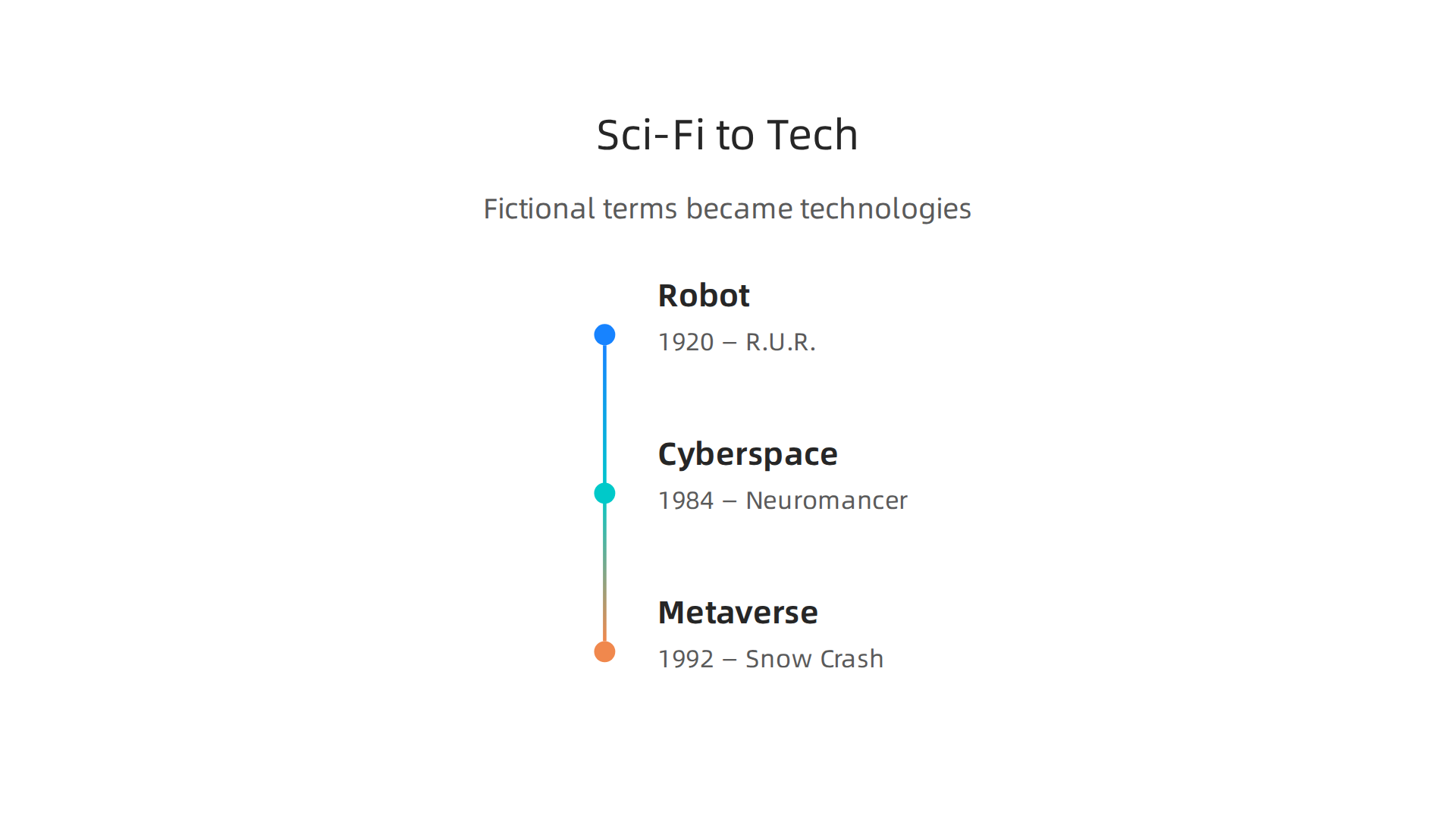
Words like "robot," "cyberspace," and "metaverse" first appeared in science fiction novels, films, and TV shows. Only later did engineers, marketers, and CEOs adopt them as real-world jargon.
Here is a fascinating fact. The word "robot" was born in 1920 in a play called R.U.R. by Czech writer Karel Čapek. The play imagined artificial workers that eventually rebelled. Today, robots vacuum our floors and assemble cars. The term is so common we forget it came from fiction. The same goes for "robotics," a word coined by science fiction legend Isaac Asimov in his 1940s stories. He described the three laws of robotics before any real robot existed. The Oxford University Press blog confirms that Asimov invented the term "robotics" for his stories.
Then came "cyberspace." In 1984, author William Gibson wrote Neuromancer and used that word to describe a virtual reality network. At the time, the internet barely existed. Now, cyberspace is a standard synonym for the online world. It appears in news, legal documents, and everyday conversation. YourDictionary lists cyberspace among the words that science fiction made very real.
More recently, "metaverse" jumped from Neal Stephenson’s 1992 novel Snow Crash into the vocabulary of Silicon Valley. In 2026, companies like Meta and Microsoft pour billions into metaverse platforms. The term has become a technology synonym for immersive digital worlds. A Babbel article traces how these nine everyday words originated in sci-fi books and then entered common use.
Why does this matter? Because it shows how culture shapes language. When sci-fi authors invent a word, they are not just telling a story. They are planting a seed. Later, engineers build the thing, and the word becomes real. The history of computers and tech is full of these borrowed terms. For example, "virus" and "time travel" also started in fiction before becoming tech concepts.
Understanding this evolution makes you a smarter viewer and reader. You see the layers in a film like The Matrix, where "the Matrix" itself is a synonym for simulated reality. You catch how modern AI tools borrow names from classic stories. The connection between imagination and innovation is direct.
Today’s filmmakers are using AI to create new visual languages that once only existed in science fiction. See how Stability AI and Creatify AI are changing indie production and inventing terms that may soon become industry standards.
If you enjoy seeing how sci-fi ideas become real language and stories, you should dive into a fresh universe of invention. Read Book 1 of the Ridiculous series. It is a universe-bending comedy with chaos, wit, and heart. It shows how new terms and worlds are born from creative minds.
How Technology Synonyms Impact the Sci-Fi Fandom Experience
So how do all these borrowed terms affect you as a sci-fi fan? Honestly, the impact is bigger than you might think. If you love diving into forums, writing reviews, or debating fan theories, you have probably run into a frustrating problem: inconsistent synonym use.

One movie calls it a "virtual world." Another says "metaverse." A video game uses "cyberspace." In 2026, new terms like "extended reality" (XR) are popping up in research and industry, as seen in a recent study on XR applications in shipbuilding. All of these are technology synonyms for immersive digital environments. But they are not exactly the same thing. When creators mix them up, it gets confusing fast. You end up spending more time decoding language than enjoying the story.
That is why understanding technology synonyms matters. When you know the difference between "augmented reality" and "mixed reality," you can jump into discussions with confidence. You catch subtle references that casual viewers miss. Your fan theories become sharper because you use the right words. You can even spot when a writer or filmmaker is borrowing a term from classic sci-fi for a deeper meaning.
A clear grasp of these synonyms also helps you write better reviews. Instead of saying "the hologram tech looked cool," you can explain how it relates to real-world developments in computer vision. That kind of insight sets your analysis apart. Dictionaries, like Merriam-Webster, add hundreds of new words each year, many born from our favorite stories. Keeping up with these words makes you a smarter fan.
The trick is to find trustworthy guides that cut through the noise. Platforms like Cinema Sci Fi exist exactly for this reason. Instead of hopping between ten different sites, you get one place that explains the terminology in plain language. No jargon overload. Just clear, helpful breakdowns that enrich your experience.
If you want a trusted source to decode these terms and help you stay on top of every new technology synonym, subscribe for curated reviews, deep dives, and weekly sci-fi highlights. It is the easiest way to turn confusion into conversation.
A Taxonomy of Common Technology Synonyms Across Domains
All these overlapping terms can feel like a foreign language. But here’s the good news: once you group them by domain, everything starts to click. Think of it like sorting your bookshelf by genre. You put all space stories together, all AI stories together, and suddenly finding what you want becomes easy.
That is exactly what a taxonomy does. A taxonomy is just a fancy word for a classification system. Experts use it to organize technology synonyms into clear groups so people can quickly understand how terms relate. Companies like EconSight have built entire technology taxonomies that combine human expertise with AI to map out the modern tech landscape. These systems help researchers, writers, and fans alike spot patterns across different fields.
Let me walk you through the main domains where technology synonyms cluster.

Once you see the structure, your memory will thank you.
AI and Machine Learning Domain
This is the wild west of synonyms. You hear "artificial intelligence," "machine learning," "deep learning," "neural networks," and "large language models" used almost interchangeably. But they are not the same. The UK Government Office for Science published an emerging technology taxonomy that lists these as a clear hierarchy: machine learning sits under AI, deep learning sits under machine learning, and foundation models sit under deep learning.

Understanding this chain helps you talk about AI with real precision. For a deeper look at how these technologies are shaping modern sci-fi production, check out our guide on AI in sci-fi filmmaking.
Computing and Hardware Domain
In computing, synonyms often describe the same core idea but from different angles. "System architecture," "computer hardware," "data processing," and "meta computing" all appear in the Eureka Network technology taxonomy. "Cloud computing" and "edge computing" are synonyms for where processing happens. "Microprocessor" and "CPU" are synonyms for the chip itself. Knowing these groups helps you decode tech news without confusion.
Biotechnology Domain
Biotech has its own unique synonyms. "Gene editing," "CRISPR," "genetic engineering," and "genome modification" all circle similar concepts. But each word carries a slightly different weight. "CRISPR" names a specific tool, while "genetic engineering" describes the broader field. This domain also ties into what you might call the "what is technology" question from history of computers, since modern biotech relies heavily on computational biology.
Space and Aerospace Domain
Space terms are some of the oldest synonyms in sci-fi. "Space exploration," "astronavigation," "interstellar travel," and "deep space missions" all point to the same human desire to go beyond Earth. Even "rocket" and "launch vehicle" are synonyms with different levels of formality. Grouping these terms helps you navigate space news and sci-fi lore with ease.
Why a Taxonomy Matters for You
When you organize technology synonyms by domain, two things happen. First, your brain builds mental hooks. You remember that "deep learning" hangs out with "neural networks" in the AI closet. Second, your searches become faster. Instead of typing random words into Google, you know exactly which family of terms to use. The AiFA Labs artificial intelligence glossary is a great example of a domain specific taxonomy that collects hundreds of AI terms in one place.
This structured approach is exactly what we use at Cinema Sci Fi to break down complex tech concepts for fans. We want you to watch a movie like Ridiculous and immediately spot which technology synonyms the writers borrowed from real science. If that kind of deep dive sounds useful, subscribe for weekly insights straight to your inbox.
How to Find Reliable Information on Technology Synonyms
So you now have a solid taxonomy for organizing technology synonyms into domains like AI, computing, and biotech. That mental map is powerful. But here is the tricky part. Not every source online treats these words with the care they need.
Let’s say you search Google for "technology synonyms" or "what is technology." You might land on a general dictionary page. That is a fine start, but the world of tech English moves fast. Merriam-Webster added over 200 new words and definitions to its dictionary just recently. And that is a great resource. But emerging fields like extended reality or quantum computing update their terminology so quickly that general dictionaries can fall behind.
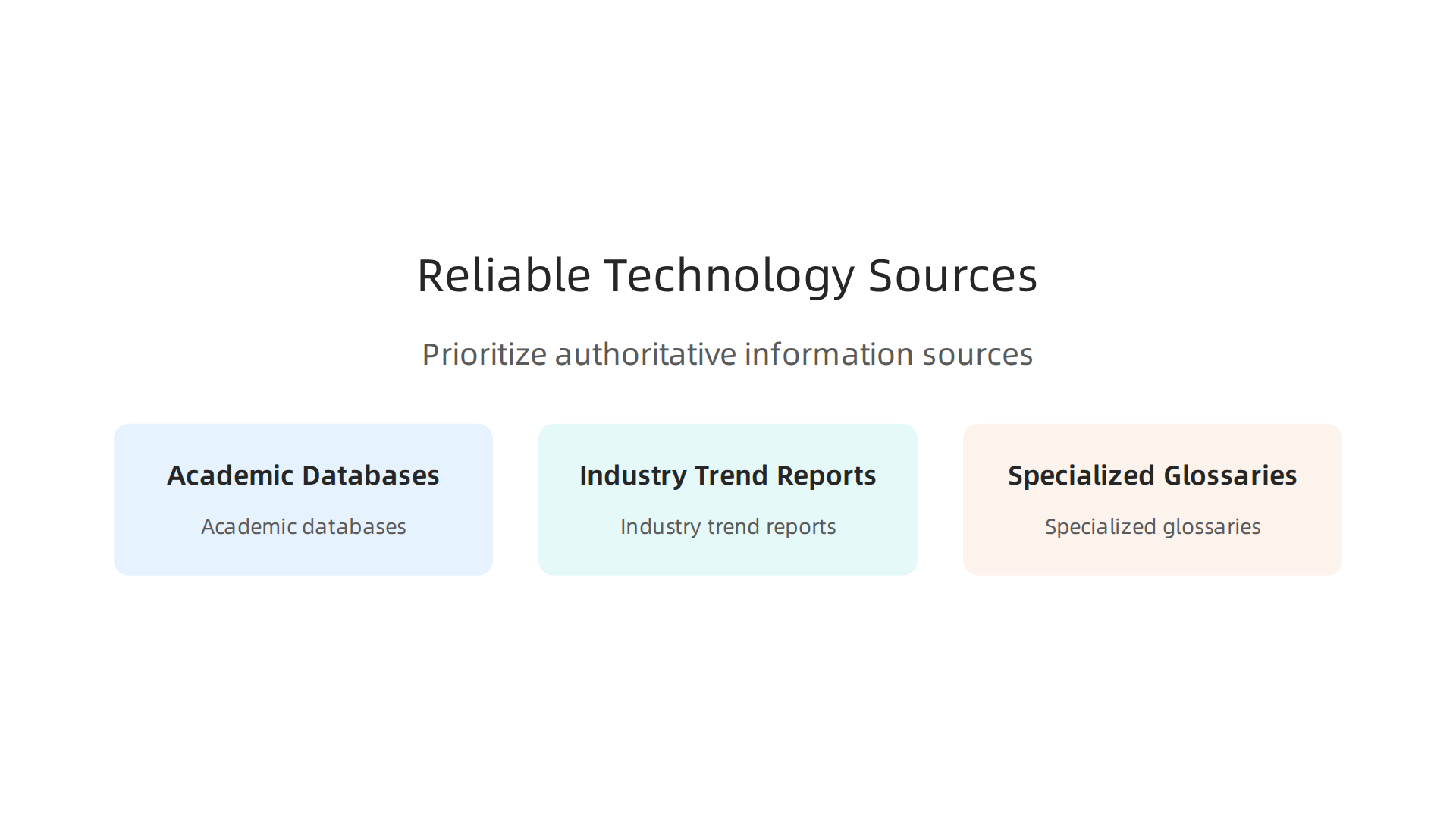
You need to prioritize authority. Here is where the real signal lives.
Look at the Sources the Experts Use
Academic databases are your best friend. When scientists publish research, they must define their terms with extreme precision. For example, a 2026 study in Frontiers in Virtual Reality carefully defines the entire family of "extended reality" synonyms including virtual reality and augmented reality. That kind of clarity is hard to find on a random blog.
Industry trend reports are another goldmine. Major firms like Capgemini release annual guides on top tech trends in 2026.

These documents use specific language that helps you understand exactly what "Agentic AI" means versus "Adaptive AI." They are curated by real experts, not automated bots.
Specialized glossaries also help a ton. When you need to settle a debate about whether "deep learning" and "neural networks" are true synonyms, an expert curated list from a dedicated research organization will give you the definitive answer.
The Sci Fi Fan Shortcut
If you are a sci fi enthusiast like us, finding reliable information on technology synonyms gets even easier. You already hang out in niche communities where people obsess over these details. The trick is knowing which communities to trust.
At Cinema Sci Fi, we connect the dots between technical jargon and the movies you love. Instead of guessing whether "regenerative medicine" means the same thing as "genetic engineering" in a film, you can read our deep dives that explain the real science behind the fiction. Discover how the latest tech trends influence storytelling in our analysis of AI in sci fi filmmaking.
You can also cross reference terms across multiple specialized sources. If one forum says "quantum computing" is a synonym for "supercomputing" but an industry report says they are different fields, the industry report wins every time. Build a habit of checking your sources against the most authoritative one available.
Make Reliable Information a Habit
Finding trustworthy definitions for technology synonyms does not have to feel like homework. You just need to know where to look. Start with academic papers, industry glossaries, and trend reports. Then use specialized platforms that connect those terms to your passion for sci fi.
Ready to stop sorting through questionable definitions and start enjoying the real stories behind the tech? Subscribe for curated reviews, deep dives, and weekly sci fi highlights straight to your inbox.
The Future of Technology Synonyms: Emerging Terms and Trends
We have covered how to find reliable information on technology synonyms. But here is something exciting to think about. The language of tech is not static. It grows every year. And 2026 is a huge year for new words and meanings.
New technologies like quantum computing, neural interfaces, and digital twins are generating fresh synonyms.

You might already know "quantum computing" as a term. But have you heard it called "post-silicon computing" or "qubit-based processing"? Those are newer synonyms popping up in expert circles. The same goes for "digital twins." Some now call them "virtual replicas" or "simulation mirrors." The meaning is the same, but the words keep evolving.
Right now, industry research points to 8 emerging technologies that will define 2026, including self-directed AI agents and adaptive AI. These fields bring their own vocabulary. For example, "agentic AI" is sometimes called "autonomous AI" or "self-directed intelligence." Keeping up with these synonyms helps you understand tech news and conversations better.
Where do these new terms come from? Often, they come from sci-fi. Think about it. "Neural interface" first appeared in books and movies long before real labs started working on brain-computer links. Today, scientists use terms like "brain-machine interface" and "neural lace" almost like synonyms. Sci-fi writers dream up the language first. Then engineers borrow it. That is why our in-depth look at AI in sci-fi filmmaking is so useful. It shows how fictional ideas become real terminology.
Another source is industry trend reports. Major firms like Capgemini release annual guides that define new tech trends for the year ahead. These reports introduce phrases like "adaptive AI" and "zero trust security" into everyday business talk. If you follow these trends, you will hear those synonyms more and more at work or in the news.
How can you stay ahead? Start paying attention to the words used in specialized blogs, academic papers, and sci-fi stories. When you watch a movie like The Creator or read a novel about digital consciousness, note the terms they use. Then look up the real science behind them. That habit will prepare you for upcoming media and conversations.
Ready to explore a whole universe where tech terms come to life? Read Book 1 of the Ridiculous series, a sci-fi comedy that plays with these very ideas. It is a great way to see how tomorrow’s language can be fun today.
Summary
This article explains how many everyday tech words began in science fiction and why understanding those technology synonyms improves your enjoyment and analysis of sci‑fi. It defines what technology synonyms are, traces origins for terms like "robot," "cyberspace," and "metaverse," and shows how language moved from novels and plays into engineering and business jargon. The piece groups synonyms by domain—AI, computing, biotech, and space—so you can build a mental taxonomy that makes searching and discussing tech easier. It also gives practical guidance on finding trustworthy definitions using academic papers, industry reports, and curated glossaries, and warns about common fan mistakes when authors mix terms. Finally, it looks ahead at emerging terms (agentic AI, neural interfaces, digital twins) and shows how sci‑fi and industry reports keep inventing new vocabulary. After reading, you’ll be able to identify true synonyms, pick the right sources, and use terms confidently in fan discussions and reviews.