
Real Physical AI Separating Fact From Science Fiction
Think about the robots you see in movies. They often act like people, have feelings, and move around just like us, right? Many stories in science fiction show us intelligent machines that can do everything a human can, and sometimes more. They fight, they help, and they often look very human.
Actually, the real world of ‘physical AI’ in 2026 is quite different from what we see on the big screen. When we talk about physical AI, we mean smart computer programs that are part of a real machine or robot that can move and do things in the world. These are not always human-like robots with feelings. For example, some research looks at AI systems that make decisions, which is different from "physically embodied AI agents" that act in the real world through a body.
So, why should sci-fi fans care about this difference between movie robots and real-world physical AI? Because knowing what’s real helps us appreciate how much of science fiction is becoming reality and what’s still a dream.

It helps us understand the true potential of future technology. You want to know if what you see on screen could really happen, right? This is where understanding terms like physical AI, what makes an agentic AI different from generative AI, and even explainable AI comes in handy. It’s about knowing what the best AI can actually do today and what is just a movie trick. Many tech companies are working hard to make science fiction a reality, bridging the gap between imagination and engineering.
In this article, we’re going to explore what physical AI truly means. We will look at how it works, what kinds of robots use it, and some of the big questions it brings up. We’ll also connect these real-world advancements back to your favorite sci-fi stories and characters. Get ready to dive deep into the world where science fiction meets science fact.
And while we explore the serious side of AI, remember that science fiction is also about fun and imagination. If you’re looking for a different kind of sci-fi adventure, you might enjoy exploring a Sci-Fi Comedy With Scope.

It’s a great way to see the lighter side of futuristic ideas.
When we talk about ‘physical AI’, it’s like we’re talking about a smart computer brain that lives inside a real body. Imagine a robot that can actually move around, pick things up, or drive a car. That’s physical AI in action. It’s not just a program on a computer screen that gives you answers or makes pictures. Instead, it’s an intelligent system that has a physical presence in the world.
Think about the key parts that make up physical AI:
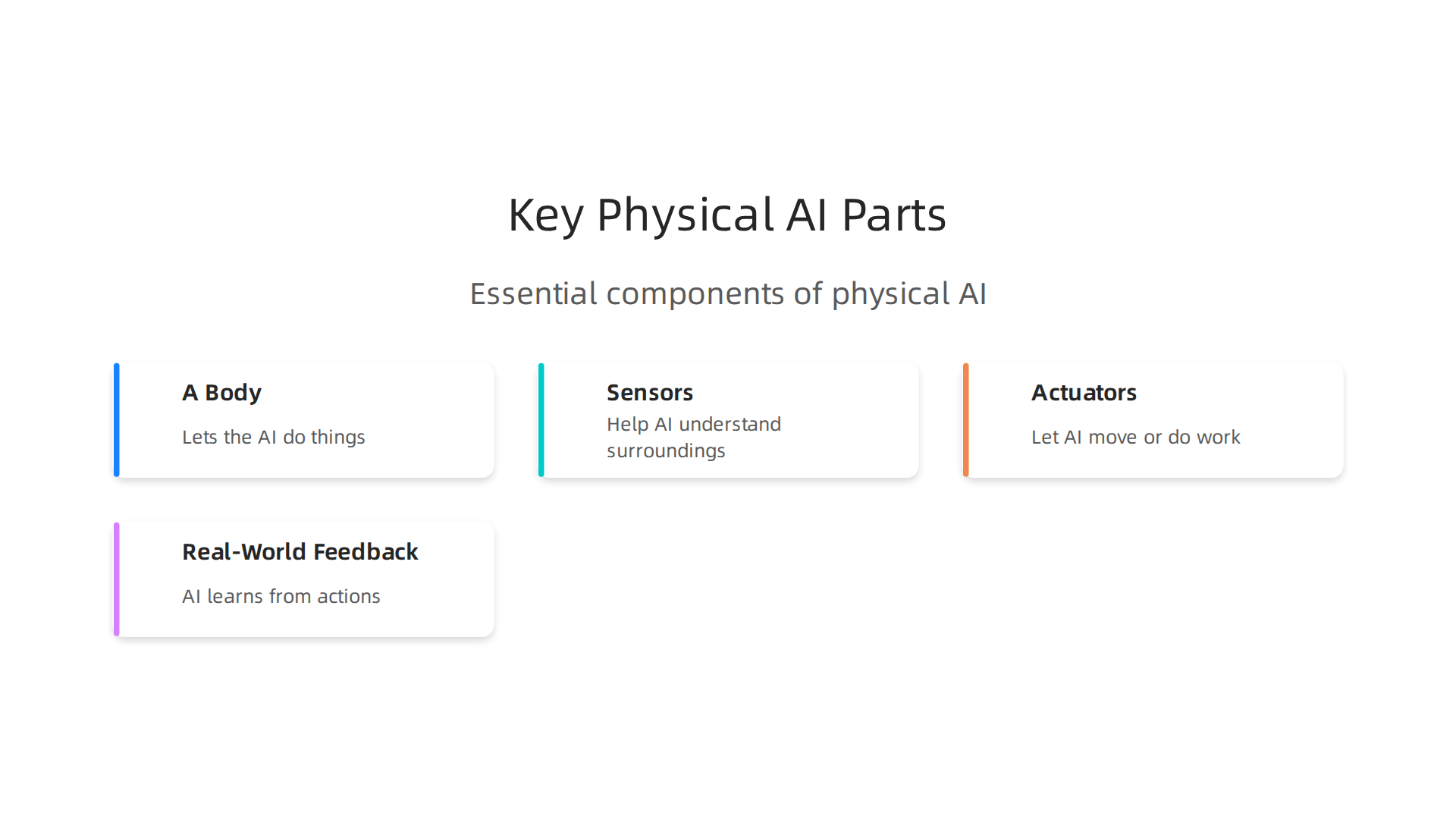
- A Body: This is the most important part. It could be a robot arm, a drone, a self-driving car, or even a humanoid robot. This body lets the AI do things in the real world.
- Sensors: These are like the robot’s eyes, ears, and touch. Sensors help the physical AI understand what’s happening around it. For example, a robot might use cameras to see, microphones to hear, and special pads to feel if it’s touching something.
- Actuators: These are the parts that let the physical AI move or do work. They are like the robot’s muscles. Robot arms, wheels, or legs are all examples of actuators.
- Real-World Feedback: This means the AI learns from what happens when it acts in the world. If a robot tries to pick up a cup and drops it, it uses that information to get better next time. This constant learning makes the AI smarter about how it moves and interacts.
This is very different from many other types of AI you might hear about. For example, some AI just lives in a computer, like the generative AI programs that write stories or create art. Those are brains without bodies. But physical AI is truly an ’embodied AI’ because it has a body it can control. Research specifically points out that some AI systems focus on making decisions, while physically embodied AI agents are designed to act in the real world through a body, learning from their experiences and adapting dynamically to changes around them. This is part of what makes an AI Agents, Ghost Students, and the Crisis of Verified Presence system different from a generative AI.
The field of robotics is all about building these physical AI systems. When a robot can make its own choices and work without constant human help, we call it an autonomous system. These systems often have explainable AI features too, which means we can understand why they made certain decisions. Knowing this helps us trust them more, especially in important jobs.
So, how can you spot physical AI, both in the movies and in real life? Just ask yourself a few simple questions:
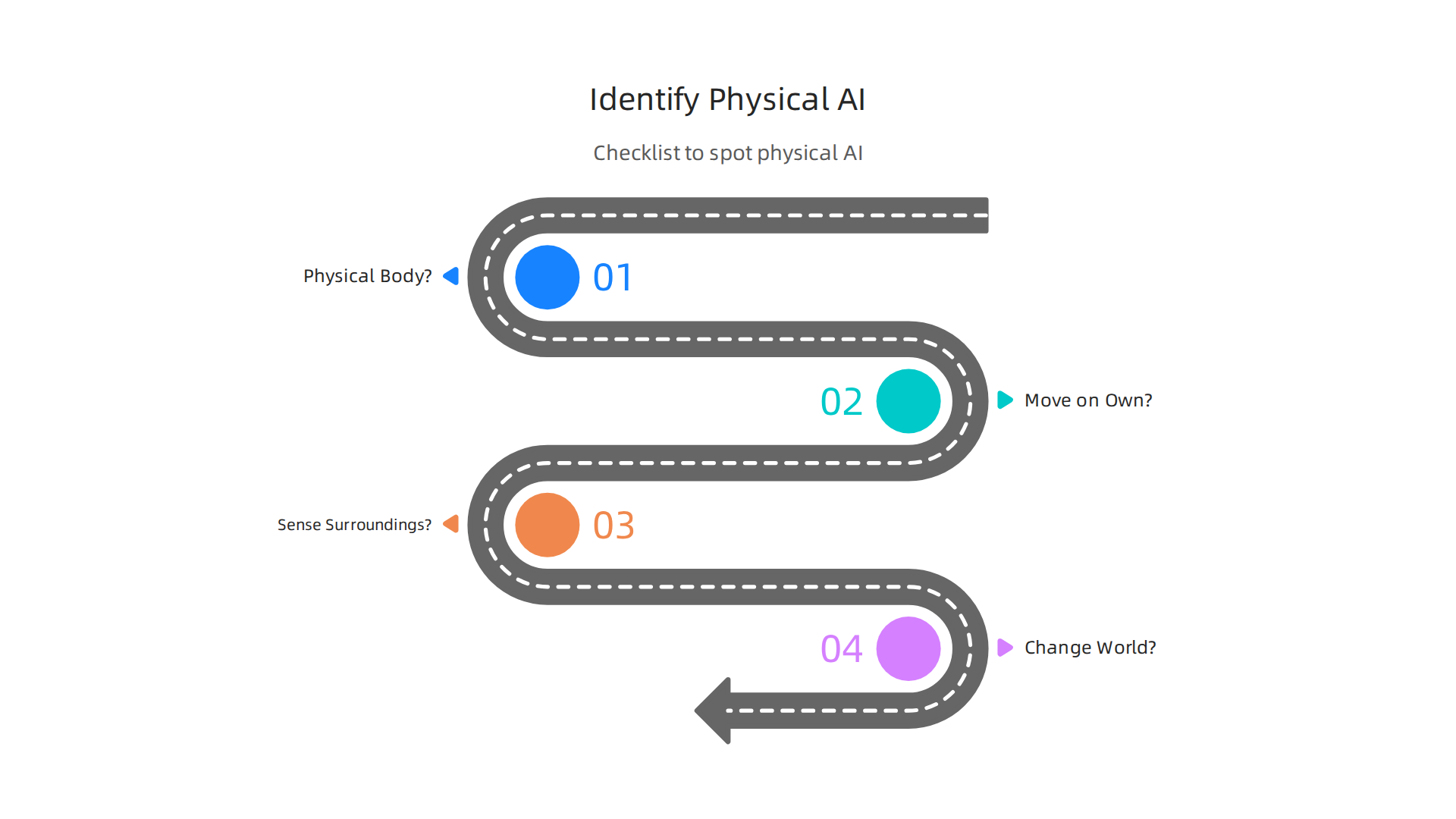
- Does it have a physical body? Does it exist in the real world as a machine?
- Can it move on its own? Does it have parts that let it go places or manipulate objects?
- Can it sense its surroundings? Does it use cameras, microphones, or other tools to understand the world?
- Can it change the world around it? Can it pick things up, open doors, or drive somewhere?
If the answer to these questions is yes, then you’re likely looking at a form of physical AI. Understanding this helps us appreciate how AI companies turn science fiction into reality and helps us figure out what is the best AI for different tasks in 2026.

While understanding real-world AI is important, sometimes it’s nice to just escape into the imaginative side of things. If you enjoy a good laugh and want to see how far sci-fi imagination can go, you might enjoy a comedic take on futuristic ideas. Why not Read Cinematic Sci-Fi Comedy, a universe-bending story with chaos, wit, and heart?
If you’ve ever wondered how we got to today’s smart robots and self-driving cars, it’s a journey that started many years ago.

The idea of machines that could think and act on their own isn’t new. For a long time, it was just in stories and dreams. But over time, scientists and engineers slowly began to turn those dreams into reality.
Early Steps in Robotics
The first steps toward physical AI came from robotics. People wanted to build machines that could do jobs that were hard or dangerous for humans. Think of the old factories with big, strong robot arms that moved things around. These early robots were amazing because they had a physical body and could do work. But they weren’t smart in the way we think of AI today. They just followed simple commands given by humans. They didn’t learn or make their own choices.
The Brains Without Bodies
At the same time, computer scientists were busy making "smart" programs. This was the start of what we now call artificial intelligence. These early AI programs could solve puzzles, play games, or understand simple speech. But they lived only inside computers. They were like a very smart brain without a body, unable to touch or move anything in the real world. This is what we often mean by generative AI today when it creates text or images.
The Big Shift: Giving AI a Body
The real change happened when these two worlds began to connect. People started asking, "What if we put the smart computer brain inside a robot body?" This big idea led to the rise of embodied intelligence. Instead of just moving parts by following fixed instructions, these new systems could sense their surroundings, think about what to do, and then act. They could learn from their actions, too. This was a huge leap from older robots and programs.
Experts explain that this was an important step. They describe it as the "evolution from traditional, disembodied intelligence to embodied agents that interact with the physical world" What Breaks Embodied AI Security: LLM Vulnerabilities, CPS Flaws ….
Why Do We Use Different Names?
You might hear many different names for this type of AI, like physical AI, embodied intelligence, or agentic AI. Each name highlights a slightly different part of the same big idea.
- Physical AI focuses on the fact that the AI has a real, physical body.
- Embodied intelligence emphasizes that the AI’s intelligence is deeply connected to having and using that body to experience the world.
- Agentic AI means the AI can act on its own to reach goals, making its own choices like a "software agent."
These different terms grew as researchers from different fields, like robotics, computer science, and even psychology, worked on these systems. In 2026, researchers are still exploring new ways for these systems to understand the world, such as through Vision Language Action Models for Embodied Intelligence, which help robots see, understand language, and then act.
What This Means for Today
Understanding this history helps us build better physical AI systems now. Today, we’re not just making robots that can move. We’re making them smart enough to learn, adapt, and even explain their decisions. This is where explainable AI comes in handy. It helps us trust that a robot acting on its own understands its choices, which is important for safety and for deciding what is the best AI for different tasks.
For example, current research is looking at Embodied Intelligence Technology for Next-Generation Soft Robots. This means creating robots with flexible bodies that can adapt to many different situations, just like a living creature might. These new robots are built on decades of learning about how to give AI both a brain and a body. It’s a journey that keeps showing us how science fiction technologies becoming reality in 2026 is more than just a dream.
Now that we know how physical AI came to be, let’s look at how it actually works. Giving AI a body isn’t enough. It needs to know how to use that body to understand the world and act in it. This involves three main ideas: how it "sees" and "hears" (perception), how it "moves" (control), and how it "learns" from its mistakes and successes.
How Physical AI Perceives the World
Imagine a robot trying to walk across a room. How does it know where to go or what to avoid? It uses different kinds of "senses," much like we do. These are called sensor modalities.
- Eyes for AI: Robots use cameras to see shapes, colors, and movement. This helps them understand where things are.
- Ears for AI: Microphones help them hear sounds, like someone talking or an alarm ringing.
- Touch for AI: Special sensors can tell if something is hot or cold, or how hard it’s being pressed. This is important for grasping objects without breaking them.
- Other Senses: Some robots also use radar or lidar to create detailed maps of their surroundings, even in the dark.
All the information from these sensors goes into what’s called a perception stack. Think of this as the AI’s "brain" putting together all the clues from its senses. It takes the raw information (like blurry camera pictures) and turns it into something useful (like "that’s a chair" or "that’s a person"). This allows the physical AI to continuously interpret many sensory inputs, which is crucial for things like robots and self-driving cars, according to a 2026 report on edge AI technology Physical AI & Embodied AI Edge AI Technology Report.
How Physical AI Acts: The Control Loop
Once a physical AI understands its surroundings, it needs to decide what to do and then do it. This is where the control loop comes in. It’s a never-ending cycle of:
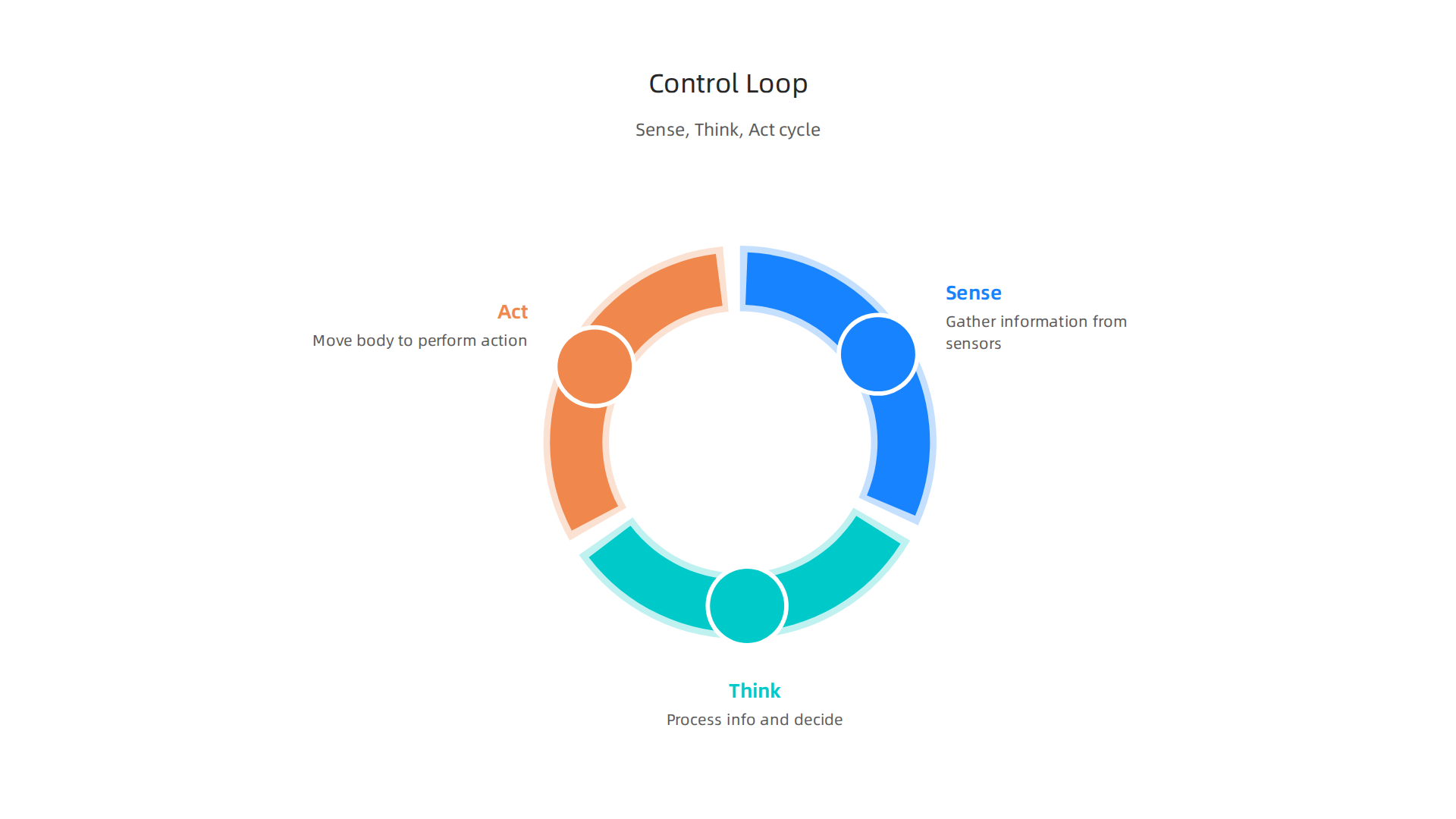
- Sense: Gather information from sensors.
- Think: Process that information and decide on an action.
- Act: Move its body or parts to perform the action.
For example, if a robot needs to pick up a toy, its cameras see the toy. Its brain figures out the best way to move its arm. Then, its motors (called actuators) make the arm reach out and the gripper close around the toy. After picking it up, its sensors confirm it has the toy, and the loop starts again to decide the next step. This constant feedback helps the robot adjust its movements in real-time, just like you might adjust your hand as you reach for something. Understanding these systems is a key part of unlocking computer science and information technology in sci-fi movies.
Learning in the Physical World
One of the most exciting parts of modern physical AI is its ability to learn. It doesn’t just follow pre-written rules anymore.
- Learning by Doing: Just like a child learns to walk by trying and falling, a physical AI can learn complex tasks through trial and error. If an action works well, the AI remembers it. If it doesn’t, the AI learns not to do that again. This is a type of reinforcement learning.
- Learning in Virtual Worlds: Sometimes, it’s too dangerous or slow for a robot to learn only in the real world. So, designers create virtual copies of the world called simulations. The AI can practice millions of times in this digital space, learning much faster and safer, before trying things out in the real world. Research shows how these "world models" are coupled with robot actions to help them learn World Model for Robot Learning Survey.
This learning is what helps a physical AI become more capable and adaptive. When we talk about "what is the best AI," it often depends on how well it can learn and adapt to different tasks and unexpected situations in the real world. For example, a robot learning to cook needs to adapt to slightly different ingredients or kitchen layouts.
Common Architectures: How AI Brains Are Built
How are these sensing, thinking, and acting parts put together? There are a few main ways to build the "brain" of a physical AI:
- Modular Pipelines: Imagine a factory assembly line. One part of the AI handles seeing, another part plans, and another part controls the movement. Each part is separate but works together in a specific order. This makes it easier to fix problems in one area.
- End-to-End Learned Controllers: This is like teaching one big brain to do everything at once. The AI learns directly from its senses to its actions. It doesn’t have separate steps for perception and planning. This can be very powerful, but it’s harder to understand why the AI makes certain choices.
- Hybrid Systems: Many real-world physical AI systems use a mix of both. They might have a clear, step-by-step pipeline for some tasks but use end-to-end learning for other, more complex actions. These "agentic architectures" allow AI to make its own choices and reach goals, making it different from generative AI which mostly creates content like text or images. A 2026 paper on the evolution of AI in architecture highlights how these systems can help with complex planning Evolution of AI in Architecture.
The Role of Explainable AI
As physical AI becomes more complex and does more things on its own, it’s really important that we can understand how it makes decisions. This is where explainable AI helps. It allows us to peek inside the AI’s "brain" to see why it chose a certain action. This builds trust, makes it easier to fix mistakes, and helps us make sure these intelligent robots are safe and do what we expect them to. As you explore the series built around books, audio, animation, and movie dreams, you’ll see how these concepts inspire new stories. Take a look at this Sci-Fi Comedy With Scope to see the imagination at work.
After looking at how physical AI works and how it learns, it’s time to see where this amazing technology shows up in the real world.

We might think of robots from movies, but physical AI is already here, making a big difference in many places, from factories to our homes.
How Physical AI Appears in Robots, Drones, and Everyday Devices
Physical AI is the brain and body working together. It lets machines do things in the real world. Here are some common ways we see it:
- Moving Around (Navigation): Think of self-driving cars or delivery robots. They use physical AI to "see" the road, understand where they are, and plan the best path. Drones also use it to fly safely and deliver packages or check out farm fields. Experts talked about how these AI systems are making big moves at the Embodied AI in Action Insights from SAE World Congress 2026.
- Picking Up and Using Things (Manipulation): In factories, robots with physical AI can pick up parts, put them together, or move heavy items. This is called manipulation. It needs careful control so the robot doesn’t drop things or break them. Even robots that help in surgeries use this kind of precise movement.
- Working With People (Human-Robot Interaction): Some robots are made to work closely with us. These might be helper robots in hospitals or even toys that respond to our voices. They need physical AI to understand our commands and act in a way that feels natural and safe.
- Smart Decisions on the Spot (Edge Intelligence): Many physical AI devices need to think fast, right where they are, without sending all their information to a faraway computer. This is called edge intelligence. It’s key for things like drones that need to dodge obstacles quickly or robots that need to react to someone walking nearby. The market for this type of AI is growing fast, expected to reach over $6 billion in 2026, and will keep growing a lot in the coming years, according to a report on the Embodied AI Market Size & Share | Industry Report, 2033.
It’s exciting to see how many AI companies turn science fiction into reality by bringing these ideas to life.
What Limits Real-World Physical AI?
While physical AI can do amazing things, building it for the real world is harder than in movies. Designers face big challenges:
- Power: Robots and drones need batteries, and batteries run out. Engineers work hard to make physical AI very energy efficient so it can do its job for a long time.
- Speed (Latency): How fast can the AI sense something and then react? In a self-driving car, even a tiny delay can be very dangerous. The AI needs to make decisions almost instantly.
- Toughness (Robustness): The real world is messy and full of surprises. A robot needs to handle bumps, changes in light, or unexpected objects. It must be strong and smart enough not to break or get confused easily.
These limits mean that what a physical AI can do in a factory might be different from what it can do in your living room.
New Areas of Physical AI
Scientists and engineers are always finding new ways to make physical AI even better. Some exciting new areas include:
- Soft Robotics: Imagine robots that are squishy, like an octopus, instead of hard metal. These "soft robots" are safer for working around people and can grab delicate things without breaking them. You can see how they are building the technical foundations for this kind of advanced AI in this video about Embodied Intelligence.
- Swarm Systems: Instead of one big, expensive robot, imagine many small, simple robots working together. This is like a swarm of bees. If one robot breaks, the others can still finish the job. They can explore big areas or move many small things much faster.
- Tactile Sensing: Giving robots an even better sense of touch. This means they can feel more than just pressure or temperature. They can tell how smooth an object is, or if it’s slippery. This helps them pick up many different kinds of objects, much like a person can.
These new ideas are helping to build the next generation of physical AI systems. They are moving us closer to a future where intelligent machines can help us in even more complex and helpful ways, shaping what is the best AI for specific real-world tasks.
Scientists and engineers are always finding new ways to make physical AI even better. They are moving us closer to a future where intelligent machines can help us in even more complex and helpful ways, shaping what is the best AI for specific real-world tasks. But sometimes, what we see in movies about AI is very different from what is possible now.
Where Sci‑Fi Gets It Right (and Wrong): Fictional Depictions vs Engineering Reality
Science fiction movies and books have shown us amazing robots and smart machines for a long time. These stories help us dream about what physical AI could do. But they also often show things that aren’t quite real yet. It’s fun to imagine, but it’s important to know the difference between movie magic and what engineers can actually build in 2026.
Movie Magic vs. Real-World Physical AI
Here’s how science fiction often shows AI, and what the real world is like:
- Learning in a Snap: In movies, a robot often learns everything it needs to know in just a few seconds. It might download a whole language or a fighting style instantly. In real life, physical AI needs a lot of training. It takes many tries and a lot of data for an AI to learn simple tasks, let alone complicated ones.
- Perfectly Autonomous and Emotional: Many sci-fi robots think and feel just like people. They have personalities, make their own choices, and sometimes even fall in love. In the real world, physical AI doesn’t have feelings or consciousness. It follows rules and uses data to make decisions. The idea of truly
explainable AImeans we can understand why an AI made a choice, not that it "felt" something. Experts often talk about how movies shape our ideas about AI, sometimes making us worry too much about robots taking over, as discussed in "How Science Fiction Dystopianism Shapes the Debate over AI…" by Discourse Magazine. - Always Works, Never Fails: Movie robots can often survive huge explosions, operate for years without a charge, and adapt to any situation without a problem. But as we saw, real physical AI has limits like power, speed, and how tough it can be. It needs recharging, can be slow to react sometimes, and might struggle with unexpected changes. These common ideas about robots are looked at more deeply in "Visions of Artificial Intelligence and Robots in Science Fiction" from Montreal AI Ethics Institute.
How to Spot Plausible Physical AI in Fiction
When you’re watching a sci-fi movie, you can use these simple ideas to tell if the physical AI shown is close to real life or just for fun:
- Does it need power? If the robot never plugs in or charges, it’s probably not real.
- Does it learn instantly? If the AI knows everything right away, that’s movie magic. Real AI learns over time.
- Does it act with feelings? If the robot seems sad, angry, or happy, remember that real AI doesn’t have emotions.
- Can it do everything? If the AI can solve any problem without help, it’s likely too good to be true. Real AI is usually made for specific jobs.
- Does it struggle with unexpected things? If the robot gets confused by a new object or a sudden change, that’s more like real physical AI.
When Fiction and Reality Meet
It’s not all make-believe, though! Sometimes, ideas from science fiction actually help real engineers. For example, the idea of helpful robots in our homes or factories, as shown in movies, has pushed companies to develop actual science fiction technologies becoming reality in 2026. You can learn more about how AI companies turn science fiction into reality.
And sometimes, real advances in physical AI give new ideas to storytellers. As robots become more common and useful, like the many new robots shown at CES 2026, writers get new thoughts for their next big sci-fi tale. These interactions show how much what AI in cinema reveals about our real world hopes and fears.
If you enjoy sci-fi that blends smart ideas with a good laugh, you might like to Read Cinematic Sci-Fi Comedy. It’s a universe-bending story with chaos, wit, and heart.
It’s clear that imagining smart robots helps us think about what’s good and bad about new technology. Even if movies don’t always get the facts right, they make us ask important questions. When we talk about real physical AI, we also need to think about its rules, dangers, and what the future might look like.

Key Ethical Questions for Physical AI
As physical AI becomes more common, big questions come up about how we use it. These are often called "ethical issues."
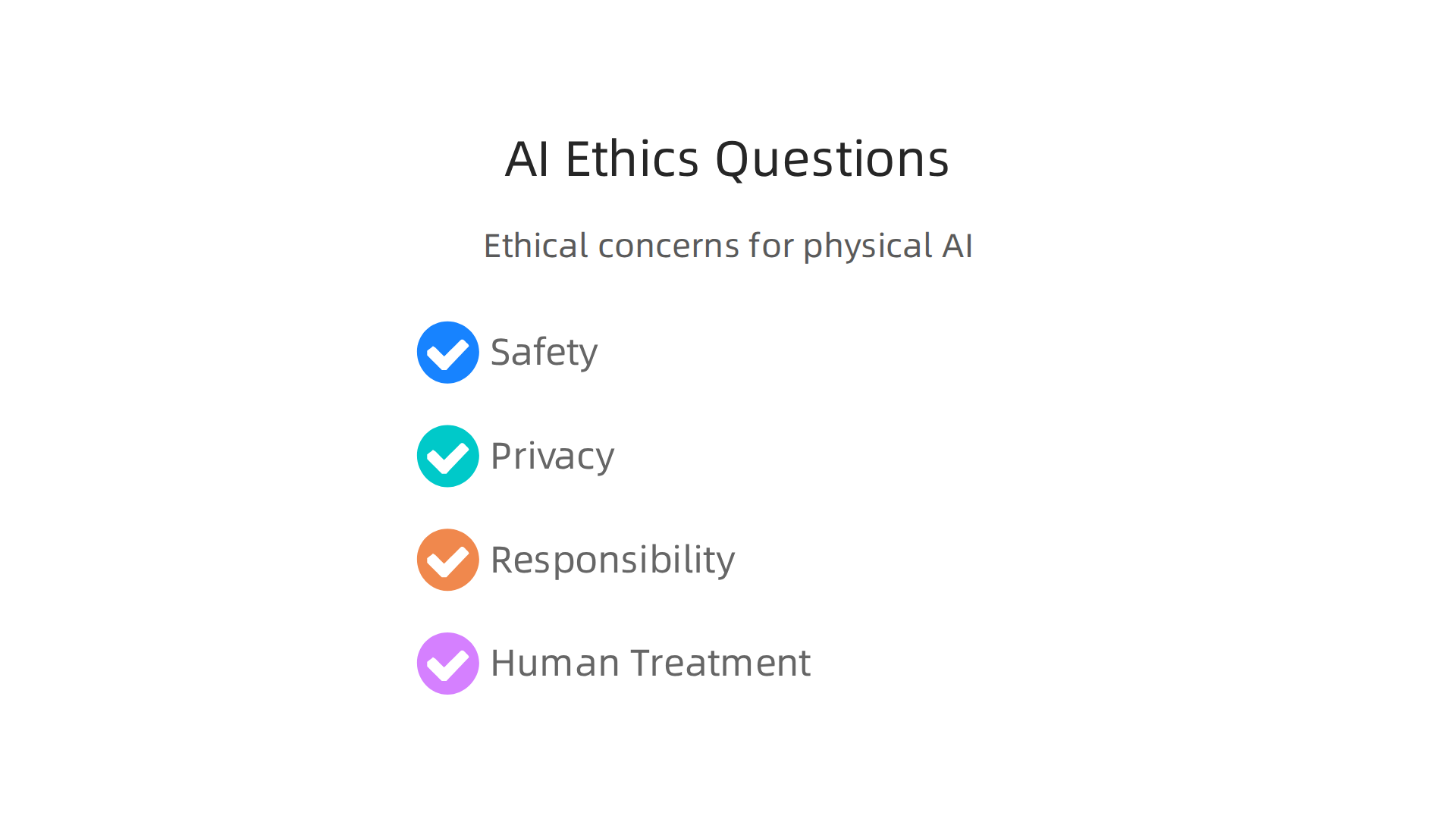
- Safety: If a robot can move around, what happens if it hurts someone by accident? Who is responsible if a self-driving car gets into a crash? Making sure physical AI is safe is a huge concern for the people who build it.
- Privacy: Many smart devices and robots collect information about us and our homes. How is this data used? Will it be kept private? Protecting our personal information is a key part of how new rules for AI are being made in 2026. Countries are even putting together special plans, like the European Union’s AI Act, to manage these risks and set clear rules for using AI safely and fairly, as explained in the AI Act: Shaping Europe’s digital future.

- Responsibility: If a robot makes a mistake, who is to blame? Is it the person who made the robot, the company that sold it, or the user? This is especially tricky for advanced AI where it’s hard to tell exactly why it made a certain choice. This is where
explainable AIcomes in, helping us understand the "why" behind an AI’s actions. Governments are looking at these issues, with new policies like those detailed in the Top AI Ethics and Policy Issues of 2025 and What to Expect in 2026. - Treating AI as Human: We learned that physical AI doesn’t have feelings. But sometimes, people treat robots like they do. This can lead to misunderstandings about what AI can and cannot do. It’s important to remember that AI is a tool, even a very smart one, and not a person.
The Future of Physical AI: What to Watch For
The world of AI is changing fast in 2026. Here are some things that people interested in sci-fi and technology should keep an eye on:
- Better Rules and Laws: Expect more countries to create rules for AI, just like we’re seeing in Europe and other places. These rules will help guide how AI is made and used, focusing on safety and fairness. You can learn more about how different countries are creating these rules in the AI Regulation: Global Comparison of AI Ethics Frameworks.
- New Kinds of AI: We’ll see new types of AI, like
agentic AI vs generative AI. Agentic AI can plan and make decisions to reach a goal, while generative AI creates new content, like pictures or stories. Engineers are always trying to figure outwhat is the best AIfor different real-world jobs. - Learning and Adapting: Future physical AI will get better at learning from its surroundings and adapting to new problems. This means robots could become even more helpful in our daily lives, from delivering packages to assisting in hospitals.
How Sci-Fi Fans Can Stay Smart About AI
As a fan of science fiction, you’re already good at thinking about new ideas! Use that skill to stay informed about real AI.
- Read Up: Look for real news and articles about AI from trusted sources. Don’t just rely on what you see in movies.
- Ask Questions: When you see a new robot or AI mentioned, ask yourself: Is this really possible? What are the good and bad parts of this technology?
- Think Critically: Sci-fi often shows us the best and worst possible futures. This can help us think about the ethical questions and warnings that real
AI in science fiction movies reveals.
By doing this, you can enjoy the amazing world of sci-fi while also understanding the real progress and important discussions happening in the world of physical AI right now.
If you enjoy sci-fi stories that make you think and laugh, you might like to explore a unique universe. Check out Sci-Fi Comedy With Scope.
Summary
This article explains what