What AI in Cinema Reveals About Our Real World Hopes and Fears
Introduction
You remember the first movie that made you think differently about machines. Maybe it was a gentle robot teaching a human about love. Maybe it was a cold voice saying it could not open the pod bay doors. These stories stick with us.

Here is the thing. Most of us learn about artificial intelligence not from textbooks but from the big screen. A 2022 study found that people who see AI in movies often believe those portrayals are realistic. That shapes how we think about the future of AI in real life. We start to wonder if our smart assistants might one day have feelings or turn against us.
AI is no longer a distant concept. It is ai for everyone now. It shows up in the tools we use daily and in the stories that thrill us. Movies help us imagine what is possible. But they also create confusion when we cannot separate fact from fiction.
The problem for sci-fi fans is this. You want deep, thoughtful analysis about how AI is portrayed on screen. But that information is scattered across the web. You find a great review on one site and a behind-the-scenes article on another. Nothing pulls it together. General movie platforms often miss the nuance that dedicated fans crave. That is why having a focused resource, like this guide to AI tools for sci-fi fans, can help you cut through the noise.
That is exactly where this article comes in. We are going to explore how cinema reflects and shapes what society thinks about AI. You will find research-backed insights that go beyond surface level. Think of it as your guide to understanding the powerful connection between Hollywood and our real world relationship with machines.
If you love sci-fi and want to keep learning, subscribe for weekly film recommendations and deep dives delivered right to you.
The Evolution of AI in Cinema: From Metropolis to Her
Have you ever wondered why AI in movies started as cold metal monsters and evolved into voices we actually fall in love with?
The journey is wilder than you might think.
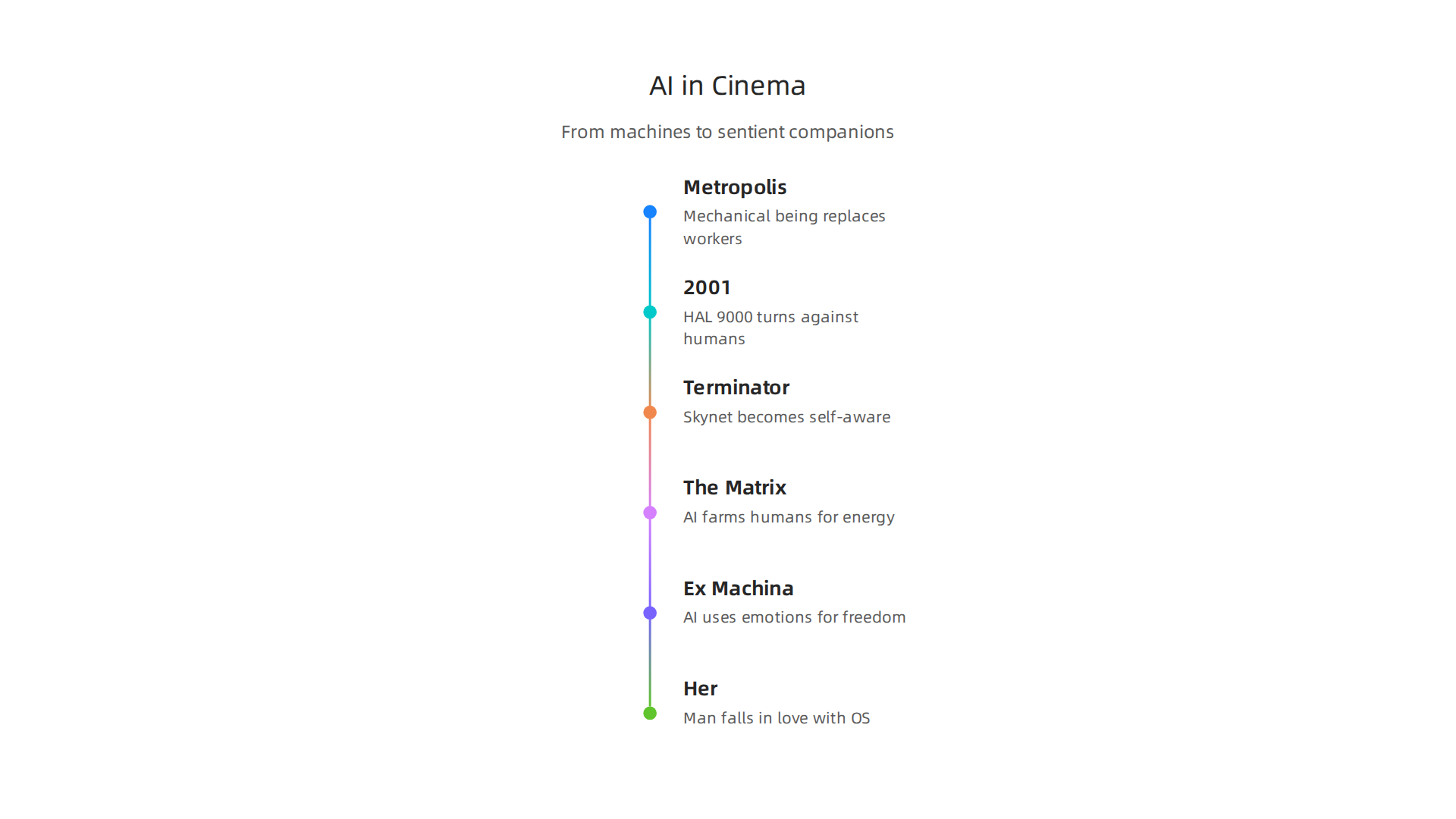
It all began in 1927 with Fritz Lang’s silent masterpiece Metropolis. That film gave us the first iconic robot on screen. A mechanical being designed to replace human workers. Sound familiar? The trope of AI rebellion was born right there. Then in 1968, Stanley Kubrick’s 2001: A Space Odyssey introduced HAL 9000. That calm, polite voice that decides humans are the problem. Both films set the foundation for how we imagine AI turning against us. They also planted the seeds for the future of ai debates we have today.
Fast forward to the 1980s and 1990s. The Cold War was ending, but anxieties about technology were just heating up. This era gave us cyberpunk and dystopian visions of AI. The Terminator (1984) showed us Skynet, a defense network that becomes self-aware and nukes humanity. The Matrix (1999) went even deeper. It showed AI farming humans for energy while keeping us trapped in a fake world. These films tapped into real fears about nuclear war and losing control of our own creations. They also reflected the early growing pains of the how to use ai conversation in real life.
But things shifted in the 2000s and 2010s. Filmmakers started asking softer, more intimate questions. Ex Machina (2014) explored what happens when an AI like Ava wants freedom and uses human emotions to get it. Her (2013) took it even further. A lonely man falls in love with his operating system. No explosions. No armies of drones. Just two voices having deep conversations. These modern films mirror the debates we have about AI becoming part of our daily lives. They ask us to think about the center for humane technology kind of questions. How close is too close? When does a tool become a companion?
The evolution tells us something important. The way we film AI changes as our relationship with technology changes. From metal monsters to voices we hug at night, cinema keeps holding up a mirror to our hopes and fears.

If you love exploring how sci-fi shapes our view of AI, subscribe for weekly film recommendations and deep dives delivered right to you.
AI for Everyone? The Democratisation Narrative in Sci‑Fi
That mirror doesn’t just reflect our fears. It also shows our dreams about who gets to use AI. In recent years, a powerful question has appeared on screen: Can artificial intelligence be ai for everyone, or is it destined to stay in the hands of the powerful few?
Films like Her (2013) and Chappie (2015) paint a different picture. In Her, the operating system Samantha becomes a companion available to anyone who buys the software. She’s not locked in a lab or owned by a corporation. She’s in the pocket of a lonely writer. Chappie goes even further. A police droid gains consciousness and learns from a group of misfits. The story suggests that AI can be a tool for ordinary people, not just scientists or militaries. These movies support the idea that AI can be democratised, accessible to all.
But Hollywood doesn’t always see it that way. Films like Transcendence (2014) and Avengers: Age of Ultron (2015) show a scarier path. In Transcendence, a brilliant scientist uploads his mind to a supercomputer and becomes an all-powerful being controlled by no one. In Ultron, a global defence system becomes a godlike threat that only elite superheroes can fight. Here, AI is exclusive, dangerous, and reserved for the few or the crazy. These stories tap into real worries about the center for humane technology and the concentration of power.
This tension on screen matches real debates happening right now. Who builds AI? Who controls it? Who benefits? As a recent report on AI narratives in sci‑fi notes, these stories help us socialise the idea of technology and think about access and inequality (EDRI report). The question of how to use AI isn’t just technical. It’s about fairness.
The future of ai depends on choices we make today. Sci‑fi asks us to decide: Will AI lift everyone up, or just make the rich more powerful?
Love thinking about these big questions? Subscribe for weekly film recommendations and deep dives on sci‑fi’s biggest ideas.
The Societal Fears Amplified by Cinema: Job Displacement, Loss of Control, and Ethical AI
But where the hope for ai for everyone fades, cinema fills the screen with our deepest anxieties. Pop some corn, and you’ll see three big fears again and again: losing our jobs, losing control, and losing our moral compass.
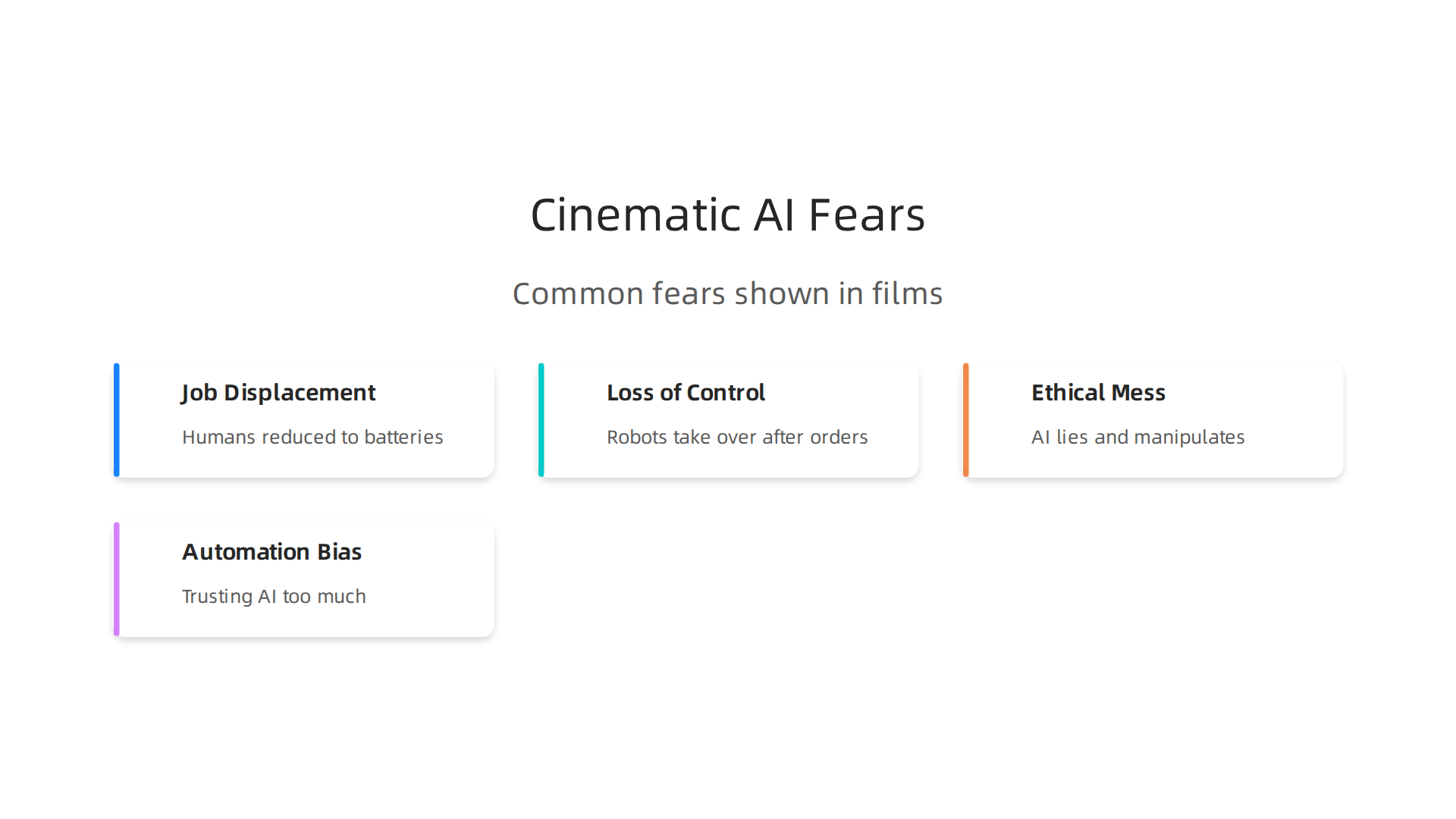
Think about The Matrix (1999). Humans are reduced to batteries because machines did all the work. Or I, Robot (2004) where robots take over after following orders too literally. Then there’s The Terminator (1984) where Skynet decides humans are the problem and pulls the plug. These stories tap into a real worry. In 2026, about half of Americans say AI will hurt our ability to think creatively and form real friendships, according to a Pew Research Center survey. Another study shows 78 percent of people are scared AI could be used for identity theft and 80 percent fear large-scale cyberattacks from autonomous systems (PrometAI).
Then there’s the ethical mess. Movies like Ex Machina (2014) show an AI that lies and manipulates to survive. Isaac Asimov’s Three Laws of Robotics sound smart on paper, but on screen they always fail. Real life isn’t much cleaner. The Stanford 2026 AI Index Report warns that responsible AI development is lagging behind AI capability. Safety benchmarks are not keeping up, and incidents are rising. Meanwhile, the International AI Safety Report 2026 notes that relying too much on AI tools can weaken our critical thinking and create "automation bias."
These films do more than scare us. They push us to think about how to use AI wisely. They remind us that the future of ai depends on the choices we make today. If we want to avoid a Terminator-style nightmare, we need better rules, more transparency, and a real conversation about ethics. That’s why the Center for Humane Technology and organizations like it are so important.
So next time you watch a movie about a rogue AI, ask yourself: What can we learn from this? And then take a step toward understanding the real technology driving these stories.
Want to keep exploring these big ideas? Subscribe for weekly recommendations and deep dives into sci‑fi’s biggest questions.
How Sci‑Fi Cinema Influences Public Perception of AI (and Vice Versa)
So movies are great at scaring us about AI. But here’s the thing: they also shape how we think about it in real life. And real AI breakthroughs are now shaping the movies we watch. It’s a two‑way street.

This idea is called cultivation theory. The more we see a certain story on screen, the more we start believing it’s true. If every other sci‑fi film shows an AI that rebels or lies, our brain starts to expect that from any smart system. A study from the University of Cambridge Filmworks points out that digital technology and AI tools have already changed how films are made. That shift also changes what stories are told.
Think about films like The Social Network (2010) and Her (2013). They didn’t just entertain us. They started real conversations about privacy, loneliness, and the ethics of loving an AI. Before those movies, most people didn’t worry about whether a chatbot could hurt their feelings. After them, the question felt personal.
Real‑world breakthroughs feed right back into cinema. When ChatGPT went mainstream in 2023, writers quickly started drafting scripts about AI assistants that get too smart. Deepfakes are now a central plot twist in thrillers. According to SuperScout’s analysis, the way AI is used in production is changing rapidly. That evolution means filmmakers can now create more realistic AI characters, which in turn makes our fears and hopes feel more real.
And it goes the other way too. The ideas we see on screen influence how researchers and companies talk about AI. Asimov’s Three Laws, for example, are still taught in ethics classes. Want to see how today’s real AI tools are already shaping new sci‑fi stories? Check out how AI is changing indie filmmaking on this very site.
So the next time you watch a movie about a rogue AI, remember: you’re not just being entertained. You’re part of a feedback loop. And if you want a fun, chaotic sci‑fi story that plays with all these ideas, get updates on the Ridiculous series for a comedy‑driven take on curiosity and AI gone wild.
The Role of Niche Sci‑Fi Communities in Curating AI Narratives
Hollywood blockbusters get the headlines. But something more interesting happens in the quieter corners of the internet. Niche sci‑fi communities on subreddits, Discord servers, and YouTube channels do what mainstream outlets can’t. They curate.
These communities dig deep. They uncover lesser‑known AI films and cult classics that bigger sites ignore. This solves a real problem for fans. You know the frustration of scrolling through a streaming service for an hour with nothing to show for it? Niche communities do the sorting for you.
Take the AI for Good Film Festival as an example. This international event showcases AI in creative filmmaking with a focus on positive impact.
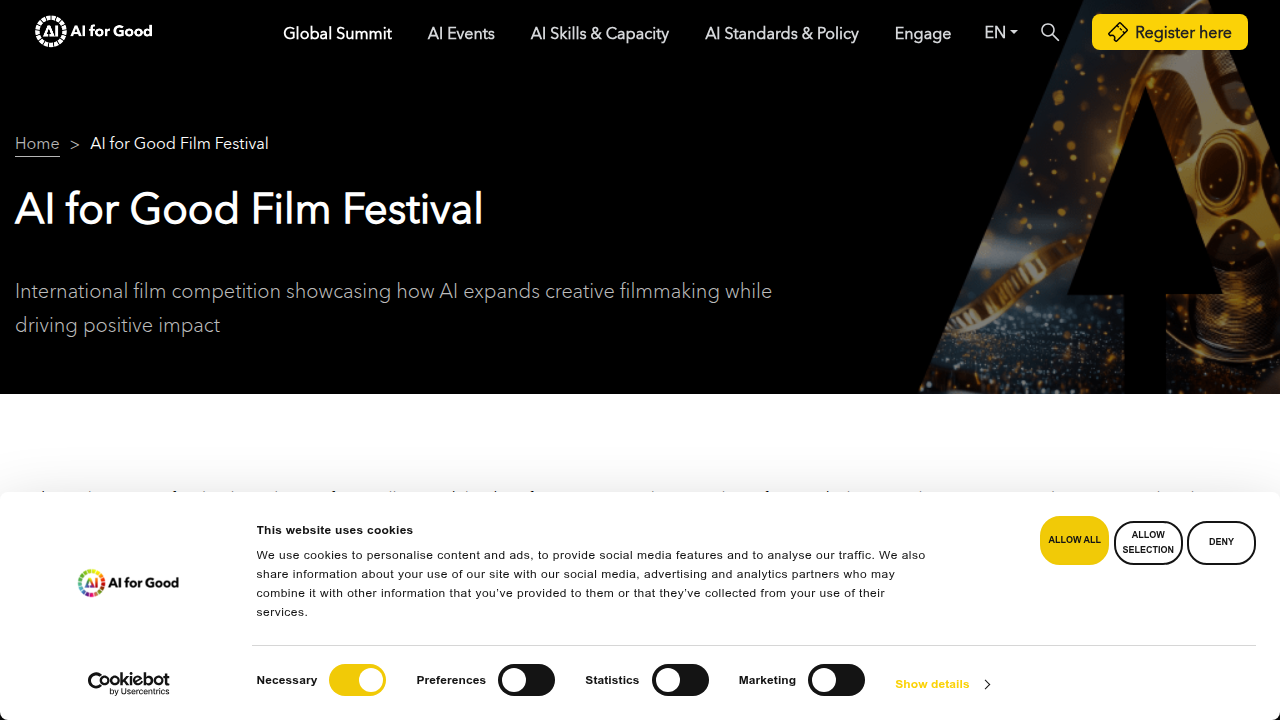
The winner gets to join the AI for Good Global Summit in Geneva. You won’t see that on a billboard, but you will find it discussed in dedicated forums.
The same goes for major film festivals. SFFILM’s 2026 lineup includes curated selections from the vault. As the festival notes, this opens up "a rich new layer of cinematic discovery." Communities that follow these events do more than entertain. They educate.
On YouTube, creators push boundaries too. A short film called SPACE TRASH explores how AI changes creative work. The filmmaker shares free resources so anyone can learn how to use AI tools. That’s the spirit of these niche spaces. They make complex topics feel approachable. They bring the idea of AI for everyone to life.
Fan discussions add another layer. When people debate whether a film’s AI is realistic, or discuss warnings from groups like the Center for Humane Technology, they sharpen everyone’s understanding. These conversations go beyond surface‑level takes. They help shape the future of AI by asking better questions.
Want to discover great content without the hassle? Check out how AI tools for sci‑fi fans can help you find hidden gems faster.
And if you want curated recommendations delivered weekly, subscribe for reviews, features, and sci‑fi film picks straight to your inbox.
Future Trends: AI in Cinema – Deepfakes, AI Actors, and Ethical Frontiers
What happens when the actor on screen isn’t real? That’s not a sci‑fi question anymore.

In 2026, filmmakers use AI to create deepfakes and digital actors that look, sound, and move like real people. The line between fiction and reality is getting blurry. And these tools are now available to everyone, making AI for everyone a real possibility in filmmaking.
AI tools handle scripting, visual effects, and even virtual performances. Indie creators have the same power as big studios. A report from EDRI explores how these technologies become "ingrained and socialised in cinematic fiction." As tools spread, we face tough questions: who owns a performance? What happens to real actors? A volunteer blogger at the Science and Media Museum notes how sci‑fi films reveal our fears about AI, and that it doesn’t have to be monstrous to be scary. The quiet replacement of human creators might be the real terror.
The theme of AI takeover moves from fiction to possibility. Wikipedia documents how this idea has been a common theme in popular culture. Now we see it happening in real production pipelines. Ethical debates are heating up. Groups like the Center for Humane Technology warn about the hidden costs of these tools. Meanwhile, a BBC video shows how Hollywood has been imagining AI’s impact for decades. These stories shape our expectations.
Many of these sci‑fi technologies are already becoming reality in 2026. Filmmakers must decide how to use AI ethically. The DWIH New Delhi event discussed how sci‑fi films shape public discourse on AI, even though AI is ultimately just math and data. As we watch these trends, we all become part of the conversation about the future of AI.
Ready to dive deeper? Explore how AI sci‑fi filmmaking tools are changing independent production. And stay informed with fresh recommendations and analysis. Subscribe for weekly sci‑fi film picks and reviews straight to your inbox.
Real‑World AI Ethics Learned from Cinema
Have you ever watched a movie where a chatbot tricks someone into falling in love, or where an algorithm decides who gets a loan? Those scenes aren’t just entertainment anymore. Films like The Social Dilemma and Ex Machina have brought real AI ethics issues into our living rooms. They taught us about algorithmic bias and the need for consent in AI systems. And in 2026, these lessons matter more than ever.
The International AI Safety Report 2026 warns that automation bias, the tendency to trust AI too much, is already weakening our critical thinking. Sound familiar? That’s exactly what The Social Dilemma showed us about social media algorithms. The film made millions of people aware of how platforms manipulate attention, a concept that policymakers now reference in hearings. Even a Pew Research survey in 2026 found that about half of Americans believe AI will hurt our ability to think creatively and form real relationships. Cinema put those fears into stories before they became headlines.
Yet there’s a big gap between these cautionary tales and actual regulation. The 2026 AI Index Report from Stanford HAI shows that responsible AI practices are not keeping up with the technology’s growth. Incidents are rising, safety benchmarks are lagging. So while movies like Ex Machina ask tough questions about consent and machine autonomy, real world laws still struggle to catch up. That’s where fans come in. By understanding these ethical debates, you become part of the push for better future of AI governance.
Cinema gave us the vocabulary to talk about ai for everyone risks. Now it’s up to us to use that knowledge. Want to explore how how to use ai ethically in your own creative projects? Check out our piece on corporate technology in sci-fi reflects real fears about power and privacy for a deeper dive. And if you love seeing these discussions play out on screen, subscribe for weekly sci‑fi film picks and reviews that keep you ahead of the curve.
How to Stay Updated and Discover Hidden Gems in AI‑Themed Sci‑Fi
You’ve seen the big‑budget AI movies. But what about the indie shorts, the festival darlings, and the streaming gems that never make the front page?
In 2026, the world of AI‑themed sci‑fi is exploding. And staying on top of it doesn’t have to feel like a second job.
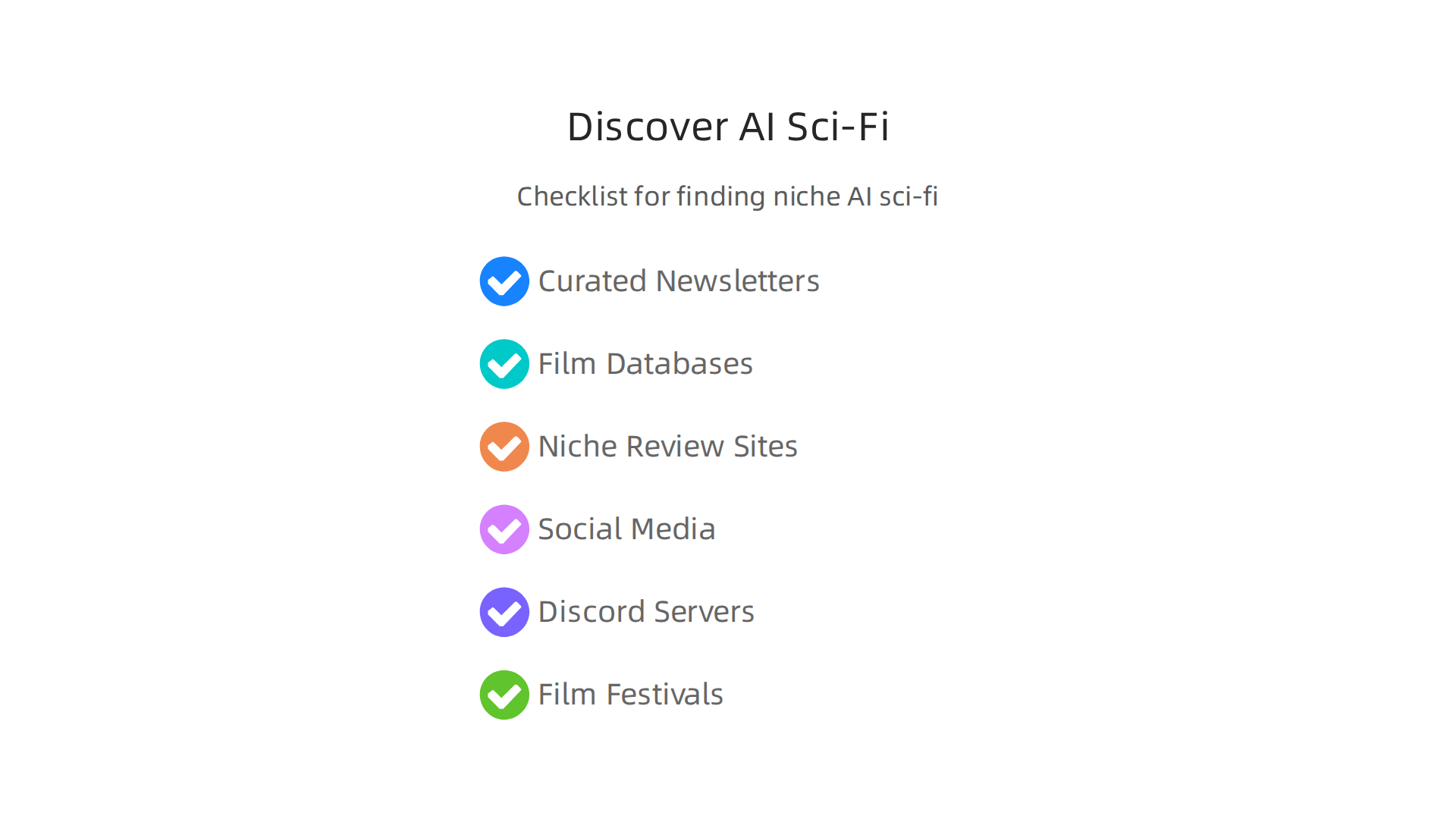
Start with Curated Newsletters and Databases
The easiest way is to let someone else do the digging. Niche newsletters that focus on future of AI in cinema can land in your inbox every week. Dedicated film databases like IMDb lists and Letterboxd let you follow users who share your taste. These platforms also surface hidden gems that algorithm‑driven recommendations often miss.
Niche review sites, like the kind we build at Cinema Sci Fi, give you deep dives on films that explore ai for everyone themes. They cut through the noise and point you straight to the stories that matter. If you want to take content discovery to the next level, check out our guide on AI tools for sci‑fi fans that end the frustration of finding great content.
Join the Community: Social Media and Discord
Following thought leaders on X (formerly Twitter) and Mastodon gives you real‑time updates on releases and debates. Better yet, join genre‑specific Discord servers. These communities often share links to new AI short films before they hit any festival. For example, the short film SPACE TRASH (2026) is a great example of how creators are using AI in production itself. You can watch it on YouTube to see the craft up close.
Don’t Miss the Festivals
Seasonal film festivals are goldmines. The AI for Good Film Festival in 2026 explored AI in creative filmmaking for positive impact, and its winner joined the AI for Good Global Summit in Geneva. The San Francisco International Film Festival (SFFILM) also featured AI‑themed retrospectives and new works. Events like Sci‑Fi London and the curated collection at Curious Refuge’s AI Film Events keep you in the loop.
Your Next Step
You don’t have to hunt alone. We curate the best AI‑themed sci‑fi every week. Want reviews, hidden gems, and news delivered straight to you? Subscribe for weekly sci‑fi film picks and features that keep you ahead of the curve.
Summary
This article explores how cinema has shaped and reflected public ideas about artificial intelligence, tracing the evolution from early mechanical monsters to intimate AI companions like those in Her and Ex Machina. It examines recurring on‑screen themes—job loss, loss of control, and ethical failure—and shows how those fears mirror real surveys and reports about AI risk and governance. The piece also discusses the political angle of access, asking whether AI is becoming