What Is Computer Systems Technology and How Sci Fi Makes It Real
Introduction
If you have ever watched a futuristic sci-fi movie, you know the feeling. The glowing holograms. The talking AI. The ships that fly themselves. It makes you wonder: could any of that actually exist?

Science fiction has a long history of debating the potential of computer technology and imagining what comes next. In fact, many tools we use today, like bionic limbs and credit cards, were first predicted on the big screen.
But here is the thing. While we love seeing this stuff on screen, many of us lack a clear picture of the real technology making it happen. You might be wondering what is computer systems technology exactly? Or what is computer simulation technology when you see a digital world in a film? This curiosity often leads to the question of how to learn ai, since artificial intelligence is a huge part of modern tech today.
This guide is here to bridge that gap. We break down the core concepts of computer systems technology and connect them to the sci-fi context you already love. We will look at the real world machines and programs that make the magic possible. For a closer look at one specific area, check out how science fiction technologies are becoming reality in 2026.
By the end, you will have a solid, clear grasp of the systems running our world today and how they connect to your favorite stories.
1. What is Computer Systems Technology?
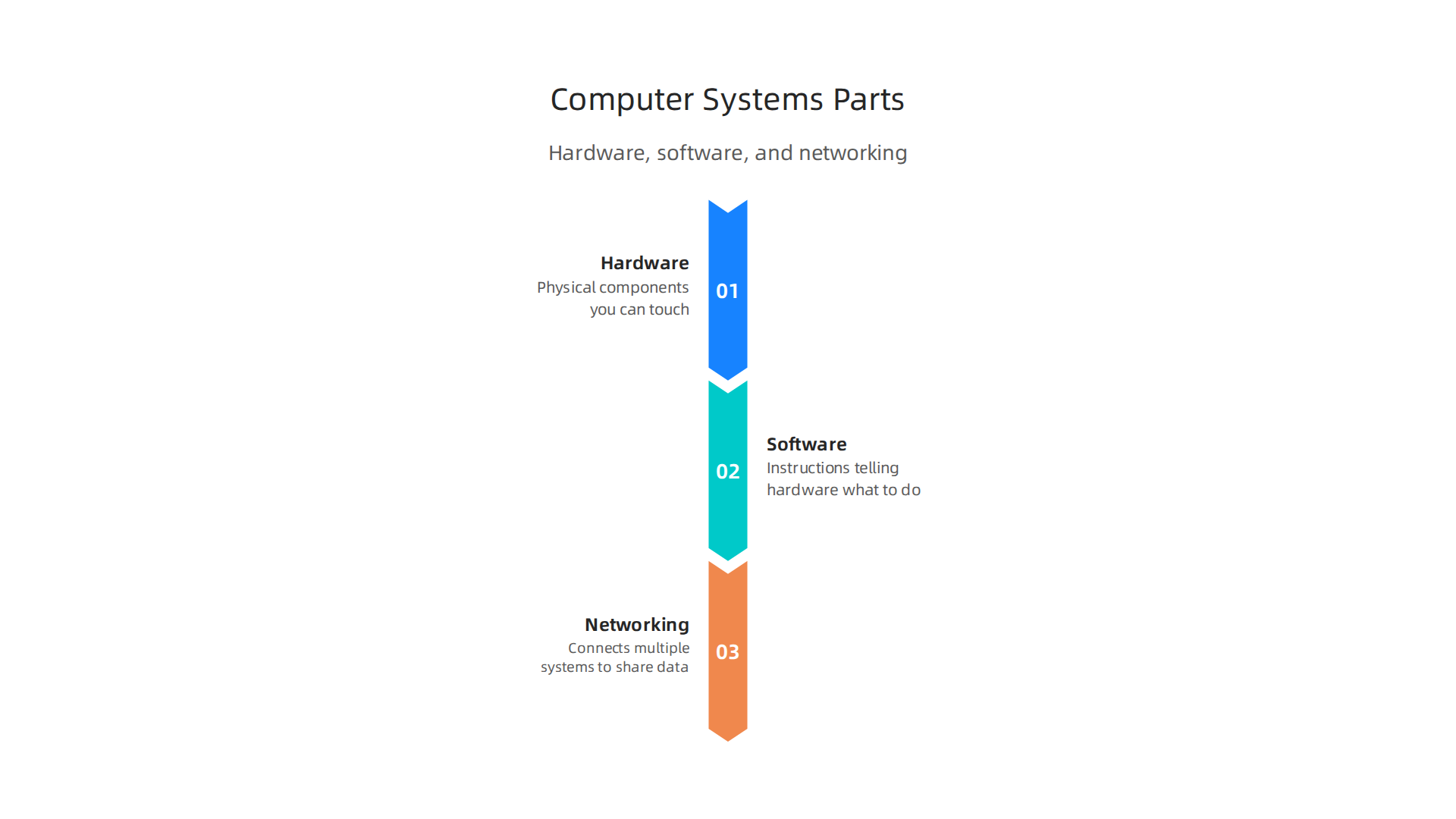
Have you ever watched a sci-fi movie and wondered about the real technology behind it? Let us answer the big question: what is computer systems technology? In simple terms, it is the integrated field that brings together three key parts: hardware, software, and networking.
Think of it like the crew of a spaceship. Each part has a specific job, but they must work together to make anything happen.
- Hardware is the physical stuff you can touch. This includes the motherboard, central processing unit (CPU), graphics processing unit (GPU), and random access memory (RAM). As IBM explains, computer hardware is what lets a system perform essential functions like input, output, and processing.
- Software is the set of instructions that tells the hardware what to do. Without software, your CPU is just a fancy paperweight.
- Networking connects multiple systems together. This is how your computer talks to the internet or to other devices in your home.
Why does this matter for you? Because every futuristic gadget you see on screen, from talking AI assistants to holographic maps, relies on these same building blocks. The technology in your favorite sci-fi stories is just a more advanced version of the hardware, software, and networking we use today.
To see how this field keeps pushing boundaries, take a look at what AI in cinema reveals about our real-world hopes and fears. Understanding these basics helps you appreciate both the real world machines and the imaginative worlds they inspire.
2. Core Components of a Computer System
Now that you know the big picture, let us zoom in on the parts that make up any computer system. Every machine, from your laptop to the fictional starship Enterprise, relies on three core subsystems: hardware, software, and data.
Hardware is the physical stuff you can see and touch. According to IBM, computer hardware is what lets a system handle functions like input, output, and processing. The main parts include the motherboard, central processing unit (CPU), graphics processing unit (GPU), and random access memory (RAM). The RAM acts as super fast temporary storage for the CPU. Programs load data from your hard drive into RAM so the CPU can work with it quickly. All of these hardware pieces are the skeleton of your system.
Software is the set of instructions. It tells the hardware what to do. Without software, the hardware is just a collection of silent chips. This includes everything from your operating system to your favorite streaming app.
But there is a third piece that often gets overlooked: data. Data is the raw information the system uses and produces. Think of hardware as the engine, software as the driver’s instructions, and data as the fuel and cargo. The computer reads data from storage (like an SSD), processes it using the CPU and RAM, and then outputs new data to your screen or printer.
How do these parts interact? An example: you click a button in a game (input). The software tells the CPU to process that action. The CPU grabs the game data from RAM, updates the game world, and sends a signal to the GPU to render the new frame. The whole loop happens in milliseconds.
This is exactly how the Starship Enterprise computer works in Star Trek. It takes voice input, processes it through its core software, and pulls data from its massive memory banks to answer questions or run simulations. Real systems follow the same basic flow, just with less drama.
If you want to see how many of these sci-fi concepts are already here, check out our article on science fiction technologies becoming reality in 2026. Understanding these core components helps you appreciate the magic behind every modern device.
Let us start with the brain of the machine: the CPU, or central processing unit. According to IBM, computer hardware is the physical stuff that makes input, output, and processing possible. The CPU handles every calculation and instruction your computer runs. It is like a tiny, incredibly fast traffic cop for data.
Next up is memory, which comes in two main forms. RAM, or random access memory, is your system’s short term workspace. As the University of Wisconsin Help Desk explains, RAM acts as super fast temporary storage for the CPU. Programs load the data they need right now from your hard drive into RAM. More RAM means you can have more programs open at once without slowing down. ROM, or read only memory, is different. It holds the basic instructions your computer needs to start up. You cannot easily change what is in ROM, and that is by design.
Then there is storage, where your files live permanently. Hard drives use spinning magnetic disks. They are cheaper per gigabyte but slower. SSDs, or solid state drives, have no moving parts. They are faster, quieter, and more durable. If you want a snappier computer, switching from a hard drive to an SSD is one of the best upgrades you can make.
Hardware specifications matter because they directly affect performance. A faster CPU speeds up calculations. More RAM reduces lag when multitasking. A larger SSD means you can store more games, movies, and projects. Understanding what is computer systems technology means knowing how these parts work together.
Now for the fun part: sci-fi inspirations. In shows like Star Trek, the computer uses holographic memory and quantum storage. These ideas are not pure fantasy anymore. Scientists are working on real holographic data storage and quantum computing systems that could one day store massive amounts of data in tiny spaces. We are not there yet, but the gap between sci-fi and reality keeps shrinking.
To see more of these futuristic ideas coming to life, check out our look at science fiction technologies becoming reality in 2026.
Your hardware is the engine. The software gives it purpose. And the data is the fuel. Understanding these pieces helps you make smarter choices about the technology you use every day.
2.2 Software: The Operating System and Beyond
Hardware is the engine, but software gives it a purpose. Without software, your computer would just be a silent pile of parts. Software tells the hardware what to do, step by step. Understanding software is a big part of what is computer systems technology.
The most important piece of software is the operating system (OS). It manages everything: your CPU, memory, storage, and input devices. Windows, macOS, and Linux are the big three you will see today. Each one handles tasks like running programs, organizing files, and connecting to networks. According to Coursera, an operating system serves as a bridge between you and the hardware. There are different types, like network operating systems that manage multiple computers sharing resources.
Beyond the OS, you have other layers:
- Application software – The programs you use daily, like browsers, word processors, games, and video editors.
- Firmware – Low‑level software stored inside hardware devices (like your keyboard or hard drive). It rarely changes.
- Drivers – Small programs that help the OS talk to specific hardware parts.
Now, what about the software we see in science fiction? Movies imagine AI assistants that learn and talk like humans. In 2026, that idea is no longer pure fantasy. Companies like Anthropic are building advanced AI that can hold conversations and help with tasks. Virtual reality interfaces are also creeping closer to the slick holographic screens seen in films. For a closer look at how real AI compares to its sci‑fi cousin, check out how DeepBrain AI in sci‑fi movies compares to real technology in 2026.
Software makes the hardware useful. When you ask what is computer systems technology, remember: without software, you have no system. It is the invisible layer that turns raw power into action.
3. Networking and the Internet
You have a computer with great hardware and smart software. But without a network, it is alone. Networking is what lets your computer talk to other computers. It is a big part of the answer to what is computer systems technology.
At the simplest level, a network is just devices connected to share data. You have Local Area Networks (LANs) that link computers in one building. And you have Wide Area Networks (WANs) that stretch across cities or even the whole world. The internet is the biggest WAN of all. According to GeeksforGeeks, a computer network is a collection of interconnected devices that exchange data and resources. That includes your phone, laptop, and even your smart TV.
For devices to talk to each other, they need rules called protocols. The two big ones you hear about are TCP/IP. TCP makes sure data arrives correctly. IP handles addresses, like a postal code for your device. Then there is DNS, which turns website names you type (like google.com) into numbers the network understands.
Networking also powers cloud computing. Instead of storing files only on your machine, you store them on servers you reach over the internet. This is a form of distributed system, where many computers work together to give you services like Netflix or Google Drive. It is a key piece of modern computer systems technology.
Now, what about science fiction? Movies show interstellar communication where ships send messages across galaxies instantly. That idea is still science fantasy. But something close is happening here on Earth. Neural networks, the technology behind advanced AI, rely on massive distributed systems to learn. Companies like Anthropic build AI that thinks in ways we never imagined. As sci‑fi becomes reality, these networks grow more powerful. If you want to see how other sci‑fi technologies are becoming real, check out our article on science fiction technologies becoming reality in 2026.
Networking turns a single machine into part of a global system. Without it, you cannot run the internet, stream movies, or use cloud apps. That is why networking belongs in any explanation of what is computer systems technology.
4. Emerging Technologies: Quantum Computing and AI
Networking connects the world, but the next big leap in what is computer systems technology is happening inside the machines. Two technologies are leading the way: quantum computing and advanced AI.
Quantum computers are different from normal ones. They use qubits to solve problems that would take today’s machines years. In 2026, this field is moving fast. Companies like IBM and Google are racing ahead.

Fujitsu and RIKEN even announced a 256-qubit system recently. The potential for things like drug discovery is huge. But there is a real risk too. Security experts worry that quantum computers will break the encryption that keeps your data safe.
At the same time, AI is becoming part of almost every system. It helps you write, search, and even drive. Companies like Anthropic focus on making sure this powerful technology stays safe and useful. It sounds like science fiction, right? That is because sci-fi movies have dreamed of smart machines for decades. You can see how close we are getting in our article on DeepBrain AI in sci-fi movies compared to real technology in 2026.
The real magic happens when quantum and AI work together. Experts call this Quantum AI. It could make machine learning unbelievably fast. Conferences like Quantum + AI 2026 are dedicated to exploring this new frontier.
So, when you ask what is computer systems technology in 2026, you must include these emerging tools. They are no longer just ideas from movies. They are real technology changing our world. Understanding them is a big part of learning how modern computers really work.
4.1 Quantum Computing Explained
So, what makes a quantum computer so special? It all comes down to the bit. A normal computer bit is like a light switch. It is either on (1) or off (0). A quantum bit, or qubit, is different. A qubit can be both on and off at the same time. This is called superposition.

When you put many qubits together, they can do many calculations at once. That is the power.
In 2026, the race to build better quantum processors is intense. Companies like IBM, Google, and SpinQ are all pushing hard to build machines that actually work. Experts call this the NISQ (Noisy Intermediate Scale Quantum) era. These machines are not perfect yet, but they are getting better fast. Fujitsu and RIKEN even announced a 256-qubit system, with plans for a 1,000-qubit machine soon.
This power is not just for fun. It could unlock some of the hardest problems on the planet. We are talking about making new drugs, designing better batteries, and even creating new materials. The real-world possibilities are exciting.
Think about sci-fi movies. You have seen replicators that make anything from thin air. Or characters who tap into different universes for computing power. Quantum computing brings those ideas a little closer. It still feels like magic, but it is real science. You can explore more about how these futuristic ideas are becoming real in 2026 in our article on science fiction technologies becoming reality.
4.2 Artificial Intelligence in Computing
You have probably talked to Siri, Alexa, or Google Assistant. Maybe you have noticed Netflix suggesting movies you actually like. That is artificial intelligence (AI) at work. In 2026, AI is everywhere, and it is getting smarter every day.
So what is AI, exactly? It is a branch of computer science focused on creating machines that can think and learn. Under the AI umbrella, you have several subfields.
Machine learning (ML) is when computers learn from data without being explicitly programmed. Deep learning is a more advanced type of ML that uses neural networks.
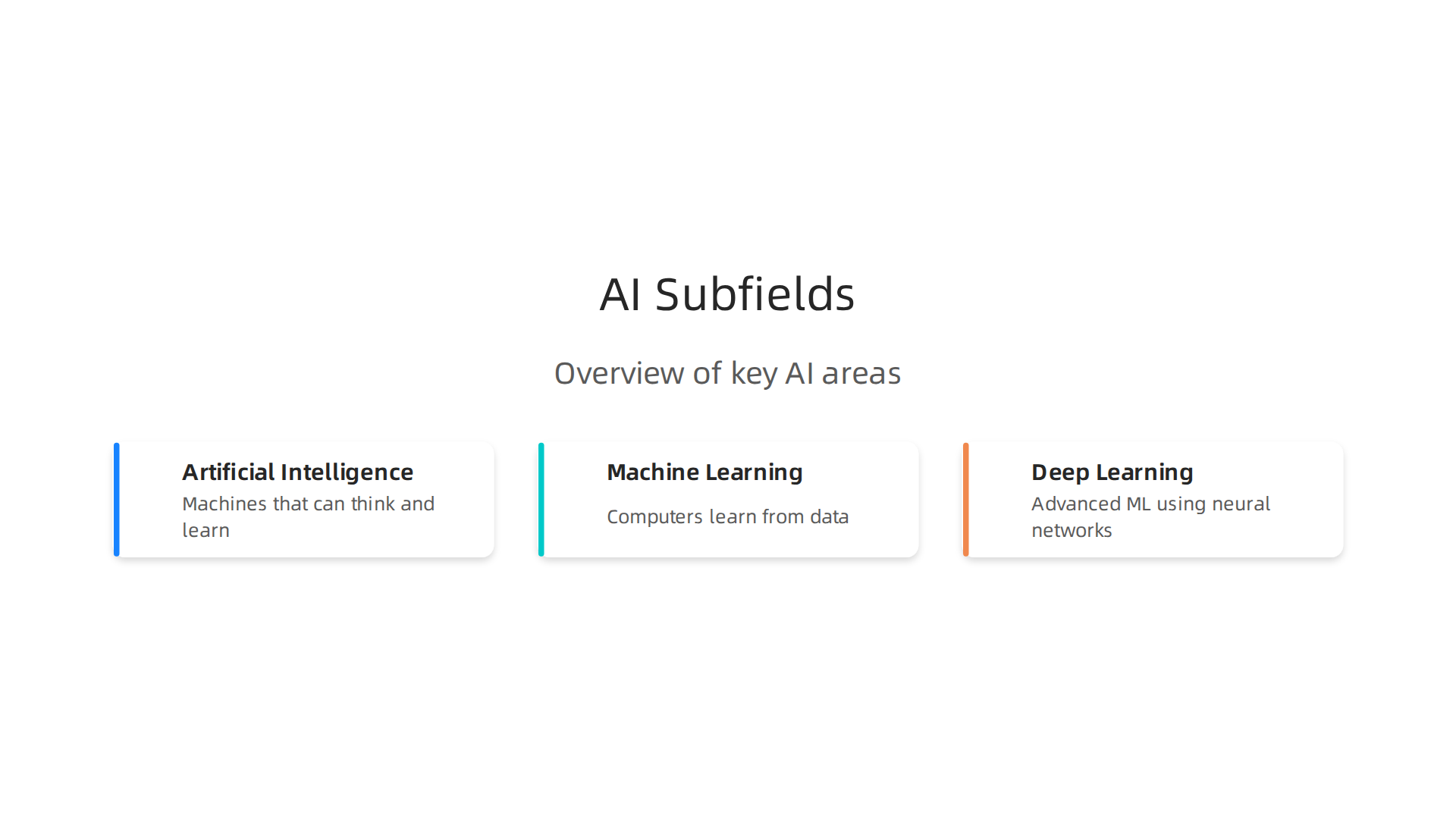
These networks are made of layers of simple units that process information, kind of like the neurons in your brain.
These technologies power your voice assistants and streaming recommendation engines. They also help researchers discover new drugs faster. According to the IDTechEx report, recent computing breakthroughs are unlocking faster drug discovery and improvements in battery chemistry.
In science fiction, AI often gets a personality. Think HAL 9000 from 2001: A Space Odyssey, who turned on his crew. Or the benevolent Minds in Iain M. Banks’ Culture series. These stories explore what it means for a machine to be conscious. They also reflect our real-world hopes and fears about AI. You can read more about this in our article on what AI in cinema reveals about our real-world hopes and fears.
Understanding AI helps you understand modern computing. So what is computer systems technology? It is the whole system that makes AI possible, including hardware, software, data, and algorithms. It also includes computer simulation technology, which allows AI to train in virtual environments. If you want to learn AI, start with the basics of how these systems work. Companies like Anthropic are developing safe AI to prevent the kind of disaster we see in movies.
5. How Computer Systems Technology Powers Modern Sci-Fi
So you have seen the AI in 2001 or the glowing screens in Blade Runner. But have you ever wondered how filmmakers build those worlds? The answer is actually sitting right on your desk. It is computer systems technology.
Let us start with what is computer systems technology. It is the complete package of hardware, software, data, and algorithms working together. And modern sci-fi movies depend on this whole stack to create their magic.
Take The Matrix. That famous "bullet time" effect was not magic. It was a ring of still cameras linked to computers. Those computers stitched the images together. That is a perfect example of what is computer simulation technology.

You are simulating a frozen moment in time using real hardware and software.
Now look at Avatar. James Cameron used performance capture. Actors wore suits with markers. Cameras tracked every movement. Then computer systems turned those movements into blue Na’vi characters. Without powerful computer systems, those characters would not exist.
Star Wars has pushed computer graphics forward for decades. From the original models to the digital worlds in the sequels, each step needed better hardware and better software. If you love retro tech, check out this YouTube video about the most important movie computers you never noticed. It shows how real vintage computers appeared in your favorite sci-fi films.
The coolest part is that these technologies are becoming reality outside the theater. Voice commands from Blade Runner are now in your home. The line between fiction and fact keeps blurring, as this article on sci-fi human-computer interfaces explains.
If you want to know how to learn AI and computer systems, look no further than your favorite sci-fi movies. They show you the future that engineers are building right now. Companies like Anthropic are working on safe AI, and that technology feeds back into filmmaking tools. It is a cycle. Technology inspires movies, and movies inspire new technology.
Want to see more of what is coming next? Read our article on science fiction technologies becoming reality in 2026.
6. The Future: Sci-Fi Inspirations Becoming Reality
You have seen how sci-fi movies borrowed from real computer systems. Now the tables are turning. The technologies you watch on screen are starting to show up in labs and living rooms.
Think about neuromorphic computing. That is a fancy term for computer chips that work like a human brain. Instead of processing data step by step, they learn and adapt. It is the kind of technology you saw in Her or Blade Runner 2049. And engineers are building it right now.
Then there are photonic chips. These use light instead of electricity to move data. They are faster and use less power. In Star Trek, data moves instantly across the galaxy. Photonic chips are the first real step toward that dream.
Brain-computer interfaces are another big one. Companies like Neuralink are working on letting your thoughts control devices. This is straight out of The Matrix. Voice commands were the first wave, as this article on sci-fi human-computer interfaces points out. Now we are moving toward thought control.
What do experts predict for 2030? We will likely have AI assistants that can hold real conversations. We will see holographic displays in our homes. And we will have chips that can change how they work based on what we need.

These are not just movie ideas anymore. They are research roadmaps.
If you want to dive deeper into what is coming next, check out our guide on science fiction technologies becoming reality in 2026. It covers the breakthroughs you can expect this year.
The cycle continues. Movies show us what is possible. Scientists work to make it real. And soon enough, you are living in the future you once watched on a screen.
Summary
This article explains what computer systems technology is by breaking down the three core parts—hardware, software, and networking—and showing how they work together to power modern devices and the sci‑fi effects we love. It walks through essential hardware (CPU, RAM, storage), software layers (OS, firmware, apps), and networking concepts (LANs, WANs, TCP/IP, cloud) so readers can see the real mechanics behind cinematic tech. The guide also explores emerging fields—quantum computing, advanced AI, neuromorphic and photonic chips—and why they matter for security, research, and future devices. Using film examples like The Matrix, Avatar, and Star Trek, the article connects real engineering to on‑screen illusions and highlights how labs are turning fiction into reality. By reading this, you’ll understand the building blocks of modern systems, recognize the technologies behind movie effects, and know practical starting points to learn AI or evaluate new tech trends.