Immersity AI Turns 2D Photos into 3D Immersive Worlds That Adapt to You
Introduction
We all know that feeling. You are watching a great sci-fi movie, completely lost in a futuristic world. But deep down, you wish you could step inside it. You want the story to bend around you. You want deeper immersion.

Right now, most movies offer a fixed experience. You watch, but you cannot change what happens.
But what if a movie could respond to you in real time? What if the world on screen felt alive and adaptive? That is the promise of Immersity AI.
This technology is starting to merge real-time artificial intelligence with movie narratives. For sci-fi fans, it creates unique and personal viewing experiences.
So, what exactly is Immersity AI? It is an AI-powered platform that takes regular 2D photos and videos and turns them into immersive 3D content. It analyzes depth and spatial relationships in visual content. This adds a layer of realism that feels almost magical. It feels like a synergy of synthesis AI and cinematic art. This open future AI technology is not just for tech experts. It is becoming available to everyone through apps and web tools.
This is huge for sci-fi fans. It means the places we love to visit on screen can feel even more real. Imagine exploring a digital alien world where the backgrounds and technology images shift and move around you naturally. The tech behind this is fascinating. It uses smart algorithms to generate depth maps from flat pictures, giving them real dimension.
In this article, we will break down how this tool works. We will look at its creative applications. And we will explore what it means for the future of science fiction cinema. It could change how we tell and experience stories forever.
Ready to explore a story that breaks the mold? Check out the Sci-Fi Comedy With Scope series to see how bold creators are already building immersive worlds today.
What Is Immersity AI?
So you have heard that AI is starting to change movies. But what exactly is this tool called Immersity AI? Let us break it down in simple terms.
Immersity AI is a platform that turns regular 2D photos and videos into 3D content.
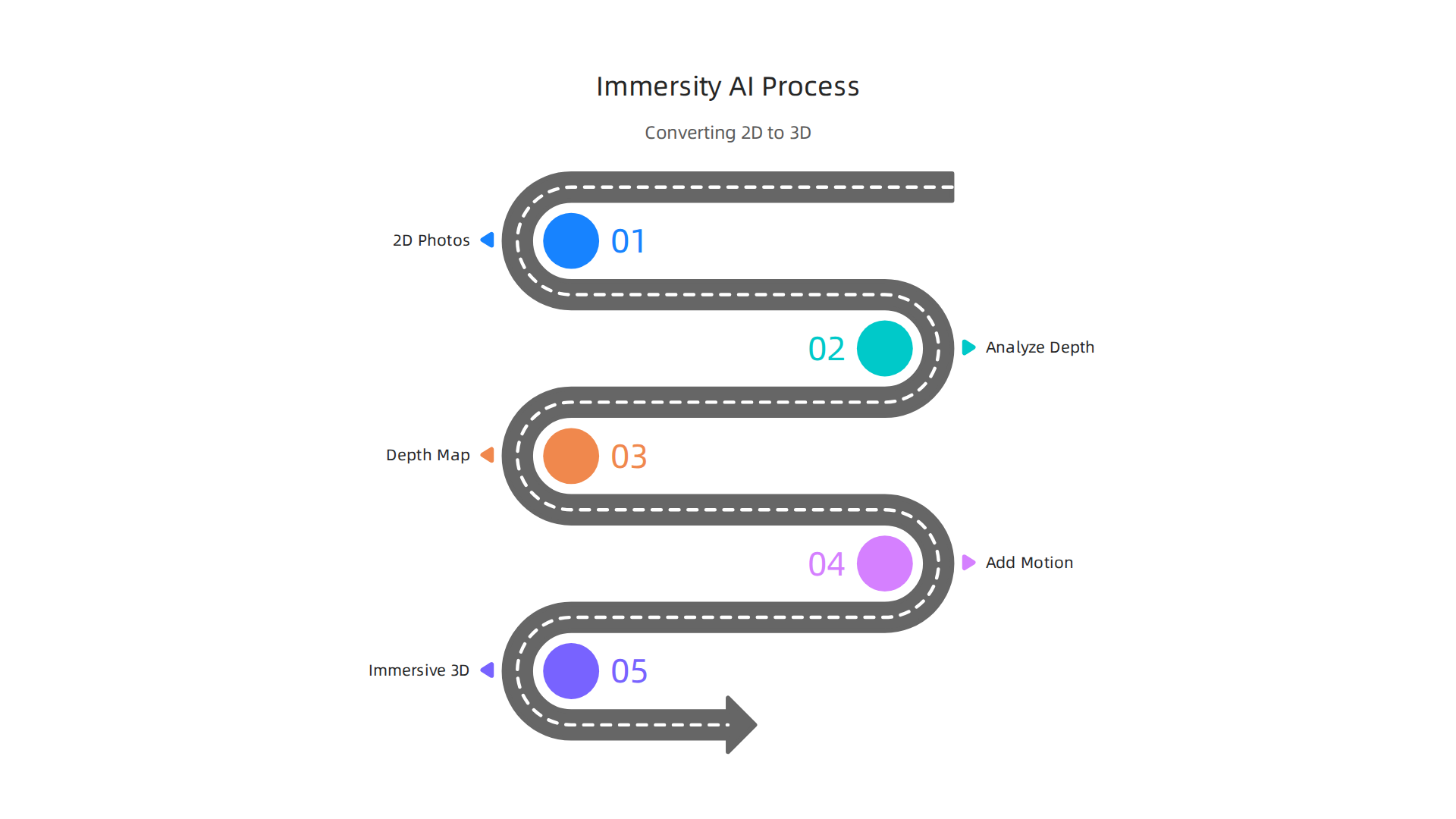
It used to be called LeiaPix, but it has grown into something bigger. The core idea is simple. You give it a flat image, and it adds depth. It makes the scene feel real and layered.
The technology works by analyzing depth and spatial relationships in visual content. It creates something called a depth map from your image. This map tells the AI which parts of the picture are close and which are far away. Then it adds natural motion to those layers. The result is an immersive 3D experience that feels alive.
You can try it right now with the Immersity App, which is available on web and mobile for free. It uses AI to add animated depth to any picture or video you upload.
But how does this relate to cinema? Here is where it gets exciting for sci-fi fans. Immersity AI uses real-time computing to adapt film elements. Imagine a scene where the background subtly shifts as you watch it. The AI can adjust depth and motion based on what is happening on screen. This is not just a gimmick. It builds on advanced technologies like neural rendering, eye tracking, and generative AI. All of these work together to create a living image.
Some people confuse this with VR or AR. But Immersity AI is different. It does not require a headset or goggles. You do not need to enter a separate virtual space. Instead, it integrates into traditional cinema settings. You watch the movie on a normal screen, but the content itself feels deeper and more responsive. It is a bridge between standard film and full virtual reality.
This matters because it makes AI tools for sci-fi fans more accessible. You do not need expensive hardware. You just need the right content and a compatible display.
The company behind this technology, Immersity, describes its journey as one of "immersive innovation." They started with depth map generation and kept building from there. Today, the platform represents a new layer in visual storytelling. It is a form of synthesis AI that blends real-world visuals with artificial depth. This open future AI approach means the technology is available to creators and viewers alike.
If you want to go deeper, check out this piece on how AI in cinema reveals our hopes and fears. It puts tools like Immersity AI into a bigger cultural context.
The Science Behind Immersity AI
Now that you know what Immersity AI is, let us look at how it actually works under the hood. The magic does not happen by accident. It relies on a smart mix of computer vision, natural language processing, and adaptive rendering.
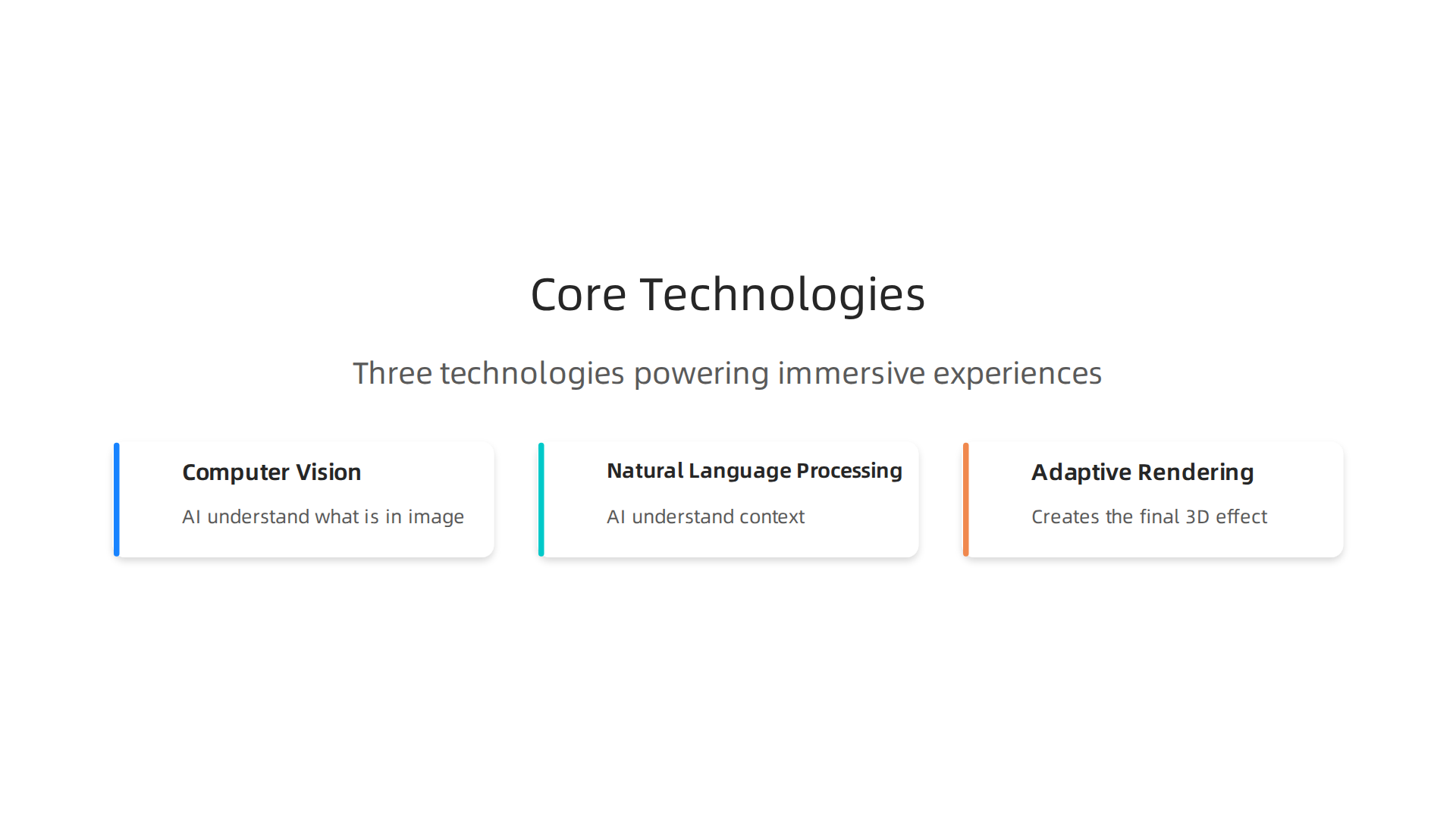
These three pieces work together to turn a flat image into a living scene.
Here is a simple breakdown of each piece:
- Computer vision helps the AI understand what is in the image. It identifies objects, people, and backgrounds. It figures out which parts are close and which are far.
- Natural language processing might sound strange for a visual tool. But it helps the AI understand context. For example, if a scene includes a spaceship and a planet, the AI knows the planet should be far in the background.
- Adaptive rendering is what creates the final 3D effect. It adjusts depth and motion in real time based on what the scene needs.
This combination is not just for static photos. It works for video too. Each frame gets analyzed and enhanced. The result is a smooth, immersive experience that feels natural.
But the science goes even deeper. One of the most exciting features is the real-time feedback loop. Immersity AI can actually change what you see based on aggregated audience data. Let us say a group is watching a sci-fi chase scene. If the system detects that everyone is leaning forward during a certain moment, it might subtly increase the depth or motion in that part. This makes the scene even more gripping. It is a form of synthesis AI that adapts to viewers.
This kind of technology is similar to what researchers at Microsoft are exploring. They recently presented a system called Storycaster at CHI 2026. Unlike headset-based VR, Storycaster preserves spatial awareness while adding immersive depth to storytelling. It shows how the science behind immersive experiences is moving beyond goggles and into everyday screens.
The system must process all this input within milliseconds. If there is any delay, the immersion breaks. That is why Immersity AI uses powerful algorithms running in real time. It is a real feat of engineering.
This open future AI approach means the technology keeps improving. You can stay up to date with the latest developments on the Immersity AI news page, where they announce new features and partnerships.
For sci-fi fans, this science is a dream come true. It means the movies you love can become more interactive and responsive. If you want to see how other AI technologies are changing the genre, check out this article on science fiction technologies becoming reality in 2026. It connects the dots between what you see on screen and what is possible today.
Transforming Storytelling with Immersity AI
Stories have always been a one way street. You watch. You listen. The end. But what if the story could change based on how you feel? What if it could shift its twists and turns to match your emotions in real time? That is exactly what Immersity AI makes possible.
With this technology, movies no longer have to follow a single path. Instead, they can become non-linear narratives. Imagine watching a sci-fi thriller where the hero’s choices depend on your reactions. If you gasp during a tense moment, the AI might darken the mood. If you laugh, it could lighten the scene. The story adapts to you. This is not a distant dream. It is happening now thanks to the real-time feedback loop we talked about earlier.
Writers are starting to work hand in hand with synthesis AI to build these branching stories.

Instead of writing one script, they write several. The AI helps connect them smoothly. It decides which arc to follow based on audience cues like heart rate, facial expressions, or even how still the room is. This kind of collaboration is opening up a whole new world of creativity. It is part of the open future AI vision where technology helps humans tell better stories.
The results from early pilot projects are impressive. Studios report higher engagement and repeat viewership. People come back to see what happens if they react differently the second time. It turns a passive viewing into an active experience. One example of this research comes from Microsoft. Their system Storycaster keeps you aware of your surroundings while adding immersive layers to the story.

It shows that you do not need a headset to feel like you are inside the movie.
For sci-fi fans, this is huge. The genre is built on big ideas and unexpected twists. Now the twists can change with every viewing. If you want to see how other real world technologies are reshaping the stories you love, check out how science fiction technologies are becoming reality in 2026. And if you enjoy stories that play with perspective and humor, you might love the Cinematic Sci-Fi Comedy available on Amazon. It shows how AI inspired storytelling can also be fun and unexpected.
The future of film is not just about better graphics. It is about stories that learn and grow with you. Immersity AI is making that future feel closer than ever.
The Viewer’s Journey: Personalized Cinematic Experiences
You and your friend sit in the same theater. The same movie starts. But by the end, you might have seen two completely different stories. That is not a sci-fi fantasy. It is what Immersity AI makes possible today.
Here is how it works. Cameras or sensors built into seats, devices, or even your phone track subtle physical responses. Things like your heart rate, breathing, facial expressions, and how often you shift in your seat. The AI reads these cues in real time and adjusts the movie to match your mood. A tense moment might get darker music. A funny scene might stretch longer. The story bends around you, not the other way around.
This is possible because Immersity AI runs on existing devices without needing new hardware. As one analysis explains, this embedded path allows immersive experiences to reach billions of users without requiring anyone to buy expensive gear. That means you could be in a regular theater or even watching at home, and the same personalization works.
What makes this truly wild is that every viewer gets their own version. In a packed cinema, your experience depends on your reactions, not the person next to you. The AI learns what makes you lean forward and what makes you relax. It creates a unique journey each time you watch. This is a key part of the open future AI vision where technology adapts to humans instead of the other way around.
But you might be wondering: what about privacy? It is a fair concern. Many people worry that tracking physical responses sounds like something out of a surveillance thriller. The good news is that Immersity AI is designed to process all that data locally on your device. Your biometric information never leaves your phone or seat. You stay in control of what is shared. Some systems even require you to opt in before they start tracking anything. The team behind Immersity AI has made privacy a priority from the start, as shown in their use cases where data stays local and personal.
This balance between personalization and privacy is exactly the kind of discussion that sci-fi movies have explored for years. If you want to see how real technology mirrors those on screen fears, check out our article on how corporate technology in sci-fi reflects real fears about power and privacy. It helps put these concerns into perspective.
The big takeaway is simple. With Immersity AI, your next movie night could be one of a kind. Just for you. And that is something worth getting excited about.
Industry Adoption and Early Applications
So who is actually using Immersity AI right now? The answer might surprise you. It is not just tech companies in a lab somewhere. Some of the biggest names in filmmaking are already testing this technology.
Major studios and independent filmmakers are both jumping in. The major players see it as a way to keep audiences engaged during a time when people skip theaters more than ever. Independent filmmakers see something else. They see a chance to tell stories in ways that big budgets never allowed before. The beauty of Immersity AI is that it runs on devices people already own. As the team explains, this embedded path allows immersive experiences to reach billions of users without expensive new gear. That makes it just as useful for a no-budget short film as it is for a blockbuster.
Festivals have taken notice too. Events like Sundance have already featured short films powered by Immersity AI. That matters. Sundance is where new storytelling tools get their first real test. Seeing these films on that stage means the technology has moved past the demo phase. It is actually being used to create something real. The trend matches what we saw at CES 2026, where immersive experiences, scalable spatial tech, and hybrid intelligence dominated conversations. The industry is paying attention.
Movie theaters are upgrading too. They have to. Streaming has changed what people expect from a night out. So theaters are investing in infrastructure that supports personalized experiences. Think sensors in seats and local processing systems that keep your data private. These upgrades let each viewer in the audience get a unique version of the same film. It is a big investment, but early results suggest audiences are willing to pay more for something they cannot get at home.
This shift from concept to real-world use is exactly the kind of thing that makes sci-fi fans excited. If you want to see how AI is changing the way indie filmmakers create content today, check out our article on how Stability AI and Creatify AI are changing indie production. It shows a similar story about tools that used to feel futuristic becoming part of everyday filmmaking.
The bottom line is simple. Immersity AI is not sitting on a shelf waiting to be used. It is already in theaters, at festivals, and in the hands of creators who want to tell stories differently. And if you are curious about where storytelling is headed next, you might enjoy seeing it play out in a fun way. Explore a sci-fi comedy series that pushes the boundaries of books, audio, and animation. It is the kind of creative energy that matches where this technology is taking us.
Challenges and Ethical Considerations
All that excitement about Immersity AI is real. But we can’t ignore the problems that come with it.

Every powerful technology has a dark side, and this one is no different. Let’s break down the biggest challenges.
Technical hurdles are real. Making immersive experiences work for millions of people at once is harder than it sounds. The team at Immersity AI has talked openly about the hidden challenges of building these experiences. Getting the fundamentals right makes all the difference. Things like latency, cost, and scalability are not solved overnight. When you run a personalized experience for every single person in a theater, the computing power needed is massive. And the cost can be huge too. The embedded path allows immersive experiences to reach billions, but only if the tech works reliably at that scale. For smaller creators, those costs might still be out of reach.
Ethical issues are even trickier. Three big ones stand out.
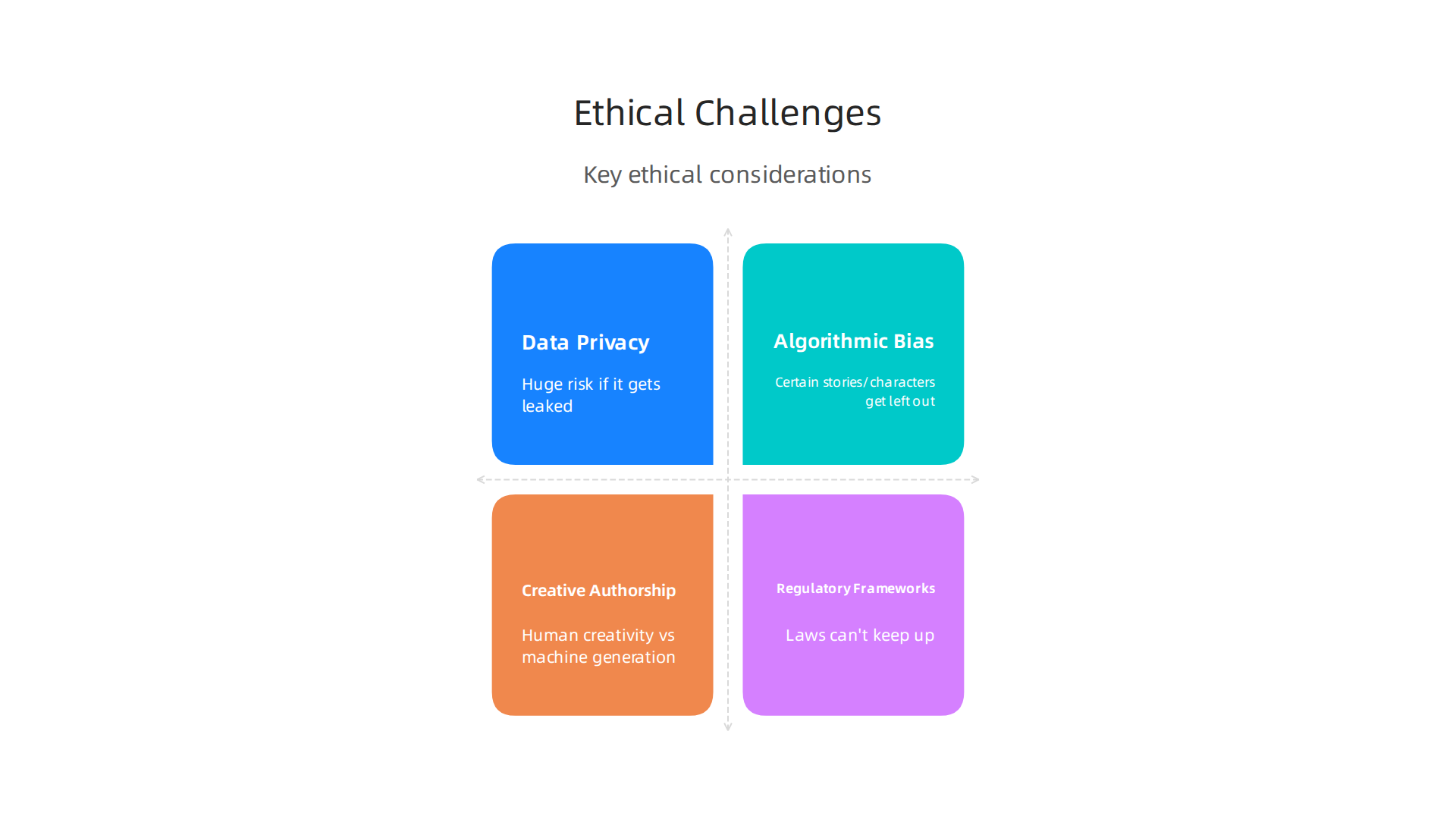
First, data privacy. To give you a personal experience, Immersity AI needs to know a lot about you. Where you look, what you react to, maybe even your heart rate. That data is gold for advertisers, but it is also a huge risk if it gets leaked. The systems need to process data locally to keep it safe, but not all devices can do that yet.
Second, algorithmic bias. AI learns from the data it trains on. If that data has bias, the technology images and experiences it creates will have bias too. That could mean certain types of stories or characters get left out. It is a problem the whole industry is still figuring out.
Third, creative authorship. Who really made that film? If a director uses immersive AI tools to generate scenes and adapt them in real time, where does human creativity end and machine generation begin? The open future ai community debates this all the time. Synthesis ai is starting to blur the lines even more. These are not just philosophical questions. They affect how credit, money, and legal rights get shared. If you have seen sci-fi movies about technology going wrong, you know how fast these issues can spiral. Our article on what AI in cinema reveals about our real-world hopes and fears digs into that parallel.
Regulatory frameworks are lagging behind. The technology is moving faster than the laws can keep up. Governments are still trying to understand what rules make sense for AI and immersive experiences. We saw that at CES 2026 where the conversation was mostly about what is possible, not what is legal. Conferences like the 2026 AI City Challenge workshop at ECCV 2026 show how advanced the research has become. But regulation is still catching up. That leaves a gray area where creators and companies have to decide their own ethical standards. Some will do the right thing. Others might not.
All these challenges might sound scary. But they are not reasons to stop. They are reasons to be smart. The same article that talks about getting immersive experiences right also points out that getting the fundamentals right is the key to avoiding bigger problems later. The industry is aware of these issues. Researchers, developers, and storytellers are working on solutions. The path forward is not about avoiding the technology. It is about building it with eyes wide open.
The Future of Immersity AI (2026 and Beyond)
Despite the challenges, the future of Immersity AI is incredibly exciting. We are standing at the edge of a major shift in how we experience stories, games, and entertainment. Here is what we can expect in 2026 and the years that follow.
Most major films will use adaptive AI within a decade. Experts predict that soon, nearly every blockbuster will change in real time based on who is watching. Imagine a movie that gets scarier if you are enjoying horror, or funnier if you laugh at a joke. This is not science fiction anymore. Research presented at events like the 2026 AI City Challenge workshop at ECCV 2026 shows that the technology is already mature enough to handle these complex tasks. The film industry is paying attention, and early adopters are already experimenting.
Home streaming and mobile platforms will make immersive experiences available to everyone. Right now, most adaptive content requires special hardware or a theater. That is changing fast. The embedded path, as described in this article on mobile immersive experiences, allows these experiences to reach billions of users without forcing them to buy new devices. Your phone, your tablet, your smart TV all become windows into a personalized story. This opens up a huge market for creators and studios.
Collaborative authoring between humans and AI will become the new standard. The old idea of a single director or writer is evolving. Now, creators use tools like Immersity AI to generate scenes, adapt dialogue, and even craft entire storylines. But the human touch is still essential. The article on getting the fundamentals right points out that true immersive experiences only work when human creativity and AI precision blend seamlessly. In 2026, we are already seeing indie filmmakers use this approach, and larger studios are starting to follow.
The future is not just about technology. It is about new kinds of stories that adapt to us. If you want to see where this is heading in cinema, check out how AI is changing indie film production on Cinema Sci Fi. And for a fun, imaginative story that plays with these very ideas, grab a copy of Read Cinematic Sci-Fi Comedy to see how creative storytelling can bend reality.
Key Players and Pioneers in Immersity AI
So who is actually building this future? The field of immersive AI is not the work of one company or lab. It is a growing mix of startups, university researchers, veteran filmmakers, and open-source communities all pushing forward together. Let us look at the main groups driving change.
Startups and research labs are making the biggest technical leaps. Young companies like Immersity AI are creating the core tools that let stories adapt to you. At the same time, labs at MIT and Stanford are studying how AI can read human emotions and reactions in real time. Their work helps the whole industry improve. Leaders like Sam Altman, who took the top spot in the Top 100 AI Leaders 2026 list for accelerating global adoption, show how important this space has become. New startups focused on synthesis ai and open future ai are appearing all the time, each solving a different part of the puzzle. These teams are also finding new ways to use technology images generated by AI to enhance visual storytelling.
Veteran directors and producers are investing in AI-driven production companies. This is not just a tech movement. Big names in Hollywood and the indie film world are putting serious money into AI-powered content creation. They see that tools like Immersity AI can cut costs, speed up shoots, and open creative doors that were locked before. Directors who once relied only on practical effects are now exploring how AI can help them tell richer stories faster. For a closer look at how this is changing filmmaking, check out this article on how AI tools are changing indie film production.
Open-source initiatives are making the technology available to everyone. This might be the most exciting trend. Open-source projects let independent creators, students, and small studios experiment with immersion AI without paying huge licensing fees. That lowers the barrier to entry and leads to more diverse and surprising stories. When anyone can access these tools, the creativity that emerges often beats what comes out of big studios.
To see the latest partnerships, product updates, and milestones in this space, follow the Immersity newsroom. It is the best place to track which companies are leading, which tools are launching, and how the landscape shifts week by week.
Summary
This article explains Immersity AI, a platform that converts ordinary 2D photos and videos into immersive 3D experiences by generating depth maps and adding adaptive motion. It walks through the core technology—computer vision, NLP for context, and adaptive rendering—and shows how those systems enable real-time, audience-responsive storytelling without headsets. The piece covers practical uses for sci‑fi fans and filmmakers, from mobile apps and festival shorts to theater upgrades that personalize viewings for each audience member. It also details industry adoption, technical hurdles like latency and cost, and ethical concerns around privacy, bias, and authorship. Throughout, the article balances excitement about new creative possibilities with caution about regulation and responsible design. Readers will come away understanding how Immersity AI works, who’s using it now, what equipment is needed, and what to watch for as adaptive cinema spreads in the coming years.