
How Science Fiction Is Shaping Real Ag Technologies in 2026
Introduction: When Sci-Fi Plants the Seeds of Tomorrow
Close your eyes and picture a farm in a science fiction movie. You probably see something pretty strange. It might be a set of glowing vats in a sterile room. Or a domed greenhouse on Mars. Maybe it is a machine that prints a perfect steak from a cartridge. Science fiction has always been great at dreaming up new ways to feed people. These stories give us farms on distant planets, synthetic foods, and machines that make something from nothing.
But here is the surprising truth. In 2026, the line between these sci-fi dreams and our real farms is getting blurry. Farmers today are not just using tractors and their gut feelings. They are using precision technology to plant seeds and spray crops with incredible accuracy. Artificial intelligence is helping them make smart decisions about water, fertilizer, and harvest timing. According to a 2026 report on agriculture technology trends, farmers are using real time data analytics to grow more food while using less. The future of farming is happening right now.

This brings us to a big question. What can the movies teach us about real agriculture? The answer lies in what we call keystone technologies. These are the big, foundational tools that make everything else possible. In a movie, the keystone technology might be a faster than light engine or a force field. In real life, it might be the AI that runs an autonomous harvester or the data network that connects a whole field. Groups like Pennco Tech are training people to build these systems.

Companies like Segula Technologies are figuring out how to make them work together.

These keystone technologies are what turn a sci-fi fantasy into a real world tool.
In this article, we will look at how cinema imagines the future of farming. We will explore the key technologies that show up in space movies, dystopian films, and alien worlds. And we will see how those ideas connect to the real ag technologies shaping our food system today. It is a journey from the silver screen to the soil.
Ready to dig in? If you want to see these futuristic ideas brought to life in a fun and original story, check out the first book in the series. It is a cinematic sci-fi comedy that plays with big concepts and keeps you guessing.
Terraforming and Planetary Agriculture: The Big Screen’s Green Revolution
Think about the most famous garden in movie history. It probably belongs to Mark Watney. In The Martian, he is stranded on a dead planet with nothing but a habitat and some potatoes. His only shot at survival depends on building a farm from scratch. He uses his own waste as fertilizer and Martian soil as his bed. It is messy. It is risky. And it is one of the most gripping survival stories ever told. The science fiction encyclopedia notes that the entire plot of The Martian rests on this ability to grow food on a barren world. Then there is Total Recall. Remember the massive underground greenhouse that reveals the true, living face of Mars? These scenes stick with us. They tap into something primal. The drive to grow food is the drive to live. No matter where we are.
Here is the thing. Farming on another world is incredibly tough. You cannot just dig a hole and drop in a seed. You need a whole system to support that single plant. That system is exactly what we call a keystone technology. It is the foundational tool that makes everything else possible. In a space movie, that keystone technology is often terraforming. It means changing an entire planet. You alter the atmosphere. You warm the soil. You make a dead world bloom. To pull that off, you need top tier engineering and system integration. That is the kind of complex, high stakes work that companies like Segula Technologies tackle every day. And you need a skilled workforce that understands how to build and run these advanced tools. That is where training programs like Pennco Tech come into the picture. They are preparing people right now for these futuristic careers.
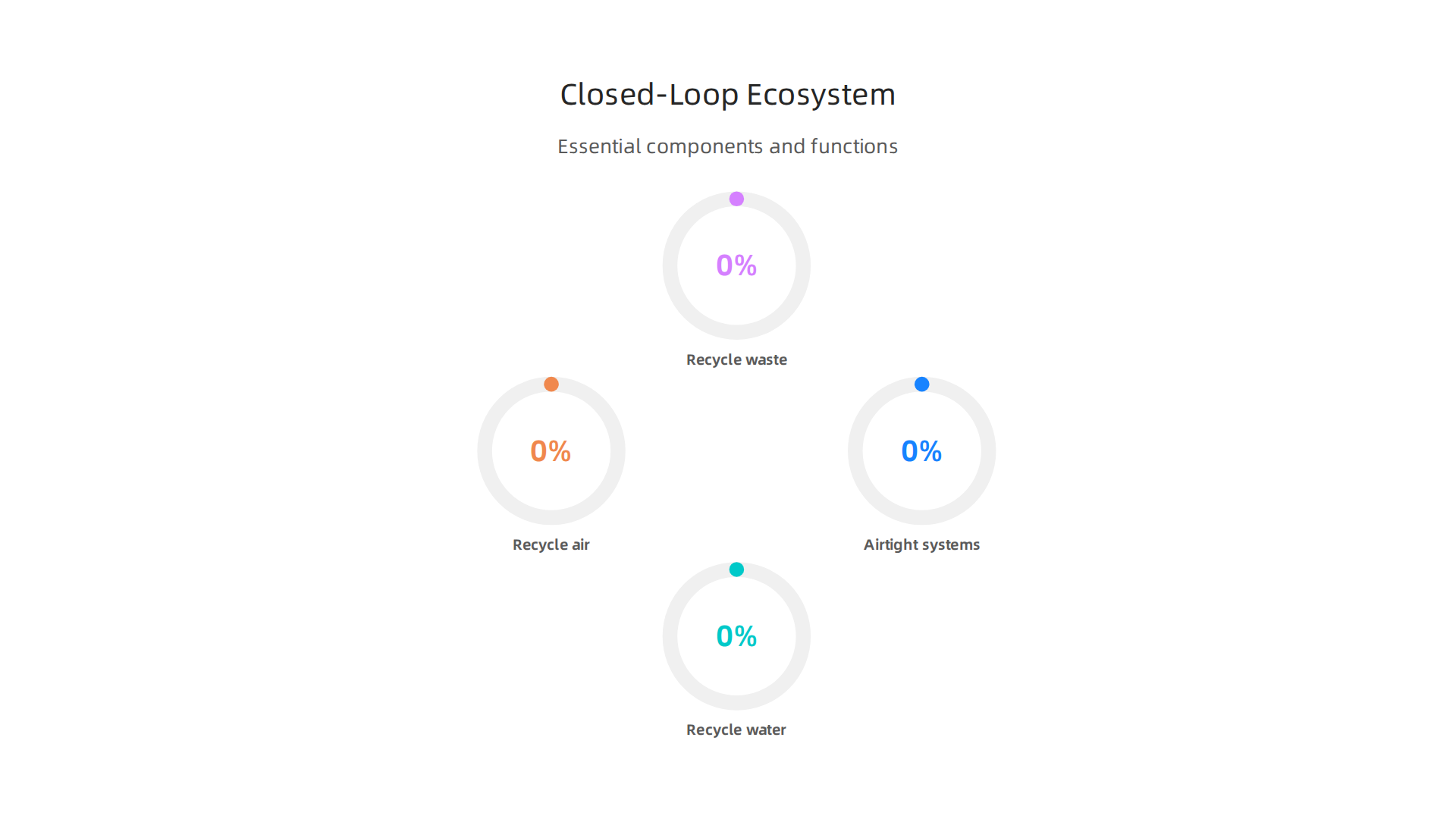
Science fiction did not just predict this. It actively inspired it. In 2026, real scientists are working on the same problems the movies love to show. They are building closed-loop ecosystems. These are airtight systems that recycle water, air, and waste to support plant life with zero outside supplies.
NASA and other space agencies are investing heavily in hydroponics and aeroponics designed for zero gravity. We are not there yet, of course. The research from Washington State University reminds us that space farming is still largely science fiction. The challenges are massive. Radiation, low gravity, and poor soil create huge obstacles. But here is the cool part. The real ag technologies we use on Earth today, like AI-driven sensors, precision robotics, and autonomous tractors, are the direct ancestors of the machines we will send to Mars. Every step we take on Earth gets us one step closer to that red planet farm. If you want to see what other futuristic concepts are becoming real right now, take a look at our guide on science fiction technologies becoming reality in 2026.
The dream of terraforming a planet is still a dream. But it is a powerful dream. It pushes our research forward. It drives our innovation. It reminds us that imagination is the first step toward discovery. If you love exploring these big "what if" questions and the scope of what humanity can achieve, you are part of a great tradition. For a fun, original ride through a universe full of chaos, wit, and heart, explore this cinematic sci-fi comedy series. It is built on the same curiosity that will one day help us plant a garden on another world.
Vertical Farms and Urban Agriculture: Sci-Fi’s Sky Cities
Think about the skyline in Blade Runner. Smoke, neon, and rain. But also towering structures where food grows in stacked layers. Then there is Soylent Green. The city is packed with people, and food comes from hydroponic facilities inside buildings. These movies set the standard for something we now call vertical farming. They showed us a future where vegetables grow up instead of out. Where farms live inside skyscrapers right where people live.
That future is not just science fiction anymore.
In 2026, real vertical farms exist all over the world.
The USDA explains that vertical farming is the practice of growing crops in stacked layers indoors.
It uses systems like hydroponics, aquaponics, and controlled environment agriculture. The American company Aerofarms is currently the largest vertical farm in the world, according to a report from Films for the Earth.
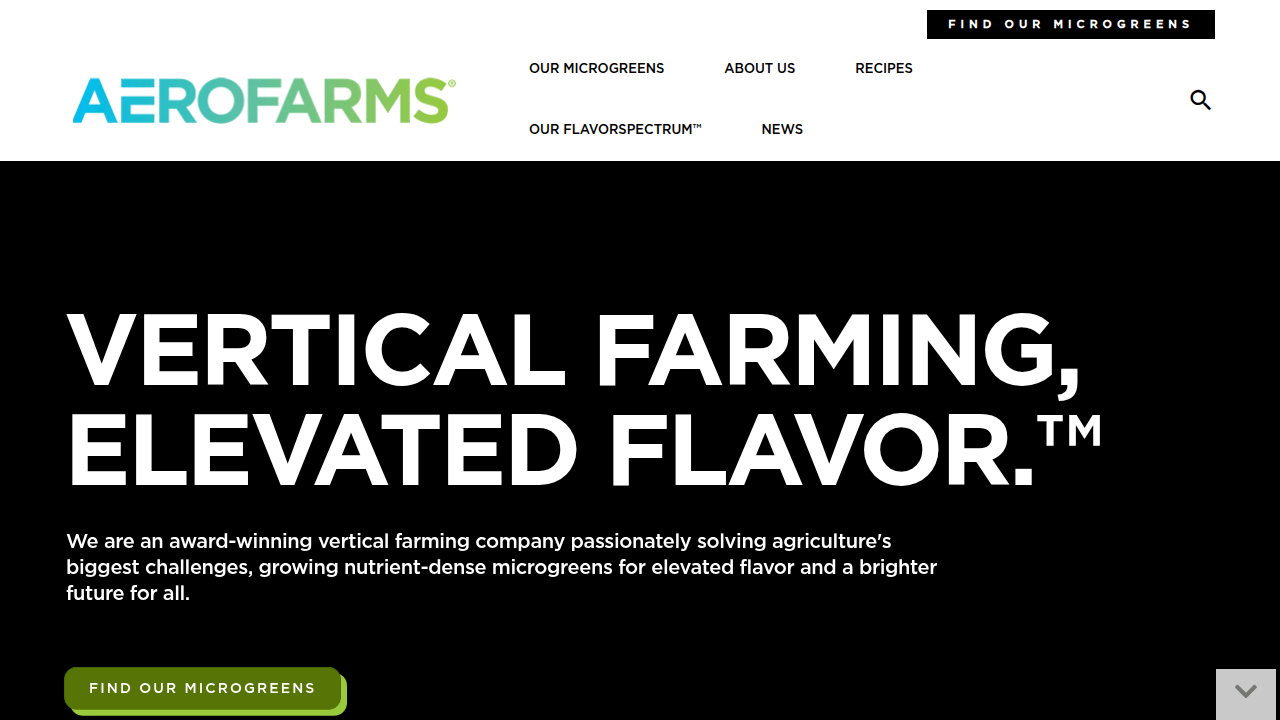
These farms grow lettuce, herbs, and even strawberries without soil. They use LED lights instead of the sun. And they use a tiny fraction of the water that traditional farming needs.
Water is a big reason why vertical farming matters so much right now. Traditional agriculture uses about 70% of all freshwater globally, as a water scarcity expert pointed out in an analysis of Dune. And water is getting harder to find. Freshwater per person has dropped 20 percent over the past two decades, according to research from the University of Tennessee. Vertical farms solve this problem. They recirculate water through closed systems. Some use up to 95% less water than soil farming. That is a huge deal for a planet facing worsening droughts.
These ag technologies are advancing fast. Researchers are developing better LED lights, more efficient pumps, and AI systems that monitor every leaf. The goal is to make vertical farming cheap enough to compete with traditional farms. And it is working. If you want to see how other sci-fi concepts are turning into real tech, check out our guide on science fiction technologies becoming reality in 2026.
The dream of the sky city farm is becoming real. It takes curiosity and hard work to get there. If you love exploring big ideas like this, you might enjoy a fun, original ride through a universe full of chaos, wit, and heart. Check out the Ridiculous series and see where imagination can take you.
Synthetic Biology and Lab-Grown Food: From Replicators to Reality
When you think about the future of food in science fiction, two images come to mind. In Star Trek, the crew walks up to a replicator, says "Tea, Earl Grey, hot," and the drink appears instantly out of thin air. The Food Ethics Council points out that the replicator in Star Trek could transform energy into matter, producing any food you wanted. That is pure abundance.
Then there is The Matrix. In that world, humans are fed a nutrient slurry. It is a liquid that keeps bodies alive but has no taste, no joy, no culture. That is the nightmare version of synthetic food.
These two extremes show what we hope for and what we fear. In 2026, we are somewhere in between.
Real lab-grown meat exists.
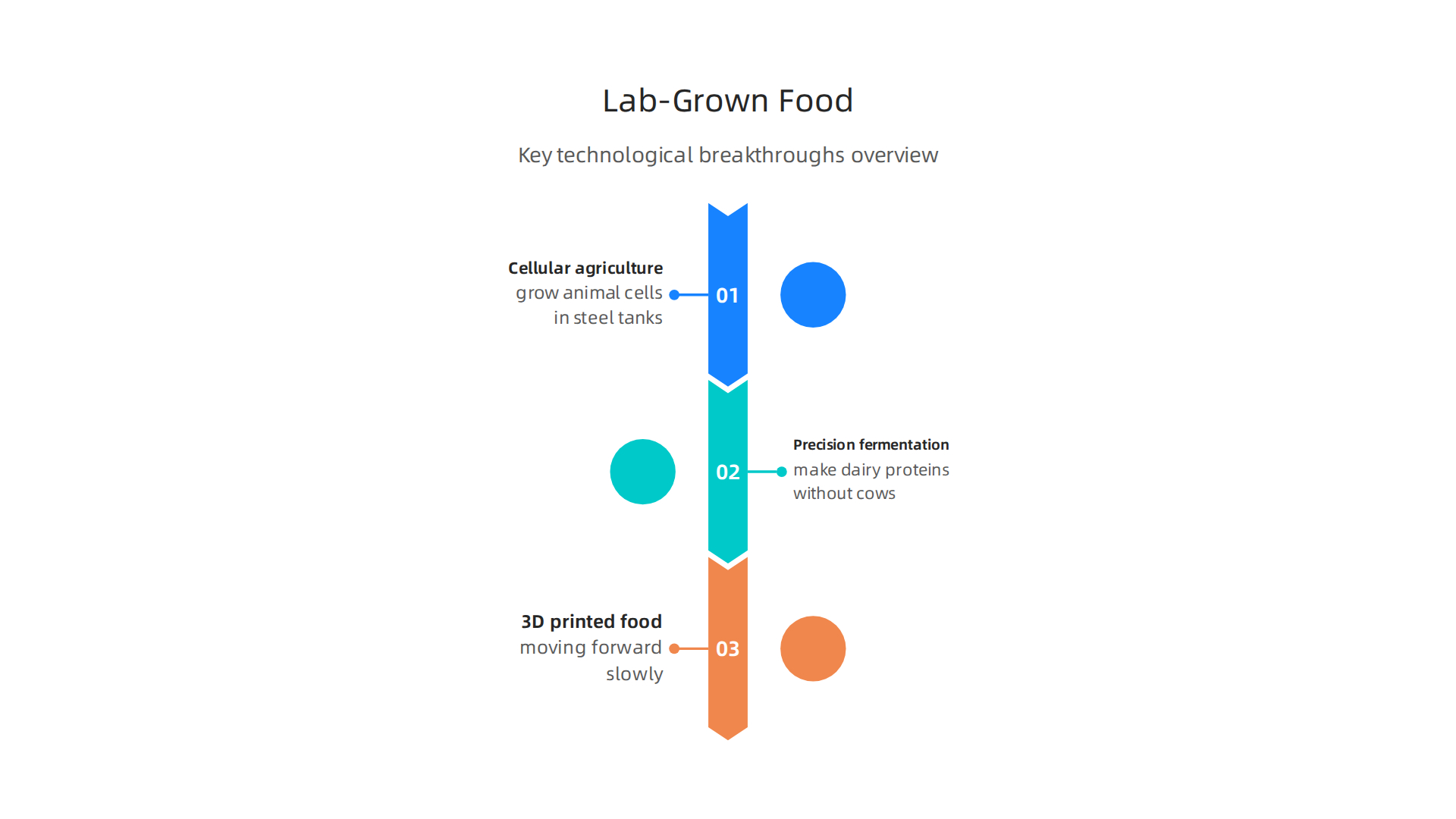
Companies grow animal cells in steel tanks to create chicken, beef, and fish without slaughter. The process is called cellular agriculture, and it is one of the keystone technologies that could radically change our food systems. Another breakthrough is precision fermentation. That is how we make dairy proteins without cows. Even 3D printed food is moving forward, slowly pushing toward something that looks like a replicator. A report from Matter Consulting explains that some products being developed today feel like they came straight out of Star Trek.
These ag technologies help solve big problems. Raising animals for meat uses huge amounts of land, water, and grain. Lab-grown meat uses far less. It also cuts greenhouse gas emissions and reduces the risk of disease. That is not science fiction. That is real science happening right now.
Of course, we are not at the replicator level yet. We cannot ask a machine for a steak dinner and watch it assemble from atoms. But the direction is clear. If you want to see how other sci-fi predictions are turning into real tools, check out our look at what AI in cinema reveals about our real-world hopes and fears.
The path from nutrient slurry to full abundance is long. But every year, we take another step. If you enjoy thinking about where technology is taking us, you might also enjoy a creative story that does not take itself too seriously. See what happens when curiosity and chaos collide in the Ridiculous series.
AI and Automation: The Invisible Farmers of Tomorrow
Think about the last time you watched Wall-E. That lonely little robot spent centuries cleaning up Earth while a single automated food system kept humans alive on a spaceship. Or go further back to Silent Running (1972), where a lone botanist tends to Earth’s last forests inside a greenhouse spaceship with robot helpers.
Both films show a powerful idea. What if we trusted machines to grow our food?
In 2026, that idea is no longer just science fiction. It is becoming real. And it is one of the most important ag technologies we have.
How Real Farms Use AI Today
You might not see them, but invisible farmers are already working. Drones fly over fields and scan crops for disease.
Sensors in the soil measure moisture, nutrients, and temperature. Machine learning algorithms take that data and tell farmers exactly when to plant, water, or harvest.
This is called precision agriculture. And it works. The International Telecommunication Union has been studying how AI for Food Systems can boost productivity and improve global food security. The results are promising.
Vertical Farming: Food Grows Up
One of the most exciting real world examples is vertical farming. Instead of spreading crops across acres of land, farmers stack them in layers inside buildings. The USDA explains that vertical farming uses hydroponics, aquaponics, and other systems that do not require soil.
The American company AeroFarms runs one of the largest vertical farms in the world. And places like these are popping up everywhere. Vertical farms can even purify water and improve urban air quality, according to climate researchers. That is a pretty good deal for a building full of lettuce.
AI as a Keystone Technology
Here is the thing. These systems need brains to run them. That is where AI comes in. Artificial intelligence controls the lights, temperature, humidity, and nutrients in a vertical farm. It watches every plant and makes micro adjustments all day and night.
This makes AI a keystone technology for modern food production.

Without it, managing a massive indoor farm would be nearly impossible. With it, we can grow food in cities, deserts, and even in space.
But we also need to be careful. The same films that inspire us also warn us. In Silent Running, the human caretaker ends up sacrificing everything to save the last forest. In Wall-E, the automated system nearly destroys humanity’s ability to return home. These stories remind us that technology is a tool, not a replacement for wisdom.
So as we build these systems, we need to stay in control. We need to make sure our ag technologies serve people, not the other way around.
If you enjoy thinking about how science fiction predicts real innovation, you might like our look at what AI in cinema reveals about our real world hopes and fears.
And if you are in the mood for a story that does not take itself too seriously, explore the Ridiculous series. It is a universe bending comedy with chaos, wit, and heart.
Hydroponics and Water Conservation: Sci-Fi’s Blueprint for Arid Futures
Remember the stillsuits in Dune? The Fremen wore them to recycle every drop of sweat and moisture. On the desert planet Arrakis, water was more precious than spice. That idea is not just a cool movie prop. It gets to the heart of a real crisis.
Agriculture uses about 70% of all the freshwater we take from rivers, lakes, and underground sources. A water scarcity expert who looked at Dune explained just how risky that is. When water gets scarce, farmers are the first to feel the pain. And in 2026, water scarcity is getting worse. Freshwater resources per person have dropped 20% in the last two decades, according to a recent report.
So what can we do? Sci-fi has been showing us the answer for years.

Hydroponics: Growing Food Without Soil
Think about The Martian. Mark Watney survives on Mars by growing potatoes in a sealed habitat using his own waste as fertilizer. That is hydroponics in action. The Science Fiction Encyclopedia notes that the astronaut’s survival in that film depends on his ability to grow food in a closed system. No soil. No rain. Just water, nutrients, and smart engineering.
Hydroponic systems pop up in all kinds of sci-fi. They appear in space stations, underground bunkers, and colony ships. The reason is simple. Hydroponics uses up to 90% less water than traditional farming. The water stays in the system and gets reused, much like a Fremen stillsuit.
Real World Solutions in 2026
We do not need to travel to Mars to use these ideas. Real farms are already adopting hydroponics and similar methods. These ag technologies help farmers grow more food with less water. They are becoming keystone technologies for regions that face chronic drought.
In places like the Middle East, where water is extremely limited, companies are building large hydroponic farms. They combine hydroponics with desalination to turn seawater into irrigation. Studies show that better water management could reduce the amount of cropland facing water scarcity by around 50 million hectares.
That is a huge win for food security.
What This Means for You
You might not live on Arrakis. But you probably live somewhere where water is getting tighter. The tools we see in movies are becoming real right now. If you want to learn more about how sci-fi tech is shaping our world, check out our article on science fiction technologies becoming reality.
And if you enjoy thinking about the future of food and water in stories that mix humor with heart, you will love the Ridiculous series. It is a universe bending comedy that explores big ideas without taking itself too seriously. Explore the series built around books, audio, animation, and movie dreams.
Keystone Technologies: The Backbone of Agricultural Civilizations
Have you ever wondered what makes a technology truly essential? Some inventions are nice to have. Others are the ones that hold everything together. If you take them away, the whole system falls apart. Sci-fi writers call these keystone technologies. They are the must have inventions that let entire civilizations survive.
Think about the replicator in Star Trek. Without it, the crew would starve. The moisture vaporators in Star Wars? Without them, Luke Skywalker’s family could not farm on Tatooine. The protein vats in Soylent Green? They are the only way to feed a crowded planet. Each of these is a keystone technology for its world.
So what are the keystone technologies for our real world in 2026?
The answer is a set of ag technologies that are quietly transforming how we grow food. These are not just fancy gadgets. They are becoming the backbone of our food supply.
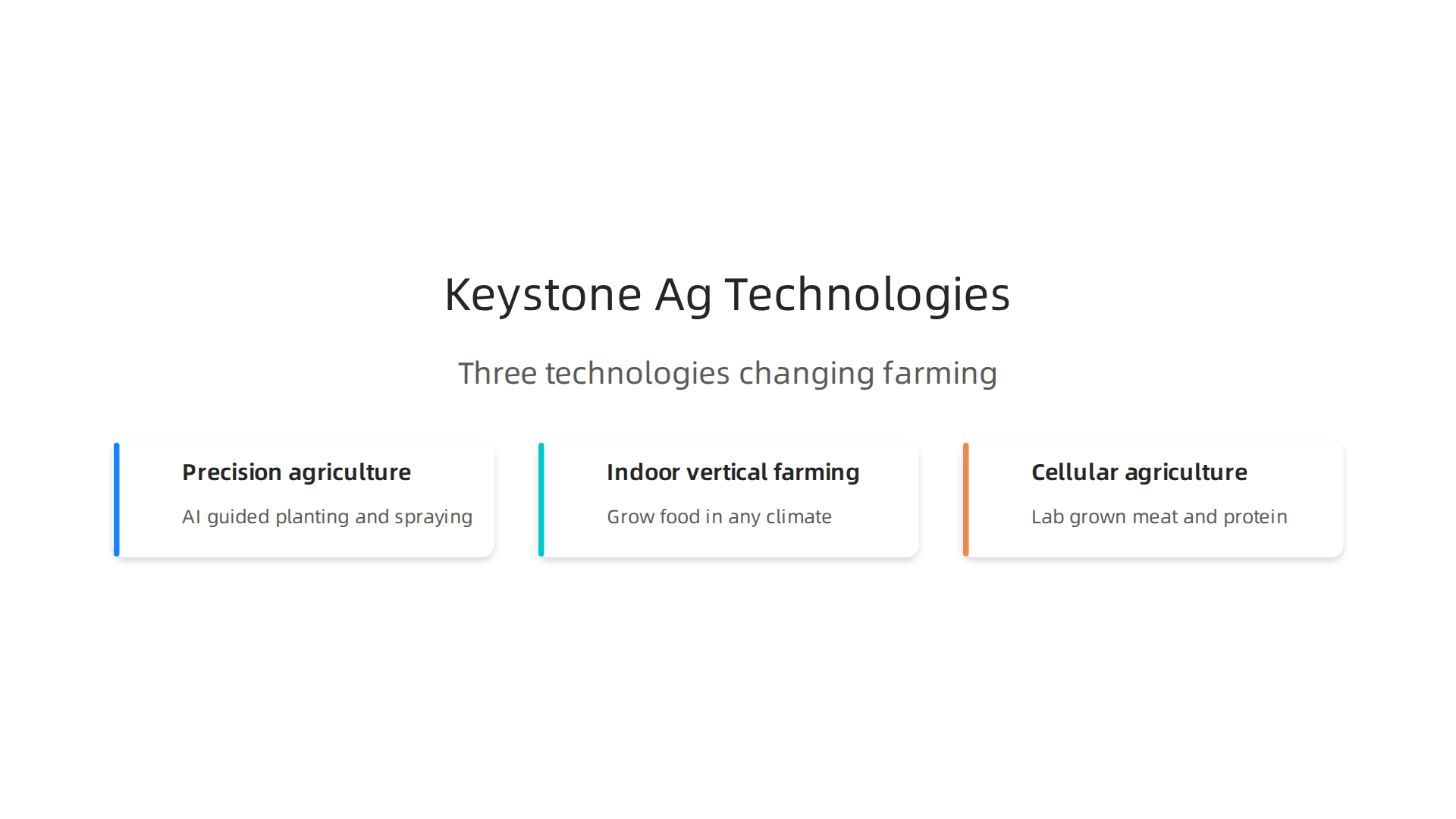
Let us look at three examples that are already changing farming:
| Sci-Fi Inspiration | Real World Keystone in 2026 | Why It Matters |
|---|---|---|
| Replicator (Star Trek) | Precision agriculture | AI guided planting and spraying to get the most from every seed and drop of water |
| Moisture vaporator (Star Wars) | Indoor vertical farming | Grow food in any climate using 90% less water |
| Protein vat (Soylent Green) | Cellular agriculture | Lab grown meat and protein without raising animals |
These are not ideas for the distant future. They are happening right now. According to the 2026 trends report from IntelinAir, farmers are adopting field ready AI and automation at a record pace. The Illinois Soybean Association notes that artificial intelligence, precision technology, and data are the trends expected to continue shaping farm operations. And as the ICL Group explains, biologicals, field robotics, and AI driven advisory are the top innovations that are actually working in the field.
The reason these technologies feel like keystone technologies is simple: our current food system depends on stable weather and cheap water. As both become less reliable, we need replacements. These ag technologies are stepping in to fill the gap.
Why this matters for you
Understanding which technologies are truly keystone technologies helps you see where the world is heading. It also shows you which investments and innovations will matter most in the coming years. If you are curious about how more sci-fi predictions are turning into everyday tools, read our article about science fiction technologies becoming reality in 2026.
And if you enjoy stories that explore big ideas like these with humor and heart, you will love the Ridiculous series. It is a universe bending comedy that takes on topics like water scarcity, technology, and survival without taking itself too seriously. Start the series on Amazon.
Summary
This article traces how science fiction imagines the future of food and shows how those cinematic ideas map to real agricultural technologies in 2026. It explains keystone technologies — the foundational systems like AI, vertical farming, hydroponics, and cellular agriculture — and why they matter for water use, food security, and farming in extreme environments such as cities or other planets. The piece compares on‑screen examples (The Martian, Blade Runner, Star Trek, Dune) with current innovations like precision agriculture, closed‑loop hydroponics, lab‑grown protein, and autonomous machinery, noting where research is advancing and where major challenges remain. Readers will learn what each technology does, practical benefits (for example, water savings and lower emissions), realistic limits (radiation, cost, scale), and which companies and training programs are helping bring these sci‑fi concepts into real farms. The article balances wonder with caution, highlighting both the promise and the risks of handing essential systems over to machines, and points to further resources for readers who want deeper technical or cultural context.