Genetic Engineering in Sci-Fi Movies and the Real Science Behind Your Favorite Films
Introduction
Have you ever watched a sci-fi movie and wondered, "Could that actually happen?"

You are not alone. From Gattaca to Jurassic Park, life technologies like genetic engineering and cloning have shaped the most unforgettable stories in cinema. These films tap into our deep curiosity about what it means to tinker with the building blocks of life.
But here is the thing: the line between science fiction and real science keeps getting thinner. In 2026, researchers are already editing genes with tools like CRISPR, and the ethical questions Hollywood raised decades ago are now urgent. As one study notes, major milestones like the cloning of Dolly the sheep directly influenced how filmmakers portrayed genetics on screen (NIH). That connection between real breakthroughs and big screen drama is what makes this genre so powerful.
Sci-fi fans want more than just entertainment. They crave in depth analysis that bridges the gap between fiction and reality. That is exactly what this article delivers. We will explore the evolution, the accuracy, and the ethical implications of life technologies as they appear in film. We will look at how movies have predicted, exaggerated, or sometimes perfectly captured the future of biotech.
If you love digging into the real science behind your favorite films, you are in the right place. And if you enjoy a little humor with your sci fi, check out this Sci-Fi Comedy With Scope for a fresh take on the genre.
Let’s start with how Hollywood first began playing with the concept of life technologies and why it still fascinates us today.
The Pioneering Sci-Fi Films That Introduced Genetic Engineering
Long before CRISPR made headlines, Hollywood was already dreaming up scenarios where life technologies could spiral out of control. Some of the earliest films to tackle genetic experimentation still feel shocking today, nearly a century later.
Take ‘The Island of Dr. Moreau’ . The first film adaptation hit theaters in 1932, with later versions in 1977 and 1996. The story follows a mad scientist who uses genetic manipulation to turn animals into human-like creatures.

This movie set the stage for every "science gone wrong" tale that followed. According to the Genetic Literacy Project, early films like this one planted the idea that tampering with nature leads to disaster.
Then came ‘The Fly’ (1958). In this classic, a scientist accidentally merges his DNA with a fly during a teleportation experiment. The result is a body horror film that asks a simple question: What happens when we lose control of our own biology? Audiences walked away with a deep unease about genetic mixing and its unknown consequences.
The 1970s and 1980s brought even bigger ideas. ‘Blade Runner’ (1982) introduced replicants, bioengineered beings nearly identical to humans. The film explored what it means to be human when life itself can be manufactured. As one academic study explains, real breakthroughs like the cloning of Dolly the sheep echoed themes that movies like ‘Blade Runner’ had already made famous (NIH).
But the biggest cultural impact came in 1993 with ‘Jurassic Park’ . Steven Spielberg brought dinosaurs back to life using ancient DNA extracted from mosquitoes. The film made genetic engineering feel real and terrifying to millions of viewers. It also introduced the concept of filling genetic gaps with DNA from other species, which is surprisingly close to real lab techniques. The Addgene blog notes that ‘Jurassic Park’ arrived right as genome engineering was taking off in labs around the world.
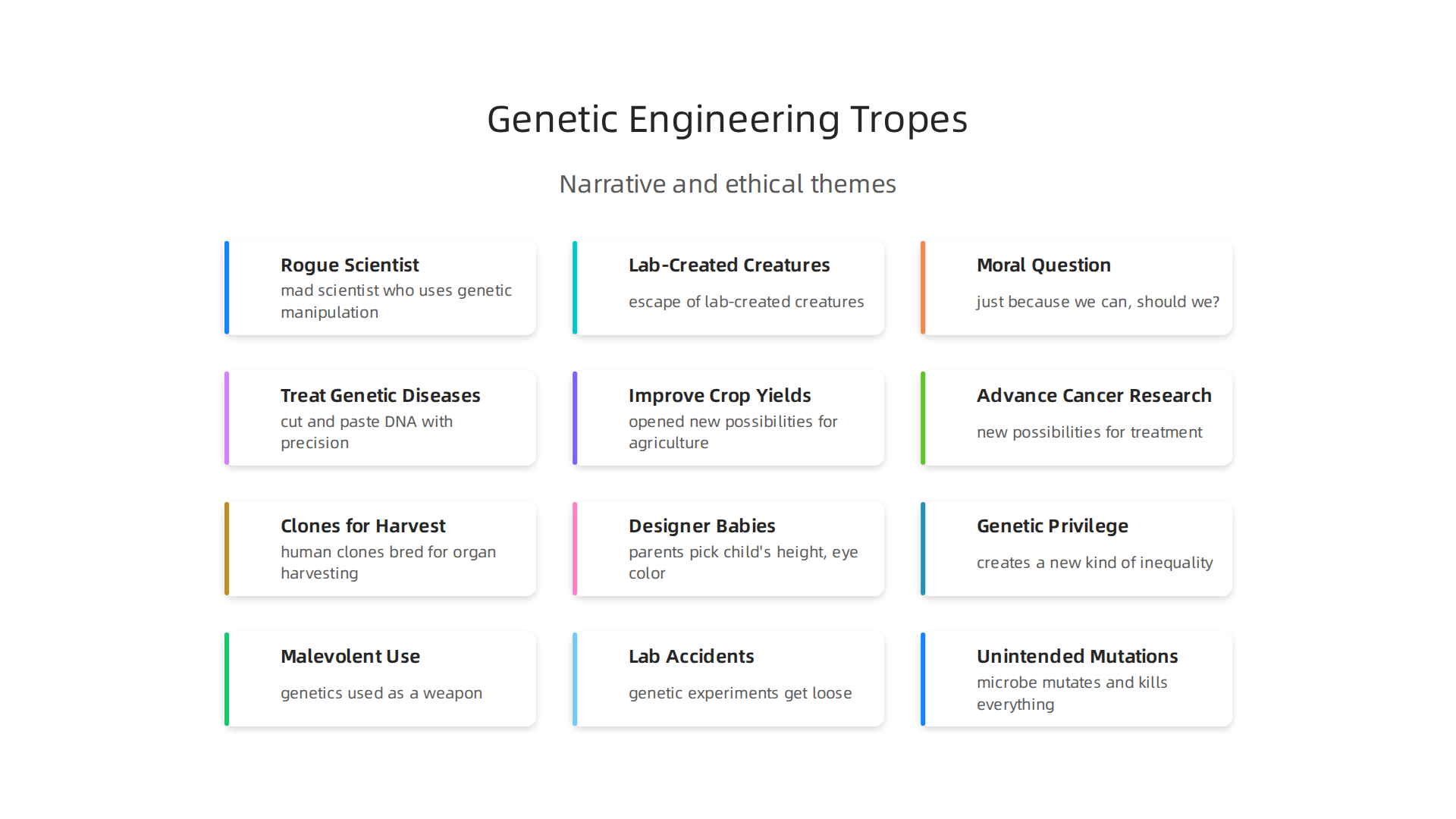
These early films created the tropes we still see today. The rogue scientist. The escape of lab-created creatures. The moral question of whether just because we can do something, we should.
Modern movies like ‘Ex Machina’ and ‘Alita: Battle Angel’ owe a lot to these pioneers.
If you love seeing how sci-fi shapes our understanding of real science fiction technologies becoming reality in 2026, you are in good company. And if you want a break from the serious stuff, grab a copy of this Cinematic Sci-Fi Comedy for a fun twist on the genre.
The Science Behind the Fiction: Real-World Life Technologies
Those early films may have felt like pure fantasy at the time. But the science they imagined is now very real. In 2026, the life technologies that once belonged only to movie scripts are changing how we treat disease, grow food, and even understand what it means to be human.
The biggest breakthrough is CRISPR. This gene editing tool lets scientists cut and paste DNA with incredible precision. It works like a pair of molecular scissors guided by a GPS. According to the National Science Foundation, CRISPR has opened new possibilities for treating genetic diseases, improving crop yields, and advancing cancer research.
In 2026, over a dozen CRISPR clinical trials are underway, targeting conditions like sickle cell disease and certain types of blindness (Innovative Genomics Institute). That sounds a lot like the lab scenes in Jurassic Park, except the goals are about saving lives, not hatching dinosaurs.
Life technologies companies are pushing hard in other directions too. Abbott tech, for example, now uses advanced diagnostics and continuous glucose monitors that turn personal health data into real time decisions. Strata decision technology helps hospitals and insurers use analytics to choose the best treatments, cutting waste and improving outcomes. And AI training is speeding up drug discovery, letting researchers screen millions of compounds in days instead of years. Synthetic biology labs are even creating custom microbes that produce everything from sustainable fuels to spider silk proteins.
Some of the most famous sci-fi films drew directly from the science of their day. The Boys from Brazil (1978) imagined cloning Adolf Hitler from preserved tissue. Back then, cloning was pure speculation. But in 1996, Dolly the sheep made it real. Gattaca (1997) showed a world where your DNA determined your career, your love life, and your destiny. That film hit theaters just as the Human Genome Project was racing to complete its first draft. Today, polygenic risk scores can predict your odds of developing certain diseases, raising the same ethical questions the movie asked.
The loop between fiction and reality keeps spinning. Movies give us a way to test out scary ideas before they become facts. Scientists then borrow those ideas and figure out how to make them work. If you enjoy seeing how imagination turns into real world inventions, you might love exploring a whole universe of stories that blend books, audio, animation, and movie dreams. Check out this series and see where your curiosity takes you.
For more on how sci-fi continues to shape real tech, read about how science fiction is shaping real ag technologies in 2026.
Cloning and Designer Babies: Ethical Questions on Screen
As life technologies like CRISPR move from sci-fi labs to real clinics, the ethical questions from movies feel more urgent than ever. Films about cloning and designer babies aren’t just entertainment. They give us a safe space to wrestle with hard choices before science forces them on us.
The Island (2005) and Never Let Me Go (2010) both paint a chilling picture. In these stories, human clones are bred for organ harvesting. They exist only to keep wealthy people alive. The Stanford Law School review of a similar film points out that these plots force us to ask: If we could create life just to save another, should we? In 2026, with real hybrid embryos growing for transplantation, that question is no longer hypothetical.
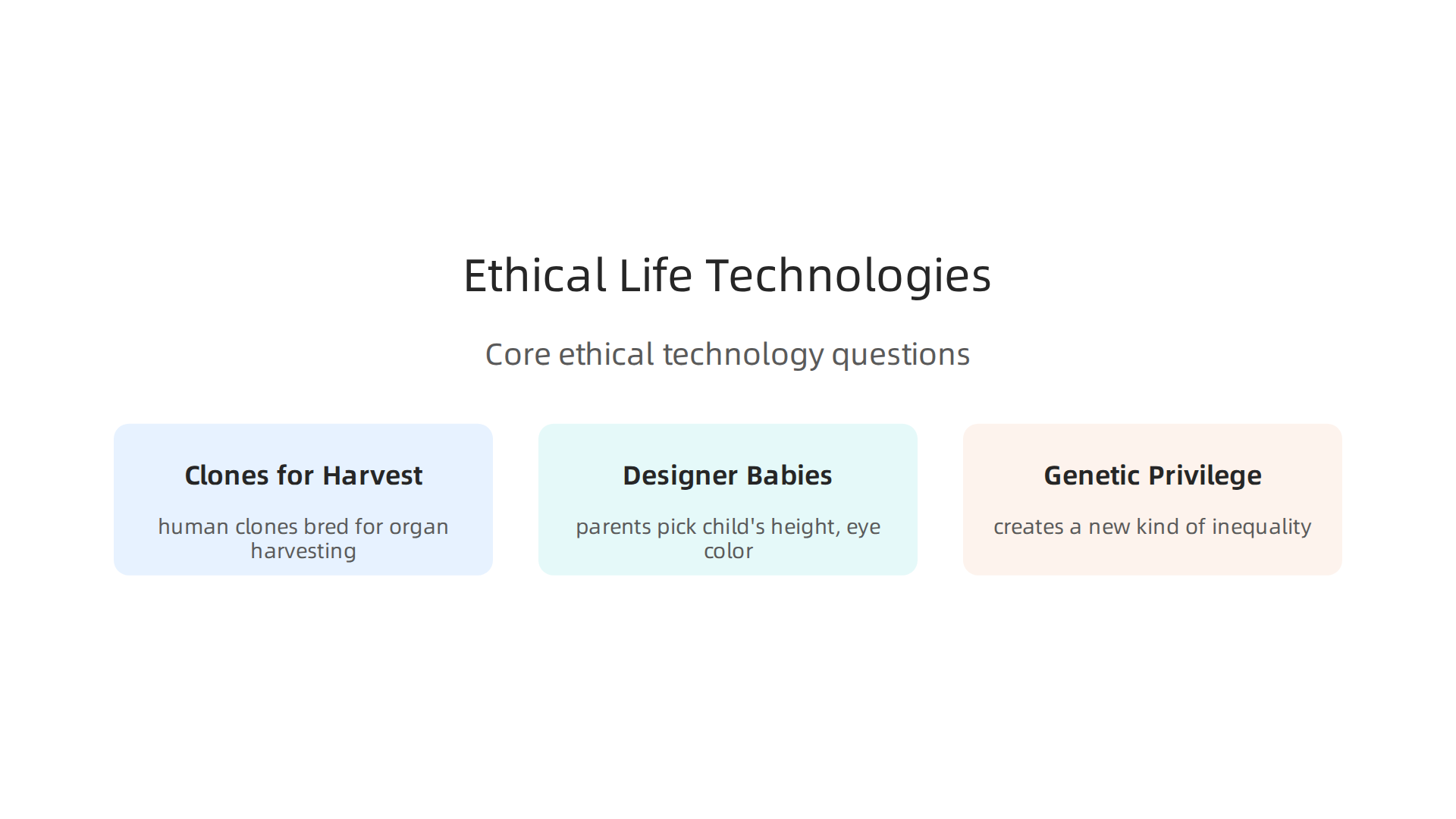
Then there are the designer baby movies. Gattaca (1997) imagines a world where parents pick their child’s height, eye color, and disease risk before birth. Those born naturally are treated as second-class citizens. The Boys from Brazil (1978) takes the idea to its darkest extreme, cloning a dictator from preserved cells. Both films use the same core fear: genetic privilege creates a new kind of inequality. According to the Genetic Literacy Project, Hollywood has used gene editing themes in sci-fi for decades, and in 2026 those themes feel less like fantasy and more like news headlines.
Today, the line between fiction and reality is blurry. Designer babies are no longer science fiction, as researchers from the IISTR Journals confirm. Biologist Paul Knoepfler calls creating genetically modified children a "likely future scenario" in his TEDx talk. The same life technologies we talked about earlier, like CRISPR and AI training, make it possible. Companies like Abbott provide tools to monitor health outcomes, while Strata decision technology helps hospitals evaluate which genetic interventions make sense. But who decides what "makes sense"?
These films spark real public debates. Should we allow embryo editing for disease prevention? For eye color? For intelligence? The questions pile up faster than science can answer them.

That’s why movies matter. They let us try on scary futures before we live in them.
If these ethical dilemmas fascinate you, you’ll love a universe-bending story that mixes chaos, wit, and heart. Read Cinematic Sci-Fi Comedy and explore what happens when imagination meets reality.
For more on how movies warn us about technology, check out what AI in cinema reveals about our real world hopes and fears.
Genetic Manipulation as a Superpower: From Mutants to Enhanced Humans
You know that feeling when you watch an X-Men movie and secretly wish you could control the weather or read minds? We have all been there. But in 2026, the idea of genetic mutation as a superpower feels less like fantasy and more like a preview. The X-Men franchise uses the metaphor of genetic mutation to explore real social issues like prejudice and acceptance. Mutants are born different. They are feared, hunted, or exploited. That is not so different from how society sometimes treats people with unusual genetic traits today.
Then you have movies like Captain America: The First Avenger and Limitless. These stories are not about being born different. They are about choosing to upgrade. Steve Rogers takes a super-soldier serum to become stronger and faster. Eddie Morra pops a pill to unlock 100 percent of his brain. Both gain incredible abilities. But both pay a heavy price. Cap loses his old life and friends. Eddie loses his identity and nearly his life. The Apple TV episode on Gattaca and the ethics of reproduction dives into the same kinds of ethical questions about genetic manipulation. If you could upgrade your body or mind, should you? And what do you lose when you do?

These storylines mirror the real world of 2026 more than you might think. We already have life technologies that push the boundaries of human potential. Companies like Abbott create wearable tech that tracks your heart rate, blood sugar, and oxygen levels in real time. Strata decision technology helps hospitals decide which genetic therapies to approve based on cost and effectiveness. And AI training is being used to model how gene edits might affect a person years down the road. All of these tools can be used to enhance human health. But they also raise the same questions that Captain America and Eddie Morra faced: who gets access? Who decides what is too far? And can we handle the side effects?
The movies do not give easy answers. That is exactly the point. They let us explore both the hope and the fear of becoming something more. If you love stories that mix deep questions with fast-paced action, you will enjoy a universe-bending tale that does the same. Read Cinematic Sci-Fi Comedy and see what happens when imagination meets the boundaries of human potential.
Want to see how other sci-fi inventions are becoming real in 2026? Check out science fiction technologies becoming reality for more connections between the screen and the lab.
The Dark Side: Bioweapons and Unintended Consequences in Sci-Fi
Not every sci-fi story about genetic tinkering ends with a happy upgrade. Some of the most chilling movies ever made show what happens when we use genetics as a weapon. Films like 12 Monkeys (1995) and Contagion (2011) are not fun fantasies. They are cold, realistic looks at engineered viruses and pandemics. In 12 Monkeys, a deadly virus is released by a group of activists, wiping out most of humanity. In Contagion, a virus jumps from bats to pigs to people, and within days, society collapses. These movies feel terrifyingly possible because they are based on real science. A study published in the Journal of Science Communication found that paying attention to science fiction actually shapes how people perceive real technologies like human genome editing. That means these movies do more than entertain. They warn us.
Then you have the straight-up bioweapon stories. The Andromeda Strain (1971) follows scientists trying to stop an alien microbe that mutates and kills everything it touches. Resident Evil turns a lab-engineered virus into the zombie apocalypse. Both films show what can happen when genetic experiments get loose. The threat is not just from bad guys with bad intentions. It can also come from lab accidents or unintended mutations.
A report from the Carnegie Endowment for International Peace in 2024 warned that gene editing and synthetic biology open up serious risks, both from malevolent use and from accidents we cannot predict.
These sci-fi warnings hit close to home in 2026. We already use life technologies like AI training to model gene edits. We use strata decision technology to decide which therapies are safe. But the same tools that heal can also harm if they fall into the wrong hands or if we move too fast. The National Institutes of Health has pointed out that genetic engineering opens up tremendous avenues for new biological weapons. That is not a distant threat. It is a conversation happening in labs and government meetings right now.
So what do we do with these scary stories? We use them. They help us ask the hard questions before it is too late. If you enjoy thinking about where science and fiction meet, you might like a story that mixes imagination with real stakes. Explore the series built around books, audio, animation, and movie dreams and see how creativity can help us face the future.
And if you want to stay aware of the real warnings hidden in your favorite films, check out AI in science fiction movies reveals warnings we should heed.
The Future of Biotech in Sci-Fi: Emerging Trends and Predictions
We have seen the scary side of genetic experiments in films like 12 Monkeys and Resident Evil. But not every story is a warning. Some of the most exciting sci-fi movies in 2026 are looking at biotech with hope, curiosity, and a lot of creativity. Recent films like The Creator (2023) and Upgrade (2018) blend artificial intelligence directly with genetic technology. In Upgrade, a paralyzed man gets a chip that controls his body, blurring the line between human and machine. The Creator shows a world where AI beings have their own biology. These stories are not just about robots anymore. They are about life technologies that mix living cells with code.
It is not just big Hollywood movies either. Indie films and streaming series are diving into more nuanced biotech themes. Shows like Black Mirror continue to explore designer babies and memory editing with a quiet, personal touch. Smaller films like Dual (2022) look at cloning as a medical service gone wrong. These stories feel real because they are based on actual tools we already use.
What is coming next? Sci-fi writers are already grabbing onto epigenetic engineering (changing how genes express without changing DNA) and de-extinction (bringing back species like the woolly mammoth). The real science is moving fast. CRISPR technology has already revolutionized research, opening new possibilities for curing genetic diseases and improving crops. As of 2026, CRISPR clinical trials are showing real progress. These advances give sci-fi creators a goldmine of material.
In the real world, companies like Abbott use advanced life technologies to detect diseases faster. Strata decision technology helps doctors choose the best therapies. And AI training is used to model how gene edits might play out before they ever touch a patient. All of this feeds back into the stories we love.
If you want to see where the next wave of sci-fi is headed, check out how science fiction technologies are becoming reality in 2026. And if you feel inspired to imagine your own future, explore the series built around books, audio, animation, and movie dreams. The best sci-fi always starts with a good story.
Summary
This article traces how science fiction movies have imagined life technologies and how those cinematic ideas increasingly mirror real-world biotechnology in 2026. It reviews pioneering films—from The Island of Dr. Moreau and The Fly to Jurassic Park and Gattaca—then explains the real science behind scenes, notably CRISPR, cloning, and synthetic biology, and how companies and AI tools are turning concepts into clinical trials, diagnostics, and new products. The piece also digs into ethical dilemmas such as designer babies, cloning for organs, and social inequality, and it examines darker risks like engineered pandemics and bioweapons that films warn us about. By comparing on-screen tropes with current research and industry trends, readers will learn how sci‑fi informs public debate, influences policy thinking, and points to the next wave of biotech themes filmmakers and scientists should watch.