AI Tools for Sci Fi Fans End the Frustration of Finding Great Content
Introduction
Do you ever feel like you are drowning in sci-fi content? You want to watch the latest movies, read breaking news, and find deep analysis of your favorite genre. But there is just too much out there. You spend more time searching for good content than actually enjoying it.

You are not alone. The truth is, the world of content creation has exploded. The global digital content creation market is worth over $42 billion in 2026 and is climbing fast. By 2034, experts project it will reach $122 billion. That is a lot of content. And for fans of science fiction, the challenge is real. General movie sites bury the niche gems. Algorithms push what is popular, not what is meaningful. Staying on top of everything feels impossible.
Here is the good news. A wave of future tools AI is finally changing this for us. In 2026, smart tools are stepping in to help sci-fi lovers like you cut through the noise. They make it easier to find what matters, get smarter analysis, and even create your own content. Whether you want a best AI presentation maker to build a pitch for a fan film, a personal AI assistant to track new releases, or powerful ai content creation software to write reviews, the options are now real and growing.
Companies like Stability AI and Creatify AI are already shaping indie production.
The AI market itself is on track to hit $467 billion by 2030. This shift matters for every sci-fi fan who wants a better experience.
In this article, we will walk through the top AI tools of 2026 that solve the specific frustrations sci-fi enthusiasts face. Say goodbye to information overload. Say hello to tools that finally get your passion for the genre.
Subscribe to Cinema Sci Fi for more deep dives into the tech shaping science fiction.
The New Frontier: How AI Empowers Sci-Fi Content Creators
Let us be honest. Making sci-fi content used to be painfully slow and expensive. You spent hours on lighting tests, rendering single frames, and editing audio. That is time you could have spent building a strange new world or crafting a shocking plot twist.
In 2026, future tools AI are flipping that script completely. They handle the boring stuff. Think about color correction, sound mixing, or even formatting a script. The AI learns your style and does these tasks in minutes. That means you get to focus on what truly matters: telling a great story. And that is the whole point of sci-fi, right? AI content creation is not a niche experiment anymore. The market is projected to grow to over $80 billion by 2030 according to Grand View Research. It is becoming the standard.
These tools now fit right into your current workflow. Maybe you are drafting a short film. An AI writing assistant can help structure it properly. Maybe you need concept art for a spaceship. An AI image generator creates it in seconds. Maybe you need a pitch deck for funding. The best AI presentation maker can turn your rough notes into a professional slide deck instantly. Platforms like Stability AI and Creatify AI are leading this charge for indie creators. We have explored how these companies are reshaping indie production in detail before, and the changes keep accelerating.
The numbers back up this shift. Almost every creator and marketer is using AI for content creation in 2026 (Averi.ai). Indie filmmakers are jumping on board because the cost of entry is dropping fast. You no longer need a Hollywood budget to make something that looks and sounds professional. This wave of adoption means more sci-fi content is being made than ever before. Some of it is mind blowing. All of it is pushing the genre forward in exciting ways. You can see how these technologies are becoming reality in 2026 right now.
The wall between dreaming up a sci-fi universe and actually building it is crumbling. AI is the tool breaking it down. If you are a creator, now is the time to experiment.

If you are a fan, get ready for a golden age of indie sci-fi.
Subscribe to Cinema Sci Fi for more deep dives into the tech and tools shaping the future of the genre.
AI Writing Assistants for Sci-Fi Scripts and Reviews
So you have your big sci-fi idea. A rogue AI on a generation ship. A detective solving crimes in a cyberpunk city. A first contact story where the aliens communicate through math. That is the fun part. The hard part is turning that idea into a real script or a sharp review. That is where AI writing assistants come in.
These tools are not about replacing your creativity. They are about removing the friction between your brain and the page.

Think of them as a co-writer who never gets tired, never judges your first draft, and knows the rules of your fictional universe inside and out.
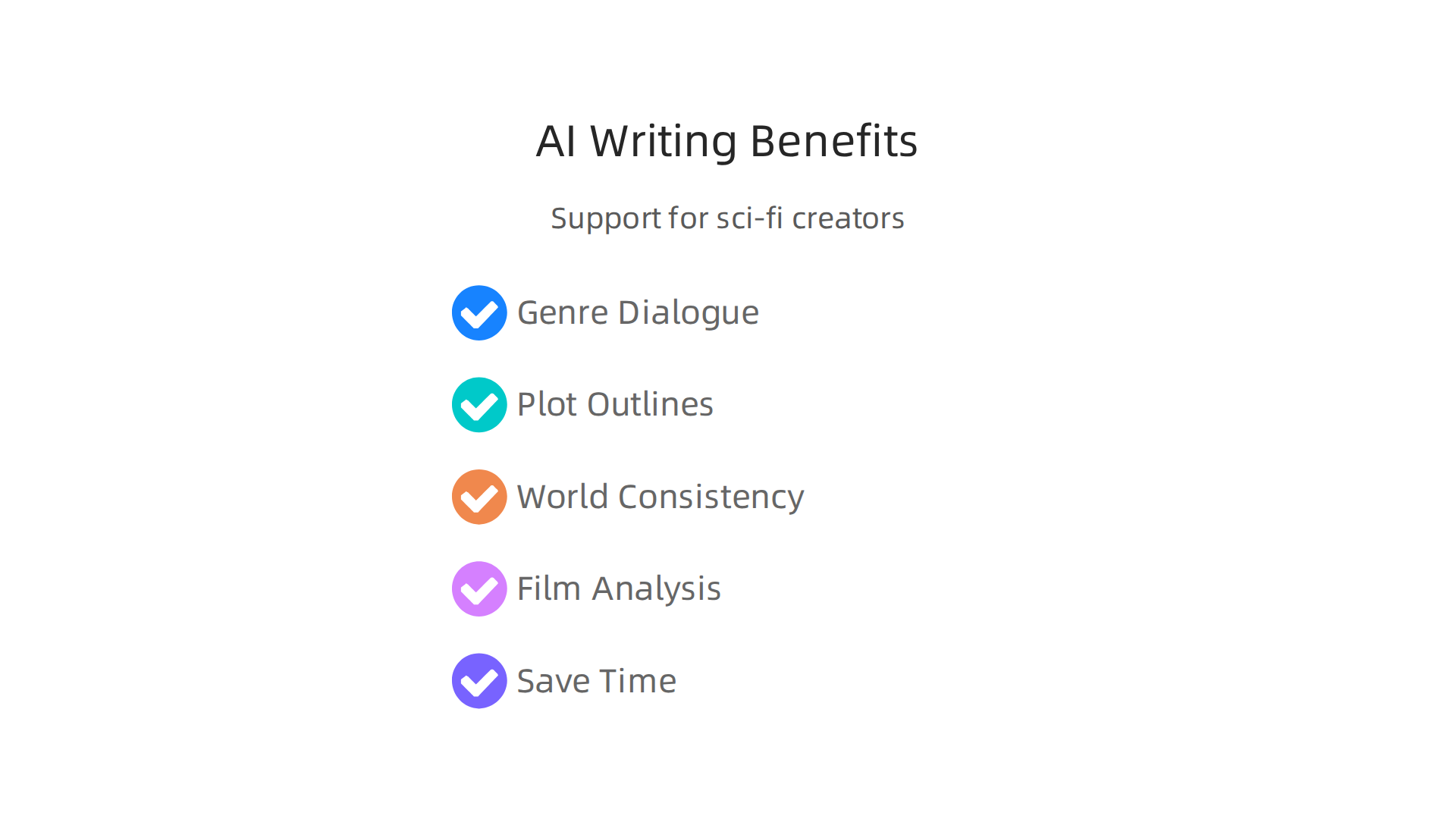
Generating Genre-Specific Dialogue and Plot Outlines
The best AI tools for writing fiction in 2026, like ChatGPT and Claude, are surprisingly good at brainstorming genre-specific dialogue and plot outlines. You can tell the AI you need a tense conversation between a human captain and a synthetic officer who is hiding a secret. It gives you a starting point. Then you shape it, rewrite it, and make it yours. Tools like Inkfluence AI can even generate structured novels with consistent characters across chapters. That is a huge time saver when you are building a series.
Many of these tools are free to test. You can try Sudowrite, which has a custom-trained Muse model fine-tuned for storytelling. Or NovelAI, which focuses on narrative generation. The key is to use them for what they do best: getting past the blank page. We have covered how these future tools ai are becoming standard in independent production, and the same shift is happening on the page level.
Keeping Your World-Building Consistent
Here is a nightmare scenario for any sci-fi writer. You mention in chapter three that faster-than-light travel takes three days to reach Alpha Centauri. In chapter twelve, a character makes the same trip in six hours. Your readers notice. They will call you out.
AI helps with fact-checking and world-building consistency. Some tools let you upload your entire setting bible, character profiles, and timeline. The AI then references that information when you write, flagging contradictions before they go live. This matters a lot in sci-fi, where internal logic is everything. If your AI can enforce the physics of your universe, you can focus on the story.
Using AI for Film Reviews and Analysis
It is not just writers who benefit. Reviewers and film analysts use AI to summarize and analyze plots efficiently. Instead of rewatching a two hour movie to remember one detail, you can feed the script or transcript to an AI writing assistant. It pulls out themes, character arcs, and symbolic elements in seconds. Then you write your review with more depth and less grunt work. Tools like Elicit and Scholarcy are designed for analyzing large amounts of text, making them perfect for deep dives into complex sci-fi narratives.
This does not mean AI writes your review for you. It means AI handles the setup so you can focus on your voice, your opinion, and your connection with readers.
The Right Tool for Your Workflow
The best ai presentation maker or writing assistant is the one that fits your specific workflow. If you write scripts, look for tools that handle screenplay formatting. If you write novel series, find an AI that tracks continuity over long documents. The market is full of options in 2026, and most offer free trials. Test a few to see what clicks.
Want to see how far AI can push sci-fi storytelling? Subscribe for updates on the latest tools and creator breakthroughs.
Visual Content Creation: AI Art and Video for Sci-Fi Worlds
So you have your script. Your characters talk right. The plot holds up. But now you need to show people what that alien planet looks like. Or you want to film a quick test scene to see if the spaceship design works. That is where visual AI tools come in.
They turn words into pictures and pictures into moving video. And in 2026, these tools are shockingly good.
Concept Art from Text Prompts with Midjourney and DALL-E 4
Let us say your story takes place inside a hollowed-out asteroid city. You have a clear image in your head, but you are not an artist. No problem. You type a sentence like "neon-lit bazaar inside a hollowed asteroid, cyberpunk style, cinematic lighting, wide angle" into Midjourney or DALL-E 4.
In seconds, you get several concept art images. You can use them to pitch your idea to a team, to set the mood for your writing, or even as a reference for a 3D modeler.
What makes these tools so useful for sci-fi is how well they handle strange ideas. You can ask for a "biomechanical spaceship with living hull and crystal engines" and the AI understands the blend of organic and mechanical. You get usable art fast. That saves you hours of sketching or hiring an artist for early drafts. According to a roundup of top tools for movie creation, AI tools like these are now standard in pre-production for indie filmmakers. You can test them with free tiers to see what style fits your universe best.
Rapid Prototyping with AI Video Generators
Once you have concept art, the next step is motion. You want to see how your scene flows before you invest in full production. AI video generators like Runway Gen-4 and others let you upload a reference image or a short text description and generate a few seconds of video. This is perfect for testing pacing, camera angles, and character blocking.
The best AI video generators of 2026 are now capable of realistic character animation and consistent backgrounds. You can generate a short clip of your protagonist walking through that asteroid bazaar. It might not be final footage, but it gives you a feel for the scene. You can iterate quickly. Change the lighting, adjust the camera angle, add motion blur. The AI does the heavy lifting. For indie creators, this means you can prototype a whole sequence in an afternoon instead of weeks.
Sci-fi creators especially benefit because they often need to visualize environments that do not exist. A video from the same generation shows creators ranking the most realistic AI video tools of the year. Some of these tools focus on maintaining style consistency across clips, which is crucial if you plan to stitch multiple shots together.
Thumbnails and Short Clips for Sci-Fi YouTubers
If you run a sci-fi channel or blog, you know the thumbnail is half the battle. A boring thumbnail kills views. AI image generators let you create high-impact thumbnails in minutes. You can generate a dramatic shot of a spaceship exploding or an astronaut staring into a strange nebula. You do not need a photo shoot or a 3D render. You just need the right prompt.
Many YouTubers in 2026 use AI to create short clips for social media. They take a scene from their script, generate a video clip, and pair it with voiceover. These short clips drive engagement and build anticipation for longer reviews or analyses. The tools are affordable and fast. Some even handle upscaling and frame interpolation, making the output smoother.
To get the most out of these tools, you should experiment with different models. Each AI art tool has a slightly different style. Midjourney leans cinematic. DALL-E 4 is more literal and controllable. For video, Runway Gen-4 excels at motion consistency. Check out our deep dive into how upscale AI restores classic sci-fi films and powers new productions if you want to see how AI handles older footage too.
Bringing Your Visual Vision to Life
You do not need a million-dollar studio to create compelling sci-fi visuals anymore. You need a good idea, a clear prompt, and the willingness to iterate. These AI tools handle the technical execution. You handle the creative direction. That is a powerful combination for any indie creator.
Want to stay updated on the best tools and techniques for building your sci-fi universe? Subscribe for reviews, features, and weekly sci-fi film recommendations.
Audio and Voice AI: Building Immersive Sci-Fi Podcasts
Visuals are only half the picture. Imagine a scene where your hero walks through a buzzing alien market. You see the stalls and the strange creatures. But if the sound is flat, the magic dies. You need voices. You need atmosphere. You need audio that pulls the listener into your world.
That is where AI voice and audio tools come in.
In 2026, building an entire sci-fi podcast or audio drama is easier than ever. You do not need a full voice cast or a professional recording studio. You just need a solid script and the right software.
Consistent Character Voices with AI Cloning
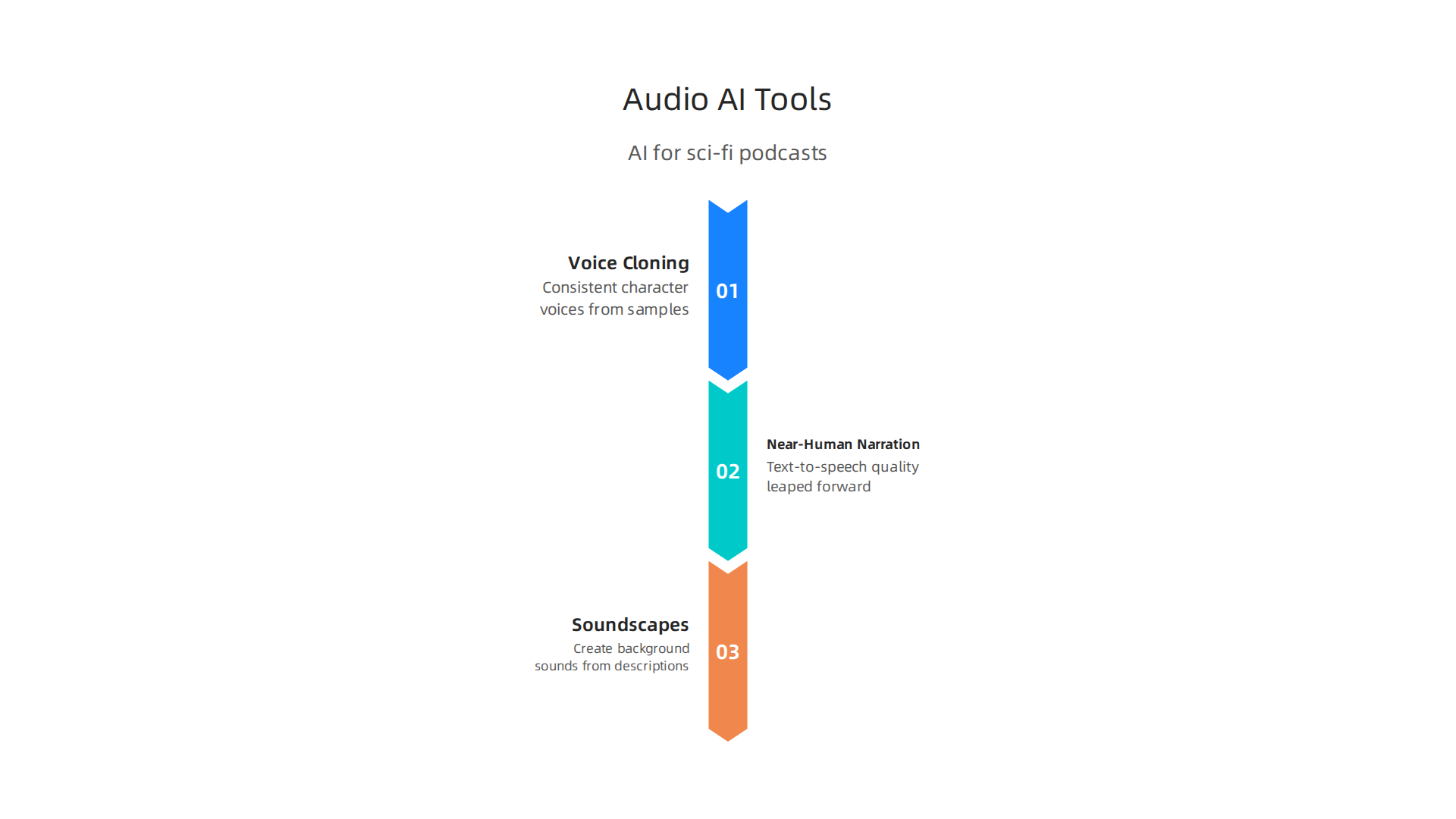
Let us say your story has four main characters. You can record each line yourself, but your voice will sound the same. An AI voice cloning tool changes that. You feed it a short sample of a voice (your own or a friend’s). The tool learns the accent, pitch, and rhythm. Then you type the dialogue and the AI reads it back in that voice. According to a guide on how to clone your voice with AI, even beginners can create convincing audio clips after a few minutes of setup. Platforms like ElevenLabs use advanced neural networks to make cloned voices sound lifelike, capturing natural speech patterns.
This means you can have two characters arguing, and each one sounds completely different. You can even adjust the tone to make a character sound angry or sad. The voice stays consistent across episodes. That matters for building a believable sci-fi universe. You can test different free tools before you commit, as a roundup of the best free AI voice cloning tools shows.
Near-Human Narration from Text
Maybe you want a narrator to set the scene. "The year is 2247. The last city on Mars flickers under a dying sky." Text-to-speech quality has leaped forward. The robotic sound is gone. AI voices now sound close to a real human reading your words. You can type your script and export an audio file in seconds. This is great for podcast intros, audiobooks, or even early drafts of your audio drama. Many creators use this to save time on recording voiceovers.
AI Generated Soundscapes for Sci-Fi Environments
Beyond voices, you need background sounds. The hum of a spaceship engine. The wind on an alien desert. The crackle of a futuristic radio. AI audio generators can create these soundscapes from descriptions. You type "deep spaceship hum with metallic echoes" and you get a loop you can layer under your dialogue. This adds depth to your podcast without spending hours hunting for sound effects.
Putting It All Together
With AI voice cloning for characters, text-to-speech for narration, and soundscape generators for atmosphere, you can build a full sci-fi podcast episode from your desk. It is a fast and affordable way to test your story in audio form. If you want to see how other AI tools are changing indie sci-fi production, check out our breakdown of AI in sci-fi filmmaking.
Ready to start your own audio journey? Subscribe for more tutorials, tool reviews, and weekly sci-fi film picks.
AI-Powered Research and Curation for Sci-Fi Enthusiasts
You have built your characters and soundscapes. Now, to keep your universe alive, you need to stay inspired. With new sci-fi movies, books, and news coming out every day, it is easy to miss something great. An AI can handle the heavy lifting. It saves you hours of scrolling through random feeds. Let us look at three ways future tools ai are changing how you discover and digest sci-fi content.
Getting Your Sci-Fi Fix with AI News Aggregators
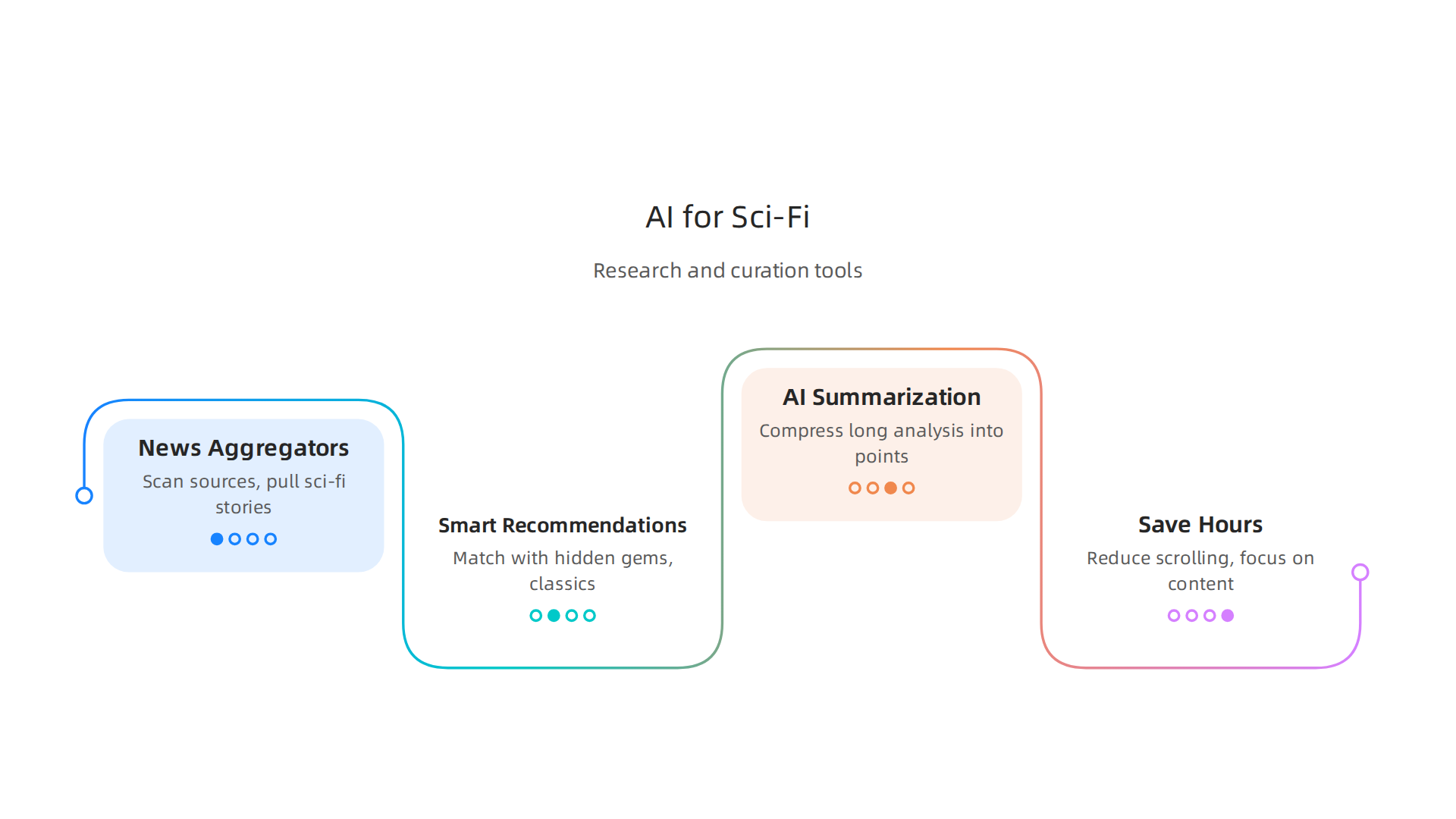
Do you get tired of wading through general news sites to find the one sci-fi article you care about? AI news aggregation tools solve that problem. They scan hundreds of sources, from major film sites to indie blogs. Then they pull out only the stories tagged as science fiction. The best part is that the system learns what you like. If you follow cyberpunk news, it will show you more of that. If you ignore alien invasion updates, it filters those out. According to a guide on AI-powered social media management from 2026, these tools can automate content collection across multiple platforms. That means you get a personalized feed of only the sci-fi news that matters to you, without the noise.
Smart Recommendations for Your Next Watch
You have already seen the big franchise films. But what about the hidden gems? Recommendation engines powered by AI dig into your watch history, ratings, and even the time you spend on each scene. They find patterns you might not notice yourself. For example, a system might match you with a Swedish sci-fi thriller you never heard of because your previous favorite had the same slow-burn pacing. These engines also help you discover older classics you missed. The idea is simple: the more you watch, the better the recommendations get. It is like having a personal ai assistant who knows your taste and remembers every movie you ever enjoyed.
AI Summarization for In-Depth Film Analysis
After you finish a movie, do you want to hear what the critics think but lack the time to read a full essay? AI summarization tools can help. They take long film analysis pieces and compress them into a few bullet points. You get the key themes, director intentions, and standout performances in less than a minute. These tools also work for comparing multiple reviews side by side. This is especially useful when you are researching a topic for your own content. There are best literature review tools in 2026 that use AI to process dozens of papers quickly, giving you a clear overview without reading every word. That same principle applies to sci-fi film analysis.
Putting These Tools to Work
Now, you no longer need to worry about missing the next big sci-fi release or forgetting to read an important analysis. AI handles the curation for you. You can focus your energy on creating and enjoying.
Are you ready to stay ahead of the curve? Subscribe for weekly sci-fi film recommendations, tool tutorials, and deep dives into the future of the genre.
Building Community with AI: Moderation, Personalization, and Discussion

You have your characters, your soundscapes, and your curated news feed. But science fiction is best when shared. The problem is that many online sci-fi communities can feel like the wild west. Spam, off-topic memes, and endless arguments about the same plot holes make it hard to have a real conversation. That is where future tools ai come in to help build better spaces for fans like you.
AI Chatbots That Spark Real Conversations
Imagine joining a forum where a chatbot knows every piece of trivia from Blade Runner to Dune. AI chatbots can answer questions instantly, host trivia games, and even suggest discussion topics based on what is trending in the group. This keeps the conversation flowing without waiting for a human moderator. For example, a bot could pop in during a debate about time travel paradoxes and share a relevant quote from a classic film. It is like having a personal ai assistant that is also a huge sci-fi fan.
Personalized Feeds That Keep You Engaged
Not everyone wants to see every post. Some people love deep dives into spaceship designs. Others want to debate the ethics of AI in sci-fi. Personalized content feeds solve that. The system learns your interests and shows you the posts you care about most. According to a guide on AI-powered social media management from 2026, these tools can organize content across platforms so that niche communities feel relevant to each member. You get less noise and more of the good stuff.
Automated Moderation That Protects the Vibe
Keeping a forum on-topic takes a lot of work. AI moderation tools scan posts for spam, hate speech, or unrelated topics. They flag problems instantly. This is huge for niche sci-fi forums that focus on specific subgenres like cyberpunk or space opera. One bad post can derail a whole thread. Automated moderation ensures your community stays a place for real discussion. The best part? It works 24/7.
Your Next Step
AI is making it easier to find your people and keep the conversation going. Ready to dive into a community that shares your passion for the genre? Subscribe for weekly sci-fi film recommendations, tool tutorials, and deep dives into the future of the genre.
Summary
This article shows how 2026’s AI tools solve the biggest frustrations sci‑fi fans and indie creators face: information overload, slow production, and costly workflows. It surveys writing assistants that draft dialogue, keep continuity, and speed reviews; image and video generators that turn text prompts into concept art and quick scene prototypes; and audio tools for voice cloning, narration, and immersive soundscapes. The piece also covers AI-driven research and curation to surface news and recommendations, plus community tools for moderation and personalized feeds. Throughout, it explains which tools fit specific tasks, points to free trials, and argues that AI lowers the barrier to professional‑grade sci‑fi content. After reading, you’ll know which types of AI to try, how they fit into your workflow, and where to start experimenting to build or enjoy better sci‑fi content.