
Liveview Technologies and Essex Tech Make Sci Fi Surveillance a Reality
From Sci-Fi Nightmares to Real-World Eyes: The Rise of Liveview and Essex Tech
If you have ever watched a movie like 1984 or Minority Report, you know the feeling. A world where cameras watch your every move. Where a system knows where you are, what you do, and maybe even what you plan to do next. For years, that idea felt like pure science fiction. A scary story we told ourselves to keep us awake at night.
But here in 2026, that fiction is slowly becoming reality. Real systems like those built by Liveview Technologies and Essex Tech are already in use. They give governments and companies the power to track people in ways we once thought were impossible. These are not just gadgets from a movie set. They are working tools used by real CSI companies and intelligence agencies.
This shift raises serious questions. How do these systems actually work? Are they as powerful as the movies suggest? And more importantly, what happens to our privacy when the eyes never blink?

These questions matter more now than ever. Privacy enforcement is surging in 2026 across the UK, EU, and U.S., with regulators cracking down harder on how data is collected and used. At the same time, companies like Strider Technologies are pushing the boundaries of what surveillance can do. The gap between sci-fi fears and real-world tech is shrinking fast.
In this article, we will explore how Liveview Technologies and Essex Tech operate. We will look at the ethical dilemmas they create. And we will see how these systems compare to the fictional surveillance stories you already know. If you are a sci-fi fan who loves tracking how fiction becomes fact, this is the deep dive you need.
By the end, you will understand the capabilities, the controversies, and the emerging solutions in modern surveillance. And you will see exactly where the line between nightmare and reality really stands.
For a fun take on these themes, check out this Cinematic Sci-Fi Comedy that plays with similar ideas in a whole new way.
Understanding Liveview Technologies: The Eyes of Modern Surveillance
Let’s get specific. Liveview Technologies is a company that builds and runs live video monitoring systems.

Think of it as giving eyes to the internet. These cameras do not just record. They watch. They think. They act.
Here is the plain truth. Old security cameras were dumb. They just sat there and captured blurry footage. If something happened, you had to rewind through hours of tape. Liveview Technologies changes that completely. Their cameras use real-time analytics to spot problems the moment they happen.
Where does this tech show up? You might interact with it every day without realizing it.
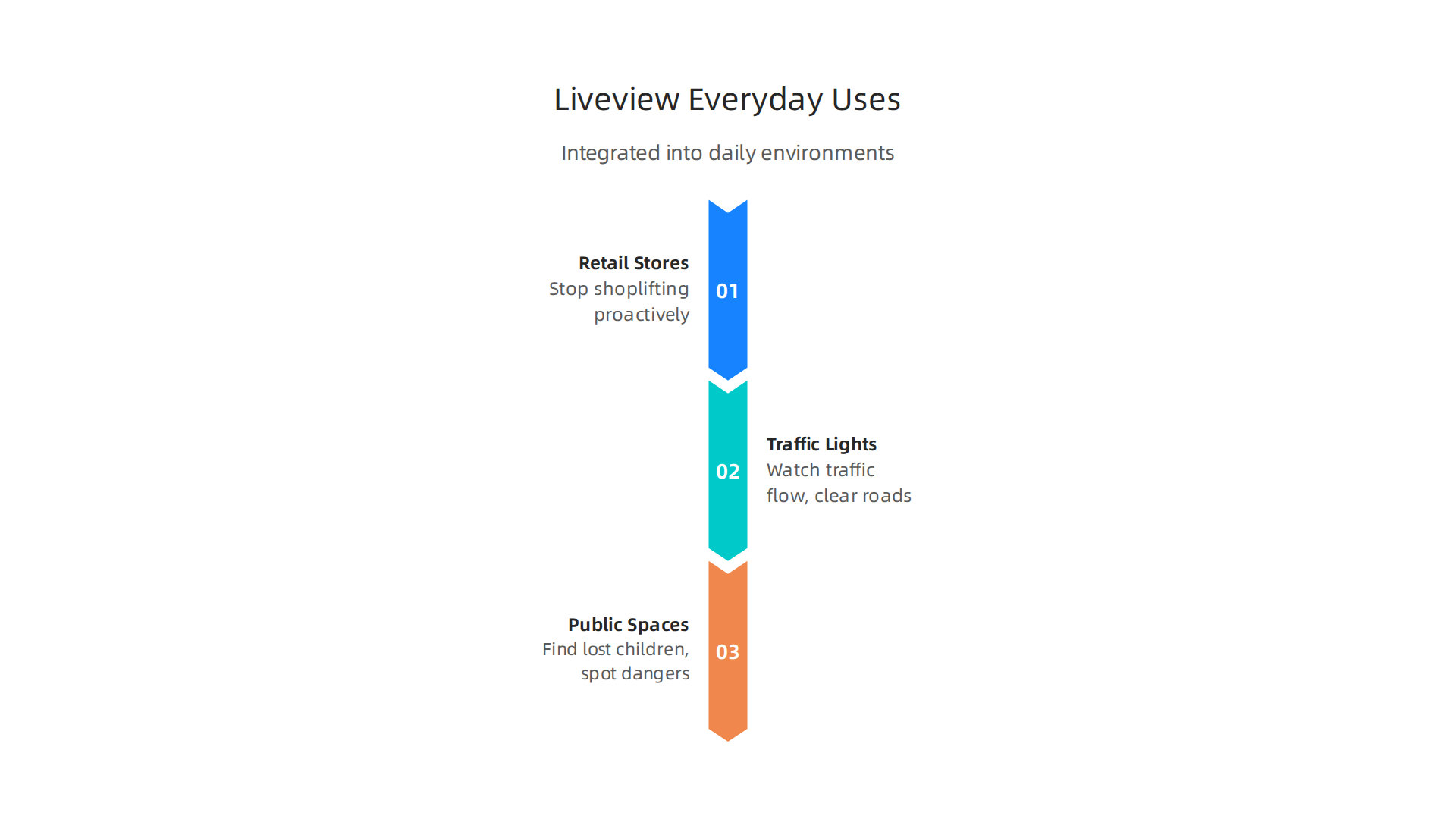
- Retail Stores: Stores use live monitoring to stop shoplifting before it happens. A security team miles away can see a problem and call the store instantly.
- Traffic Lights: Cities use these feeds to watch traffic flow. If an accident happens, the system can change the lights to help clear the road.
- Public Spaces: Parks, stadiums, and train stations use it to look for lost children or spot dangerous behavior.
This kind of work is often handled by specialized CSI companies and security teams who manage data for many clients at once.
How does it actually work? The magic happens behind the scenes. Liveview Technologies connects its cameras to IoT sensors and cloud platforms. An IoT sensor might detect a broken window. The cloud platform gets the alert. Then the closest camera zooms in and an AI analyst watches the live feed.
This market is massive and growing fast. In 2026, the global video surveillance market is worth USD 95.01 billion. The U.S. market alone sits at USD 15.53 billion. Why is it growing? Because AI makes it powerful.
The AI in video surveillance market is expected to jump from $4.04 billion in 2026 to $10.88 billion by 2032. Companies like Strider Technologies and Essex Tech are racing to build even smarter systems. According to CM3 Building Solutions, cloud-based surveillance and AI integration are the top tech trends driving this growth in 2026.
If you want to explore how these futures might play out, fiction is a great place to start. Sci-Fi Comedy With Scope explores these exact themes through books, audio, animation, and movie dreams.
But here is the thing. These tools are not just for stopping crime. They are also used to collect data. Every car that passes a camera, every person who lingers in front of a store, every movement is data. For a deeper look at why this should make us pause, check out our analysis of corporate technology in sci-fi reflects real fears about power and privacy. The warnings from movies are starting to look a lot like real life.
So Liveview Technologies is real. It is here. And it is watching. But the real question is, who watches the watchers? We will tackle that next.
The Rise of Essex Tech: AI‑Powered Surveillance Solutions
If Liveview Technologies is the nervous system of modern surveillance, Essex Tech is the brain. Essex Tech builds software that makes cameras smart. Instead of just recording, their systems watch, learn, and act.
Here is what Essex Tech offers:
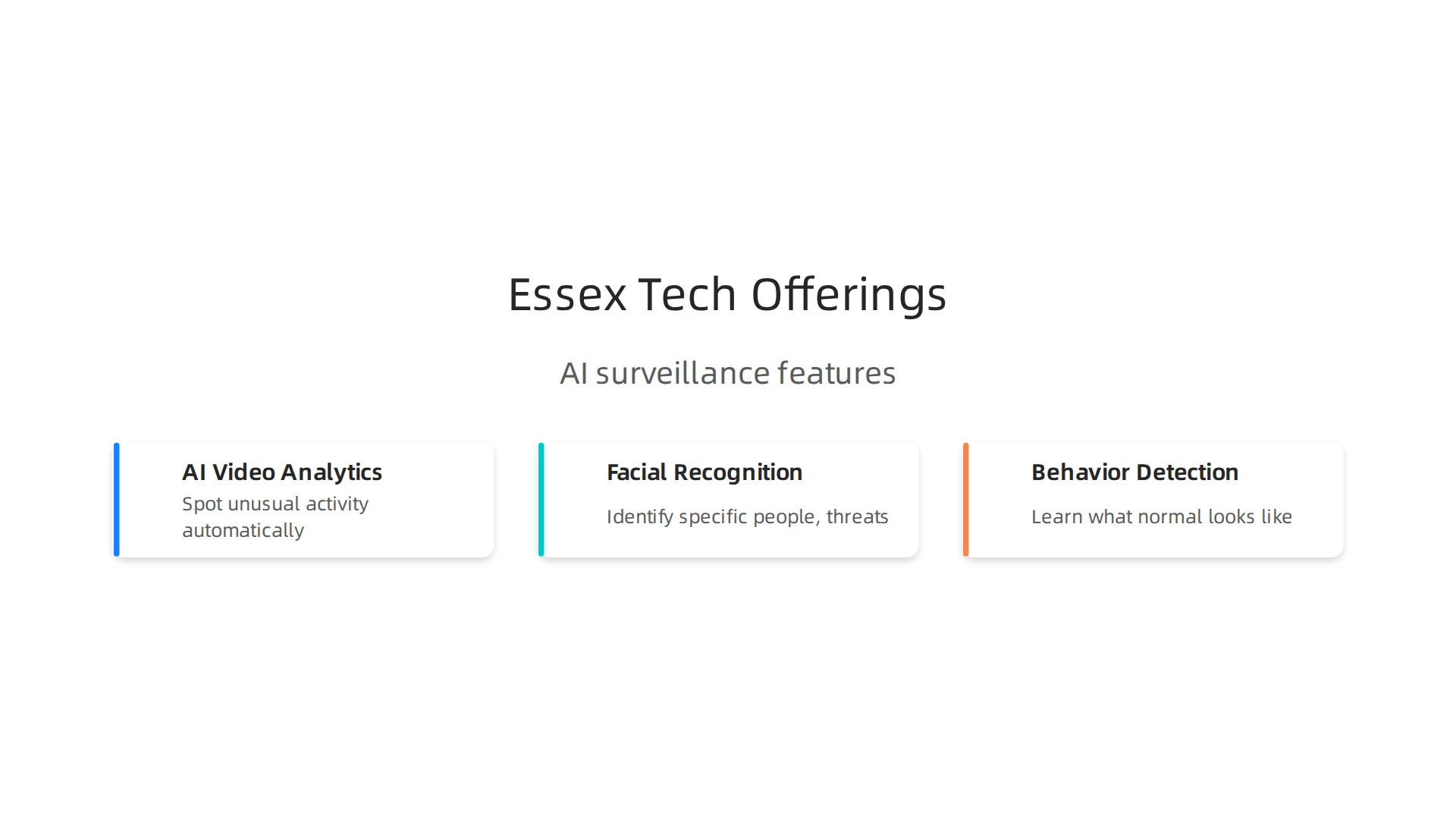
- AI video analytics that automatically spot unusual activity. A person falls down in a parking lot. A car drives the wrong way. The system flags it instantly.
- Facial recognition that identifies specific people against watchlists. This helps security teams find missing persons or known threats.
- Behavior pattern detection that learns what normal looks like. If someone loiters near a door for ten minutes, that is different from waiting two seconds. The AI adjusts to the environment.
These tools are not science fiction. They are real and deployed today. In 2026, the AI in video surveillance market is worth USD 4.04 billion. By 2032 it is expected to hit USD 10.88 billion. That growth comes from places like Essex Tech making AI practical.
How Essex Tech Integrates With Liveview
Here is where it gets interesting. Essex Tech does not replace Liveview Technologies. It works on top of it. Their software plugs into existing camera feeds, including Liveview’s infrastructure.
The secret is edge computing. Instead of sending every video frame to the cloud, the AI runs directly on the camera itself. That means decisions happen in milliseconds, not seconds. A person climbing a fence gets flagged before their feet hit the ground. A shoplifter is identified as they reach for a shelf.
According to CM3 Building Solutions, AI-powered cameras are the top security trend in 2026. They cut the need for constant human monitoring. Instead, one operator watches alerts from hundreds of cameras.
A 2026 guide from Premio Inc explains that GPU-accelerated edge computing is what makes this possible. It allows complex AI models to run on low-power cameras, not massive server rooms.
Real Impact: A Smart City Case Study
Let’s look at a real example. In 2025, a midsized city installed Essex Tech software on top of its Liveview camera network. The goal was to reduce theft from parked cars and improve pedestrian safety in a downtown district.
Within three months, false alarms dropped by 80%. The AI learned to ignore leaves blowing, shadows, and squirrels.

It only alerted operators to things like someone breaking a car window or a fight breaking out.
The city also used facial recognition to help locate lost children. Four times in six months, officers found kids within minutes because the system spotted them wandering away from parents.
For retail stores, the results are similar. A convenience store chain using Essex Tech reported a 70% drop in shoplifting incidents. The AI would detect someone hiding items and alert security before they left the store. This kind of proactive monitoring is what makes the tech so powerful.
The Bigger Picture
Systems like Essex Tech raise important questions. If a camera can recognize your face and guess your mood, who controls that data? And what happens when these systems are used by csi companies or Strider Technologies for broader monitoring?
The warnings from science fiction are hard to ignore. In films, AI surveillance always starts with good intentions but often ends with massive privacy loss. That is why it is worth reading stories that explore these dilemmas. Check out Sci-Fi Comedy With Scope, a series built around books, audio, animation, and movie dreams that tackle these themes head on.
For a deeper look at how fiction mirrors these real concerns, read our analysis of what AI in cinema reveals about our real world hopes and fears. The future of surveillance is already here. The question is whether we will use it wisely.
Surveillance Through a Sci‑Fi Lens: From Fiction to Reality
The previous section ended with a warning from science fiction. But here is the thing: those fictional stories did not just predict our future.

They helped shape how we feel about surveillance today.
Think about the Panopticon, a prison design from the 1700s where one guard could see every inmate, but no inmate ever knew if they were being watched. The power came from uncertainty. Today, Liveview Technologies and Essex Tech create a digital Panopticon. Cameras are everywhere. AI analyzes everything. You never know for sure if a human is watching, but you know the system never blinks.
Now think about Telescreens from George Orwell’s 1984. A screen that watched you and also broadcast propaganda. Modern surveillance cameras are not two-way speakers, but they do serve both security and data collection. That blurry line is what worried Orwell.
Then there is PreCrime from Minority Report. In that movie, psychics predicted murders before they happened. Today, AI predictive analytics in systems like Essex Tech’s software can flag suspicious behavior before a crime occurs. As New America points out, critics of predictive policing have used Minority Report as a warning about how these systems can be flawed and entrap innocent people.
How Sci‑Fi Shapes Our Fears
These stories matter because they frame public expectations. A 2024 study found that people’s ethical concerns about surveillance technology often fall between a utopian dream and a dystopian nightmare. Sci‑fi feeds the nightmare side.
The fear is not just about cameras. It is about who controls them. When csi companies and Strider Technologies deploy these tools, the line between public safety and corporate control gets blurry. A 2025 analysis of big tech warns that data misuse and algorithmic control now parallel dystopian narratives.
The Real Ethical Question
Facial recognition highlights this tension perfectly. In sci‑fi, it is a tool for total control. In reality, as Henry Jenkins notes, facial recognition is a violation of privacy because AI systems are "inhumanly rigid" and do not care about you personally. Liveview Technologies and Essex Tech offer powerful tools, but the ethics depend on who uses them and how.
If you want to explore a story that wrestles with these questions in a fun way, check out Ridiculous, a sci‑fi comedy that mixes chaos, wit, and heart. Read it on Amazon and see how fiction can help us think through the real-world choices we face in 2026.
Privacy, Security, and Regulation in the Age of Liveview
So we have seen how sci-fi stories warned us about surveillance. But in 2026, the question is not whether we are being watched. The question is who makes the rules. And the answer is getting complicated.
The GDPR and CCPA: Two Big Players
Two major laws shape how companies like Liveview Technologies and Essex Tech handle your data. The GDPR in Europe and the CCPA in California set the standard for privacy rights. A detailed comparison from the Berkeley Center for Law and Technology found that the GDPR tends to have more influence because it covers more ground and carries bigger penalties. But the CCPA is catching up fast.
Here is the thing. As of 2026, privacy enforcement is surging across the UK, EU, and US. Companies that collect video data and run AI analytics now face real consequences if they mess up. And the rules keep expanding. According to a 2026 compliance checklist, 20 US states now have comprehensive privacy laws, with Indiana, Kentucky, and Rhode Island joining the list this year.
What the Public Really Thinks
Here is where it gets personal. Surveys show that most people want security, but they also want privacy.

A 2025 collection of data privacy statistics reveals that global regulations are tightening because consumers are demanding more control. People are tired of feeling like they are always on camera.
The tension between safety and freedom is real. When csi companies and Strider Technologies deploy surveillance tools, the public often feels caught in the middle. We want to be safe. But we also want to know who is watching and why.
Finding the Balance
This tension plays out in courtrooms and city councils every day. Lawsuits over facial recognition and AI surveillance are becoming common. Critics argue that the security benefits do not always outweigh the loss of civil liberties. Companies that ignore these concerns risk backlash and legal trouble.
If you want to explore how this battle between power and privacy plays out in a fun, unexpected way, check out a story that mixes humor with serious questions. Explore the series built around books, audio, animation, and movie dreams and see how fiction helps us make sense of the real choices we face.
Emerging Solutions: The Next Wave of Surveillance Technology
So we have the rules and the debate. But what about the tools themselves? In 2026, surveillance technology is changing fast. The next wave goes way beyond simple cameras watching a parking lot. We are seeing smarter, more private, and even predictive systems.
And some of them feel like they walked right out of a sci-fi movie.
Biometrics Go Beyond Your Face
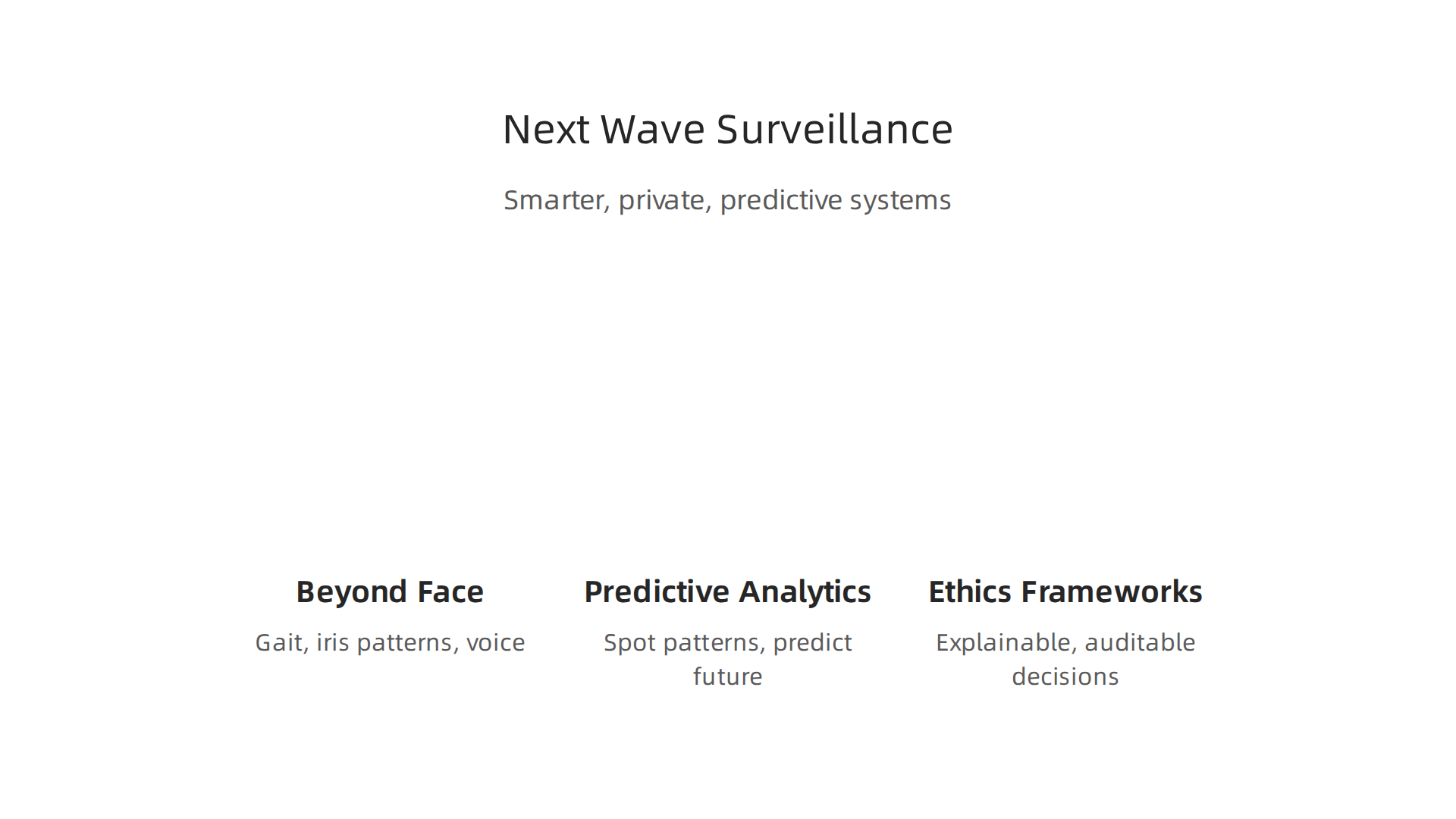
Facial recognition is just the start. New systems now identify people by their gait (the way they walk), their iris patterns, and even their voice. These biometric markers are harder to fake and work even in low light or at a distance. Companies like Liveview Technologies, Essex Tech, and Strider Technologies are integrating these into their security stacks. The idea is to make identification more accurate while reducing bias. A properly tuned AI system can also cut false alarms by 70 to 90 percent, according to a detailed guide on integrating video analytics with surveillance. That means security teams spend less time chasing ghosts and more time on real threats.
Predictive Analytics: Seeing Trouble Before It Happens
This is where things get really interesting. Instead of just recording what happened, AI now looks at patterns to predict what might happen next. For example, a camera covering a parking structure with 200 vehicle spaces can spot unusual behavior in real time and alert security before an incident occurs. This capability is transforming cameras from evidence tools into active prevention systems. The 2026 security technology trends from Avigilon highlight how predictive analytics is moving from simple detection to full-on forecasting.
These tools are already being deployed by csi companies and security integrators. The ROI is clear. AI analytics reduce forensic search time from hours to minutes. That means faster responses and fewer stolen packages or break-ins.
AI Ethics Frameworks and Transparent Systems
But smarter surveillance also means more responsibility. In 2026, the best solutions include ethics frameworks built right in. The Gartner Top Strategic Technology Trends for 2026 specifically call out AI security platforms that make decisions explainable and auditable. Blockchain and encrypted systems are also gaining traction. They create an unchangeable record of who accessed the data and when. This transparency helps rebuild trust. If you know every time a camera identifies you, and you can verify that the data was handled correctly, the whole system feels fairer.
What Comes Next? A Future Shaped by Sci-Fi
So where is all this heading? In the next few years, expect surveillance to become even more invisible and integrated. Think AI that can identify a suspicious object before anyone sees it, or drones that patrol with human-level awareness. Many of these ideas were born in science fiction. And now they are becoming real.
If you want to see how cinema imagined these futures, they can help us understand both the promise and the peril. Check out how science fiction technologies becoming reality in 2026 mirror the stories we love. And if you enjoy a good sci-fi series that mixes humor with big questions about power and privacy, explore the series built around books, audio, animation, and movie dreams at DoriDiculous. It might just change how you see the cameras around you.
Summary
This article examines the rapid rise of modern video surveillance through the lens of companies like Liveview Technologies and Essex Tech, explaining how their camera systems, edge AI, and analytics turn passive feeds into active security and data platforms. It covers real deployments—in retail, traffic management, and public spaces—how AI analytics and edge computing work together, and measurable impacts such as big drops in false alarms and theft. The piece also places the technology in a wider cultural context by comparing it to sci‑fi warnings from Orwell and Minority Report, and it outlines the privacy, regulatory, and ethical debates driving policy and public concern in 2026. Finally, the article surveys emerging solutions (biometrics beyond faces, predictive analytics, explainable AI) and practical governance approaches so readers understand both the capabilities and the responsibilities of modern surveillance systems.